
Rice Husk Ash Market
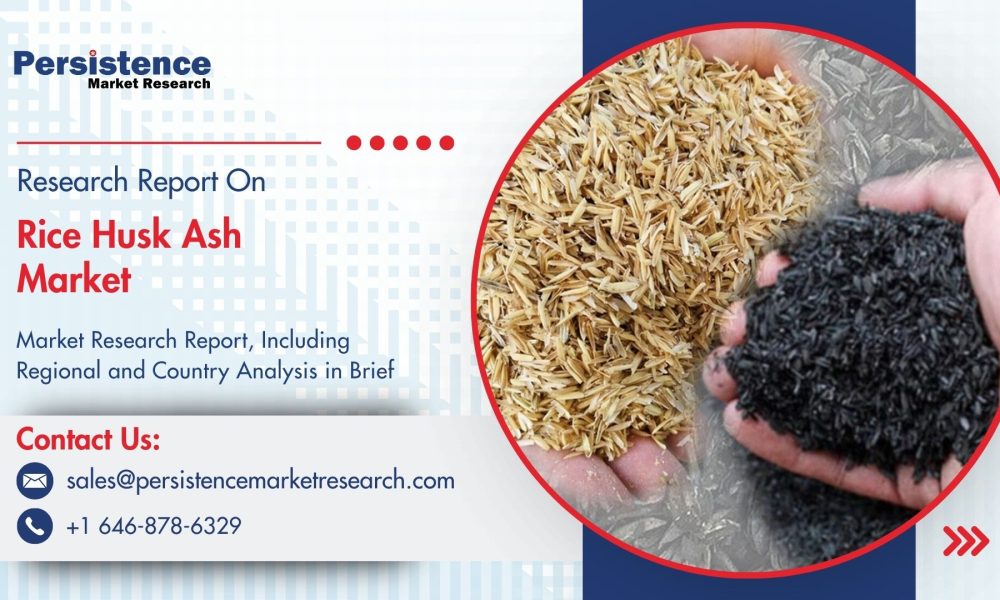
The Rice Husk Ash (RHA) Market is gaining global attention as industries increasingly adopt sustainable materials and circular economy practices. Rice husk ash is a by-product obtained from the combustion of rice husks generated during rice milling. Rich in silica and other minerals, RHA is widely used in construction, steel manufacturing, ceramics, and agriculture.
According to industry analysis, the global rice husk ash market is valued at around US$ 3.0 billion in 2026 and is projected to reach US$ 4.1 billion by 2033, growing at a CAGR of about 4.8% from 2026 to 2033. This growth is primarily driven by the increasing demand for sustainable construction materials, industrial applications, and effective agricultural waste management solutions.
Get Your FREE Sample Report Instantly – Click Now: https://www.persistencemarketresearch.com/samples/34689
Market Overview
Rice husk ash is produced when rice husks are burned in controlled conditions. Rice husk accounts for approximately 20% of the weight of harvested paddy, and its combustion produces ash containing high silica content, which is valuable for industrial applications.
Traditionally, rice husks were considered agricultural waste and often disposed of through open burning, causing environmental pollution. However, growing environmental awareness and government initiatives promoting waste utilization have transformed rice husk ash into a valuable industrial raw material.
The market is also benefiting from the rapid expansion of construction activities worldwide. Rice husk ash is increasingly used as a supplementary cementitious material in concrete production because it improves strength, durability, and resistance to chemicals while reducing carbon emissions.
Key Market Drivers
Rising Demand for Sustainable Construction Materials
One of the major drivers of the rice husk ash market is the growing demand for environmentally friendly construction materials. RHA acts as a pozzolanic material and can partially replace Portland cement in concrete production.
The use of RHA in construction offers several benefits:
- Improved compressive strength of concrete
- Reduced permeability and enhanced durability
- Lower carbon footprint compared to conventional cement
With the construction sector facing pressure to reduce greenhouse gas emissions, builders and developers are increasingly adopting RHA as an eco-friendly alternative. This trend is especially strong in developing economies where infrastructure development is accelerating rapidly.
Abundant Availability of Raw Materials
Rice is one of the most widely cultivated crops worldwide. Large quantities of rice husk are produced during rice milling operations, providing an abundant and inexpensive raw material for RHA production.
Global rice production continues to rise, ensuring a steady supply of rice husks for ash generation. For instance, processing 100 kg of paddy generates around 20 kg of rice husk, creating a massive volume of agricultural residue that can be converted into valuable ash products.
Countries such as India, China, Vietnam, Thailand, and Indonesia are major rice producers, making them key contributors to the RHA supply chain.
Increasing Use in Steel and Refractory Industries
The steel industry is one of the largest consumers of rice husk ash. RHA is used as an insulating material in steel production processes because of its low thermal conductivity and high silica content.
It is commonly used for:
- Ladle insulation
- Molten metal management
- Refractory material production
The steel industry accounts for around 39% of RHA demand globally, making it the largest end-use sector in the market.
With global steel production continuing to grow, demand for RHA in this sector is expected to remain strong.
Market Challenges
Variability in Product Quality
Despite strong growth prospects, the rice husk ash market faces certain challenges. One of the primary issues is inconsistent product quality.
The quality of RHA depends heavily on the combustion process used during husk burning. Factors such as temperature, oxygen availability, and combustion duration can significantly influence the silica content and physical properties of the ash.
If the burning process is not properly controlled, the resulting ash may contain impurities or low reactive silica, reducing its effectiveness for industrial applications. This variability can create difficulties in maintaining standardized quality across the market.
Segmentation Analysis
By Silica Content
Rice husk ash is classified based on its silica content. Common grades include:
- 80–84% silica
- 85–89% silica
- 90–94% silica
- Above 95% silica
Among these, the 85–89% silica content segment holds the largest market share, accounting for around 37% of the global market.
This grade offers an optimal balance between performance and cost, making it suitable for a wide range of applications including concrete, ceramics, and refractory materials.
By End-Use Industry
Rice husk ash is widely used across multiple industries due to its unique properties such as high silica content, lightweight structure, and thermal insulation capabilities.
Major end-use industries include:
- Steel industry
- Building and construction
- Silica manufacturing
- Ceramics and refractory
- Agriculture
- Other industrial applications
The steel industry dominates the market, followed by the construction sector where RHA is used in cement and concrete production.
Regional Analysis
Asia-Pacific
Asia-Pacific is the largest regional market, accounting for approximately 44% of global rice husk ash demand.
This dominance is mainly attributed to:
- High rice production in countries such as India and China
- Well-established rice milling industries
- Rapid urbanization and infrastructure development
China and India together produce nearly half of the world’s rice, creating a massive supply of rice husks that can be converted into ash for industrial use.
Europe
Europe is expected to witness significant growth during the forecast period. The region’s market expansion is supported by strong environmental regulations and increasing adoption of circular economy practices.
European industries are actively seeking sustainable materials that reduce waste and carbon emissions. Rice husk ash fits well into these sustainability initiatives, making it an attractive material for construction and industrial applications.
North America
The North American rice husk ash market is growing steadily due to the rising use of sustainable building materials. Construction companies in the United States and Canada are increasingly incorporating RHA into concrete mixtures to reduce environmental impact and improve material performance.
Additionally, government policies promoting waste recycling and green construction practices are further encouraging the adoption of RHA.
Competitive Landscape
The rice husk ash market consists of several regional and international companies that focus on processing agricultural waste into high-value materials.
Key players operating in the market include:
- Usher Agro Limited
- KRBL Ltd.
- Guru Meta Chem
- Yihai Kerry Investment
- Jasurya Rice Mill
- Rescon India Pvt Ltd
- Astrra Chemicals
- J M Biotech Pvt Ltd
- Global Recycling
- Refsteel Solutions
These companies are investing in advanced processing technologies to improve ash quality and expand their product portfolios.
Get a Customized Market View in One Click: https://www.persistencemarketresearch.com/request-customization/34689
Future Opportunities
The future of the rice husk ash market is closely linked to sustainability and technological innovation. One of the most promising opportunities lies in the production of high-purity silica derived from rice husk ash.
High-grade RHA with silica purity above 90% can be used in advanced industries such as:
- Electronics manufacturing
- Battery production
- Pharmaceuticals
- Specialty chemicals
Additionally, improvements in combustion technology and ash processing are enabling the production of higher quality RHA, which can command premium prices in specialized applications.
Conclusion
The rice husk ash market is expected to grow steadily in the coming years, driven by increasing demand for sustainable construction materials, expanding industrial applications, and rising awareness of agricultural waste utilization. With a projected market value of US$ 4.1 billion by 2033, the industry is set to play an important role in promoting circular economy practices.
As governments and industries continue to focus on reducing environmental impact, rice husk ash is emerging as a valuable material that transforms agricultural waste into a resource for construction, manufacturing, and advanced industrial applications.
About Persistence Market Research:
Persistence Market Research delivers strategic research solutions that drive business growth. Founded in 2012 and registered in England and Wales in 2023 as Persistence Research & Consultancy Services Ltd., we have completed 3,600+ custom and syndicated studies and supported 2,700+ projects for leading research firms. Combining traditional methodologies with modern tools, we provide actionable insights to multinational corporations, consultants, investors, and government bodies, earning strong trust through long-term client relationships.
Contact Us:
Persistence Market Research
Second Floor, 150 Fleet Street,
London, EC4A 2DQ, United Kingdom
USA Phone: +1 646-878-6329
UK Phone: +44 203-837-5656
Email: [email protected]
Web: https://www.persistencemarketresearch.com




