
The global bra market has evolved significantly over the past decade as consumer preferences shift toward comfort, inclusivity, and functional fashion. Bras are an essential part of women’s apparel and have transitioned from being purely functional garments to products that combine support, style, and advanced fabric technologies. Growing awareness about proper fit, body positivity, and diverse body shapes has encouraged brands to introduce inclusive size ranges and innovative designs. Consumers today are increasingly seeking bras that offer comfort for everyday wear while also delivering aesthetic appeal for fashion and lifestyle needs.
Additionally, the rise of e-commerce and direct-to-consumer lingerie brands has expanded consumer access to a wider variety of styles, fabrics, and sizes. The increasing participation of women in the workforce and higher disposable income levels are also contributing to greater spending on premium lingerie products. Sports bras, wireless bras, and seamless bras are gaining popularity due to their comfort and versatility, making them suitable for both daily wear and active lifestyles.
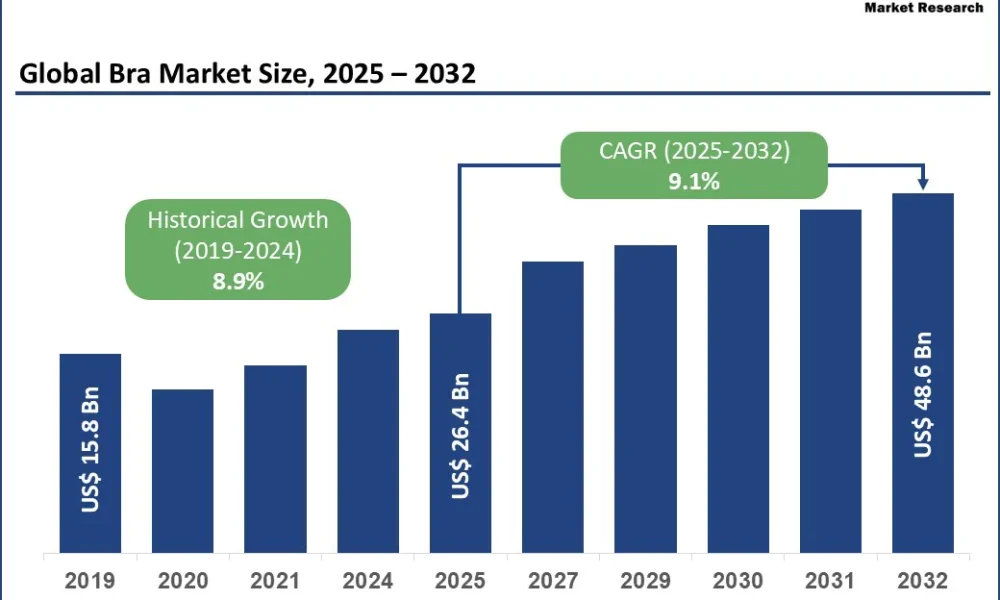
According to Persistence Market Research, the bra market size is likely to be valued at US$26.4 Bn in 2025 and is estimated to reach US$48.6 Bn in 2032, growing at a CAGR of 9.1% during the forecast period 2025 – 2032. Market growth is primarily driven by increasing demand for comfortable and functional innerwear, rising awareness about body inclusivity, and rapid product innovation. Sports bras are emerging as one of the leading product segments due to the growing popularity of fitness activities, while North America remains a leading geographical region due to strong consumer purchasing power and a well-developed fashion retail industry.
Download Your Free Sample & Explore Key Insights : https://www.persistencemarketresearch.com/samples/35604
Key Highlights from the Report
- The global bra market is projected to expand from US$26.4 Bn in 2025 to US$48.6 Bn by 2032.
• Increasing consumer preference for comfortable, wireless, and seamless bras is influencing product innovation.
• Rising demand for sports bras and athleisure apparel is supporting steady market growth.
• Expansion of online lingerie retail platforms is improving consumer accessibility to diverse bra styles.
• Growing awareness about body inclusivity and extended size ranges is encouraging brand differentiation.
• Technological advancements in fabric design and breathable materials are enhancing product comfort.
Market Segmentation
The bra market can be segmented based on product type, distribution channel, and consumer preference. Product categories include sports bras, push-up bras, T-shirt bras, strapless bras, and wireless bras. Among these, sports bras are gaining strong popularity as women increasingly adopt active lifestyles and fitness routines. The demand for wireless and seamless bras is also rising as consumers prioritize comfort for daily wear. Manufacturers are introducing innovative materials such as moisture-wicking fabrics, breathable cotton blends, and stretchable microfiber to improve support and comfort.
In terms of distribution channels, the bra market includes specialty lingerie stores, supermarkets, department stores, and online retail platforms. Specialty stores traditionally dominated the market due to personalized fitting services and wide product assortments. However, online retail is experiencing rapid growth as consumers appreciate the convenience of browsing multiple brands, comparing prices, and accessing size guides digitally. Digital-first lingerie brands are also leveraging social media marketing and influencer campaigns to attract younger consumers.
Customize This Report for Your Exact Requirements : https://www.persistencemarketresearch.com/request-customization/35604
Regional Insights
North America remains one of the leading markets for bras due to high consumer awareness, strong retail infrastructure, and the presence of established lingerie brands. Consumers in the United States and Canada prioritize comfort, premium fabrics, and inclusive sizing options. The region has also witnessed significant growth in sports bras due to rising participation in fitness activities and athleisure fashion trends. Additionally, the widespread adoption of online lingerie shopping has further accelerated market expansion.
Europe is another significant region for the bra market, supported by strong fashion awareness and demand for premium lingerie products. Countries such as the United Kingdom, France, Germany, and Italy have well-established fashion industries that promote innovative lingerie designs. Meanwhile, the Asia-Pacific region is emerging as a fast-growing market due to expanding urban populations, increasing disposable income, and growing awareness about personal apparel and comfort.
Market Drivers
One of the primary drivers of the bra market is the growing emphasis on comfort and functional design. Modern consumers prefer bras that provide adequate support without compromising comfort during long hours of wear. Wireless bras, seamless bras, and soft fabric designs have become highly popular due to their lightweight structure and flexibility. This shift in consumer preference has encouraged manufacturers to focus on ergonomic design and fabric innovation.
Another important driver is the rising popularity of sports bras and athleisure fashion. As more women participate in physical fitness activities such as yoga, gym workouts, and running, demand for supportive sports bras has increased significantly. These products offer comfort, flexibility, and moisture management, making them suitable for both exercise and casual wear. The blending of activewear with everyday fashion has further strengthened the demand for sports bras globally.
Market Restraints
Despite strong growth prospects, the bra market faces several challenges. One of the key restraints is the high competition among global and regional lingerie brands. Numerous companies compete for consumer attention through product innovation, pricing strategies, and marketing campaigns. This intense competition can limit profit margins and create challenges for smaller brands attempting to establish market presence.
Another restraint is the issue of improper sizing and consumer dissatisfaction. Many consumers struggle to find the correct bra size due to inconsistent sizing standards across brands. This can result in discomfort, product returns, and reduced customer satisfaction. Addressing this challenge requires brands to invest in better fitting technologies, improved size guides, and customer education initiatives.
Market Opportunities
The bra market presents strong opportunities through product innovation and inclusive design strategies. Consumers are increasingly seeking lingerie products that reflect body positivity and accommodate diverse body shapes. Expanding size ranges, offering customizable features, and designing bras for different body types can help brands capture a wider customer base.
Another major opportunity lies in sustainable and eco-friendly lingerie products. As environmental awareness grows, consumers are becoming more interested in bras made from organic cotton, recycled fabrics, and biodegradable materials. Companies that focus on sustainable manufacturing practices and transparent supply chains are likely to gain a competitive advantage in the global bra market.
Unlock Complete Insights – Buy the Full Report : https://www.persistencemarketresearch.com/checkout/35604
Company Insights
Key companies operating in the bra market include:
- Hanesbrands Inc.
- Victoria’s Secret & Co.
- Triumph International
- Wacoal
- PVH Corp.
- Chantelle
- L Brands
- Calvin Klein Underwear
- Savage X Fenty
- La Perla
- Maidenform
- Amante
- Zivame
- Others
Recent Developments
January 2024 – Victoria’s Secret introduced a new collection of wireless bras focused on improved comfort and inclusive sizing.
September 2023 – Wacoal Holdings Corp. expanded its premium bra product line with advanced breathable fabric technology.
Future Opportunities and Growth Prospects
The future of the bra market looks promising as consumer expectations continue to evolve toward comfort, innovation, and inclusivity. Brands are expected to invest heavily in advanced fabric technologies, ergonomic designs, and digital fitting solutions to enhance the consumer experience. The integration of technology into apparel design, such as smart fabrics and improved stretch materials, may further redefine the lingerie industry.
Moreover, the expansion of online retail channels and social media marketing will continue to shape purchasing behavior, particularly among younger consumers. Companies that focus on sustainability, inclusive sizing, and product customization will likely gain strong market traction. With increasing consumer demand and continuous product innovation, the global bra market is expected to maintain steady growth throughout the forecast period.




