
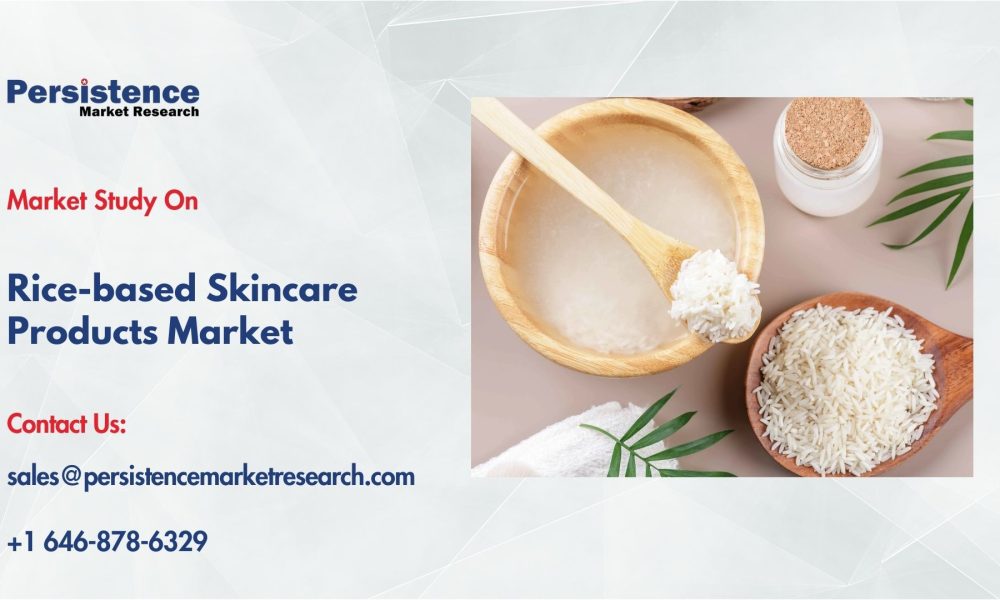
Overview of the Global Rice-Based Skincare Products Market
The global rice-based skincare products market size is anticipated to rise from US$ 7.5 billion in 2025 to US$ 15.2 billion by 2032, expanding at a CAGR of 8.1% during the forecast period. The growing consumer shift toward natural, plant-based, and sustainable skincare products is significantly driving demand. Rice extract, known for its brightening, soothing, and anti-aging properties, has gained recognition as an effective ingredient in cosmetics, fueling product innovation and wider adoption. Additionally, the rising awareness of clean-label beauty products free from harsh chemicals has strengthened the demand for rice-based formulations across both developed and emerging economies.
In terms of market leadership, facial care products dominate the segment, particularly rice-infused serums, cleansers, and face masks. These products have witnessed robust traction due to rising demand for anti-aging and skin-brightening solutions. Regionally, Asia Pacific leads the market, primarily driven by countries like Japan, South Korea, and China, where rice has been traditionally used in beauty rituals for centuries. The cultural acceptance, combined with a growing premium skincare industry and the global influence of K-beauty and J-beauty trends, positions Asia Pacific as the leading hub for rice-based skincare innovation and consumption.
Key Highlights from the Report
- The global rice-based skincare products market is projected to grow at an 8.1% CAGR between 2025 and 2032.
- Facial care products remain the leading product segment in terms of revenue contribution.
- Asia Pacific is the largest regional market, driven by traditional skincare practices and modern beauty trends.
- Rising demand for clean-label, chemical-free beauty products is fueling global adoption.
- Online retail channels are witnessing rapid growth as consumers shift to digital platforms for skincare purchases.
- Innovations in formulations, such as fermented rice water products, are driving premiumization in the segment.
Market Segmentation
The rice-based skincare products market is segmented by product type, end-user, and distribution channel. By product type, facial care products—including cleansers, toners, serums, and masks—account for the largest share, owing to consumer emphasis on skin tone correction and anti-aging benefits. Body care products, such as rice-infused lotions and scrubs, are also gaining traction as wellness and self-care routines expand globally.
By end-user, the market caters to both women and men, though women remain the primary consumer base. The rising popularity of men’s grooming and skincare products, however, is opening new growth avenues for manufacturers. In addition, rice-based products are increasingly used by sensitive-skin consumers due to their hypoallergenic and soothing properties.
Distribution channels play a crucial role, with online platforms growing at the fastest pace, fueled by e-commerce expansion and the influence of social media marketing. Offline retail, including specialty stores and supermarkets, continues to hold significant value, especially in emerging markets where consumer preference for in-person product trials remains high.
𝐆𝐞𝐭 𝐚 𝐒𝐚𝐦𝐩𝐥𝐞 𝐏𝐃𝐅 𝐁𝐫𝐨𝐜𝐡𝐮𝐫𝐞 𝐨𝐟 𝐭𝐡𝐞 𝐑𝐞𝐩𝐨𝐫𝐭 (𝐔𝐬𝐞 𝐂𝐨𝐫𝐩𝐨𝐫𝐚𝐭𝐞 𝐄𝐦𝐚𝐢𝐥 𝐈𝐃 𝐟𝐨𝐫 𝐚 𝐐𝐮𝐢𝐜𝐤 𝐑𝐞𝐬𝐩𝐨𝐧𝐬𝐞): https://www.persistencemarketresearch.com/samples/35367
Regional Insights
Asia Pacific dominates the rice-based skincare products market owing to the long-standing cultural use of rice water and rice extracts in skincare. Countries like Japan and South Korea, pioneers in beauty innovation, have popularized rice-based serums, lotions, and masks worldwide. The presence of established beauty brands, combined with consumer inclination toward herbal and natural remedies, continues to boost market share in this region.
In North America, the market is growing steadily due to rising consumer preference for clean, plant-based, and sustainable beauty products. The U.S. has become a hub for innovative indie brands launching rice-infused product lines. Meanwhile, Europe’s market is supported by the demand for premium natural cosmetics, particularly in France, Germany, and the U.K. Latin America and the Middle East & Africa are also witnessing increased adoption, driven by rising disposable incomes and the growing penetration of global beauty brands.
Market Drivers
The primary driver of the rice-based skincare products market is the rising demand for natural and chemical-free beauty products. Consumers are increasingly seeking formulations with fewer synthetic additives, and rice extract has gained popularity due to its proven benefits for skin hydration, brightening, and elasticity. Additionally, the influence of Asian beauty trends globally has elevated rice as a key skincare ingredient. Another important driver is the growing aging population worldwide, which has heightened the demand for anti-aging products. The rise of e-commerce and digital marketing strategies has also amplified awareness and accessibility, making rice-based skincare products more widely available to global consumers.
Market Restraints
Despite its growth potential, the market faces some restraints. One of the major challenges is intense competition from other natural ingredients such as aloe vera, green tea, turmeric, and hyaluronic acid, which also claim strong skincare benefits. Additionally, the high cost of premium rice-based formulations may limit accessibility for middle-income groups, particularly in developing regions. Regulatory hurdles in cosmetics, including stringent labeling and product safety requirements, can also slow market entry for smaller players. Furthermore, fluctuating raw material prices and supply chain disruptions may affect production costs and profitability for manufacturers.
Market Opportunities
Opportunities for market expansion are abundant. The premiumization of rice-based skincare, through innovations such as fermented rice water products and multifunctional serums, is a growing trend that appeals to affluent consumers. The men’s grooming sector presents another untapped opportunity, as rice-based formulations are increasingly being marketed as gentle and effective for men’s skincare routines. Additionally, the surge in eco-friendly and sustainable packaging is creating space for brands to differentiate themselves in the competitive beauty market. Emerging economies in Africa and Southeast Asia also offer potential growth avenues, where rising disposable incomes and awareness of natural skincare are shaping consumer preferences.
Reasons to Buy the Report
- Gain an in-depth understanding of the rice-based skincare products market, including size, growth, and dynamics.
- Identify key growth drivers, restraints, and opportunities influencing global demand.
- Access valuable insights on leading product segments and regional market performance.
- Explore competitive strategies and recent developments from top industry players.
- Make informed investment and business decisions backed by data-driven forecasts and analysis.
Frequently Asked Questions (FAQs)
How Big is the Rice-Based Skincare Products Market in 2025?
Who are the Key Players in the Global Market for Rice-Based Skincare Products?
What is the Projected Growth Rate of the Rice-Based Skincare Products Market?
What is the Market Forecast for Rice-Based Skincare Products by 2032?
Which Region is Estimated to Dominate the Rice-Based Skincare Products Industry?
Company Insights
- The Body Shop
• KOSÉ Corporation
• Innisfree Corporation
• Amorepacific Corporation
• Mamaearth
• Tatcha LLC
• The Face Shop
• Etude House
• Laneige
• Sulwhasoo
Recent Developments
- In 2024, Amorepacific launched a new line of fermented rice-based serums targeting global consumers looking for anti-aging benefits.
- In 2025, The Body Shop introduced an eco-friendly skincare range using rice extract with sustainable packaging, enhancing its clean beauty portfolio.
Conclusion
The rice-based skincare products market is poised for significant growth, supported by rising consumer demand for natural, sustainable, and effective beauty solutions. With the market expected to double in size by 2032, companies that innovate with premium formulations, sustainable practices, and inclusive product lines are likely to stay ahead. As Asia Pacific continues to lead, the global spread of clean-label beauty trends ensures that rice-based skincare will remain at the forefront of the natural cosmetics revolution.
Explore the Latest Trending Research Reports:




