
Overview
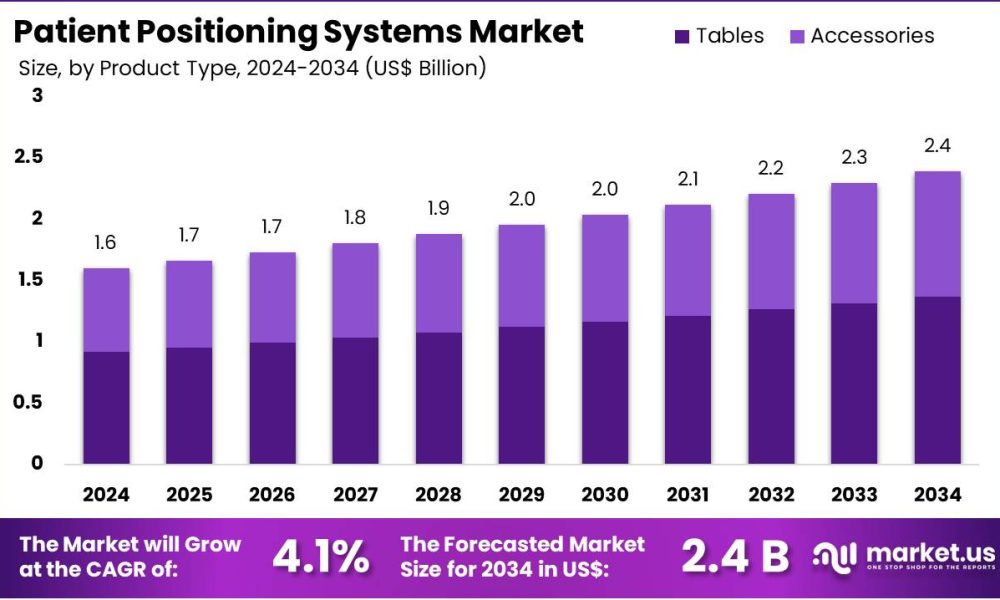
The global patient positioning systems market is projected to reach approximately US$ 2.4 billion by 2034, rising from US$ 1.6 billion in 2024. This growth reflects a compound annual growth rate (CAGR) of 4.1% during the forecast period from 2025 to 2034. The increasing demand for precision and safety in medical procedures is a primary driver of market expansion. As healthcare systems emphasize enhanced patient care and clinical outcomes, the use of reliable and efficient positioning systems has become more widespread. These systems are now critical components in various medical domains, including radiology, diagnostic imaging, and surgical procedures.
Patient positioning systems ensure accurate alignment of patients during procedures. They help reduce the risk of procedural errors and improve diagnostic imaging outcomes. These systems are also important for minimizing movement, which enhances the accuracy of radiological scans and surgical precision. As a result, their usage has become standard in both inpatient and outpatient settings. Healthcare professionals increasingly depend on these systems to improve procedural efficiency and patient safety. Moreover, they contribute to shorter procedure times, better resource utilization, and reduced stress for medical staff and patients alike.
Innovation is a key factor influencing the growth of this market. Modern positioning systems offer features like ergonomic design, durability, and compatibility with multiple imaging technologies. Manufacturers are focusing on enhancing the user-friendliness of their systems to support faster workflows and better patient outcomes. Integration with robotic surgical platforms and automated imaging tools further strengthens their clinical value. As hospitals continue to upgrade their equipment, investment in advanced positioning solutions remains a priority. These systems are also becoming more adaptable to patient needs, contributing to higher patient satisfaction and clinical effectiveness.
In February 2023, GMG Medical Equipment introduced commercial-grade medical beds tailored for outpatient care, reflecting the broader market trend toward home-based recovery solutions. These specialized beds help patients transition from hospital to home with minimal disruption. They also support better positioning during treatments conducted in outpatient environments. This development underscores the growing demand for advanced patient positioning systems beyond traditional hospital settings. With rising outpatient procedures and aging populations, the market is expected to benefit from increased adoption of versatile and efficient patient support solutions across the care continuum.
Key Takeaways
- In 2024, the global Patient Positioning Systems market generated US$ 1.6 billion, and is projected to reach US$ 2.4 billion by 2034.
- The market is expanding at a compound annual growth rate (CAGR) of 4.1% throughout the 2025 to 2034 forecast period.
- By product type, patient positioning tables dominated in 2024, accounting for approximately 57.4% of the total market share.
- Surgical applications led the market, holding a 63.5% share in 2024 due to the high demand for precision during operative procedures.
- Hospitals emerged as the leading end users, capturing 59.8% of market revenue due to high surgical volumes and infrastructure investment.
- North America was the top-performing region in 2024, securing a 39.6% market share driven by advanced healthcare facilities and high surgical rates.
Regional Analysis
North America led the Patient Positioning Systems Market in 2024, capturing the largest revenue share of 39.6%. The region’s growth can be attributed to increasing surgical volumes, rapid adoption of imaging technologies, and a strong focus on precision in radiation therapy. According to the Centers for Disease Control and Prevention (CDC), surgical hospital admissions rose by 6.2% in 2023 over the previous year. Simultaneously, the American Cancer Society noted 1.9 million new cancer cases in the U.S. in 2023, underscoring the need for accurate patient alignment in radiotherapy. The growing prevalence of complex surgeries further strengthened the market, requiring reliable positioning systems to ensure better surgical outcomes.
In 2023, regulatory and technological developments accelerated the adoption of advanced patient positioning technologies across North America. The U.S. Food and Drug Administration (FDA) approved 12 new imaging and surgical navigation systems, facilitating market entry for innovative solutions. Hospitals increased their investments in robotic-assisted surgeries, with Intuitive Surgical reporting a 22% increase in da Vinci system installations. These systems rely heavily on accurate patient positioning for optimal surgical efficiency. Moreover, government initiatives such as the Medicare expansion for outpatient procedures boosted the accessibility of high-end surgical and diagnostic technologies.
Asia Pacific is projected to experience the highest compound annual growth rate (CAGR) during the forecast period. Factors such as rising healthcare investments and increasing cancer prevalence are major growth drivers. The World Health Organization (WHO) reported 9.8 million cancer cases in the region in 2023, up from 9.2 million in 2022. China and India allocated US$32 billion and US$8.5 billion, respectively, for hospital infrastructure upgrades, as per national health ministries. In Japan, diagnostic imaging equipment sales rose by 15% year-over-year, as reported by JIRA. Additionally, India’s Ayushman Bharat scheme added 1,500 new hospitals, and medical tourism growth in Thailand and Singapore is fostering demand for advanced patient positioning systems.
Segmentation Analysis
In 2024, the tables segment led the patient positioning systems market, accounting for 57.4% of the total share. This dominance can be attributed to the increasing demand for advanced surgical tables. These tables play a critical role in achieving precise patient positioning during complex surgical procedures. Features such as motorized adjustment, ergonomic designs, and enhanced mobility have improved their clinical utility. Hospitals and surgical centers are heavily investing in innovative positioning tables to enhance patient safety and surgical accuracy. As the number of surgeries continues to rise globally, the need for reliable and flexible positioning equipment is growing, positioning the tables segment as a primary growth driver in this market.
The surgery segment represented the largest share by application, contributing 63.5% to the overall patient positioning systems market in 2024. This can be linked to the rising volume of surgical procedures performed worldwide, driven by aging populations and advances in surgical techniques. Accurate patient positioning is essential for reducing complications and improving surgical outcomes. The integration of these systems with modern operating room technologies, such as robotics and image guidance, is further accelerating their adoption. As minimally invasive surgeries become more common, the demand for precise and responsive positioning systems is expected to continue increasing steadily.
Hospitals emerged as the leading end-user segment, securing a 59.8% revenue share in 2024. Their dominance stems from being the primary hubs for various surgeries, especially in orthopedics, neurology, and cardiovascular fields. With the growing complexity of surgical procedures, hospitals are prioritizing investments in high-precision patient positioning systems. These systems enhance patient safety, support minimally invasive techniques, and streamline surgical workflows. The rise in robotic-assisted surgeries has further intensified the need for systems that offer precise alignment. As healthcare providers aim to improve surgical outcomes and reduce operational risks, hospitals will remain key consumers of these technologies, supporting sustained market growth.
By Product Type
- Tables
- Surgical Tables
- Examination Tables
- Radiolucent Imaging Tables
- Accessories
By Application
- Surgery
- Diagnostics
- Others
By End-user
- Hospitals
- Ambulatory centers
- Others
Get Sample: https://market.us/report/patient-positioning-systems-market/request-sample/
Key Players Analysis
Key players in the patient positioning systems market are prioritizing technological innovation, expanding their product portfolios, and increasing market reach to accelerate growth. These companies are actively developing ergonomic and high-precision positioning systems that improve patient comfort and surgical accuracy. Integration with other healthcare technologies, such as advanced imaging systems and surgical robotics, is also gaining momentum. This approach enhances workflow efficiency and clinical outcomes. Many players form strategic alliances with hospitals and medical device manufacturers to increase product adoption. Additionally, there is a focused effort on penetrating emerging markets, where investments in healthcare infrastructure are rising. Such strategies help companies build a broader customer base and improve global competitiveness.
IMRIS, based in Winnipeg, Canada, stands out as a global leader in patient positioning and intraoperative imaging systems. The company offers advanced surgical tables and positioning solutions that aim to improve accuracy and ensure patient safety during complex procedures. IMRIS emphasizes integration with technologies like MRI and CT scanners, allowing for real-time imaging during surgeries. This integration enhances clinical precision and supports better decision-making in the operating room. Through continuous research and development, and close collaboration with healthcare institutions, IMRIS is expanding its global presence and maintaining its competitive edge in the market.
Leading Key Players in the Patient Positioning Systems Market
- Stryker Corporation
- STERIS plc
- Smith & Nephew
- Mizuho OSI
- Medtronic
- Medline Industries
- LEONI AG
- FluidAI Medical
Conclusion
In conclusion, the patient positioning systems market is growing steadily due to the rising demand for precision, safety, and better patient outcomes in medical procedures. These systems are widely used across surgeries, diagnostics, and radiology to improve accuracy and reduce complications. Hospitals and outpatient centers are increasingly adopting advanced positioning solutions to support modern surgical technologies like robotics and real-time imaging. Innovation in product design and strong investment in healthcare infrastructure, especially in emerging regions, continue to boost market expansion. As healthcare providers prioritize efficient workflows and patient comfort, the need for reliable and adaptable positioning systems will remain strong across the global care continuum.
Get in Touch with Us:
Market.us (Powered By Prudour Pvt. Ltd.)
Address: 420 Lexington Avenue, Suite 300, New York City, NY 10170, United States
Send Email: [email protected]



