
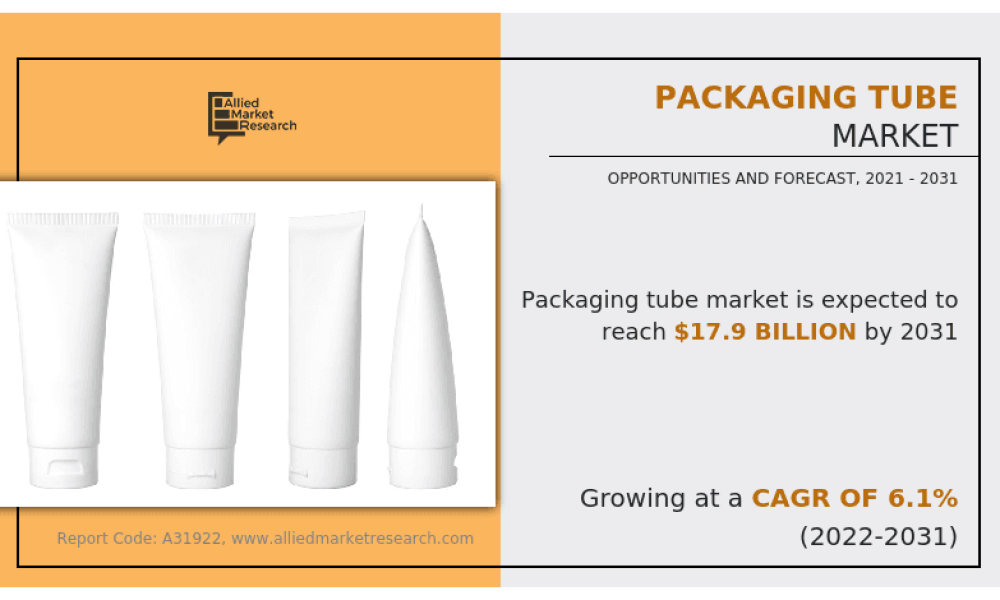
Global Packaging Tube Market: Projected Growth from $9.8 Billion in 2021 to $17.9 Billion by 2031
The global packaging tube market, valued at $9.8 billion in 2021, is expected to reach $17.9 billion by 2031, growing at a compound annual growth rate (CAGR) of 6.1% from 2022 to 2031. Packaging tubes, also known as collapsible or squeeze tubes, are cylindrical containers made from materials such as plastic, aluminum, or cardboard, designed to hold viscous substances like toothpaste, ointments, adhesives, and paints. The market is driven by rising demand from industries such as cosmetics, personal care, healthcare, and food, fueled by evolving consumer preferences and increasing awareness of health and wellness. However, challenges such as raw material price volatility and environmental concerns surrounding plastic use pose hurdles to growth.
𝐃𝐨𝐰𝐧𝐥𝐨𝐚𝐝 𝐏𝐃𝐅 𝐒𝐚𝐦𝐩𝐥𝐞 𝐂𝐨𝐩𝐲@ https://www.alliedmarketresearch.com/request-sample/A31922
Role of Packaging Tubes in Modern Industries
Packaging tubes are essential for delivering viscous products efficiently and hygienically. Their collapsible design allows precise dispensing, making them ideal for applications in personal care (e.g., creams, gels), pharmaceuticals (e.g., ointments), food (e.g., condiments), and industrial products (e.g., sealants). Tubes are typically made from plastic (polyethylene, polypropylene), aluminum, or laminates, offering durability, flexibility, and protection against contamination. Their lightweight and portable nature enhances consumer convenience, while their ability to be sealed ensures product longevity.
The packaging tube market is closely tied to consumer trends, particularly in the personal care and cosmetics sectors, where demand for premium and organic products is rising. As consumers prioritize health, hygiene, and sustainability, manufacturers are adapting by developing innovative, eco-friendly tube solutions.
Market Dynamics
Key Drivers
The primary driver of the packaging tube market is the growing demand from the cosmetics and personal care industries. Rising consumer awareness of personal health and wellness has fueled the consumption of skincare, haircare, and oral care products, many of which are packaged in tubes for ease of use. In the United States, a key market for beauty and personal care, increasing purchasing power and a shift toward organic products are driving demand for tube packaging. Organic products, often sold in smaller quantities at premium prices, benefit from tubes’ precise dispensing capabilities.
Urbanization and rising disposable incomes in developing economies, particularly in Asia-Pacific, are also boosting demand. The food and pharmaceutical sectors are contributing to market growth, with tubes being used for products like sauces, medicinal creams, and gels. Additionally, the versatility of packaging tubes, available in squeeze-and-collapsible or twist formats, makes them suitable for a wide range of applications, further driving market expansion.
Challenges
The packaging tube market faces challenges related to raw material price volatility. Plastics like polyethylene and polypropylene, which dominate the market, are subject to fluctuating crude oil prices, impacting production costs. Aluminum and laminate prices are similarly unpredictable, posing difficulties for manufacturers in maintaining profitability.
Environmental concerns and stringent regulations on plastic use and disposal are significant restraints. Growing awareness of plastic pollution has led to restrictions on single-use plastics in many regions, pushing manufacturers to explore sustainable alternatives. The COVID-19 pandemic also disrupted the market, as lockdowns halted manufacturing, construction, and transportation activities in 2020. Supply chain disruptions reduced the production and demand for packaging tubes, particularly in industries like cosmetics and food. However, as industries resumed operations by the end of 2021, the market began to recover, with manufacturers adapting to new safety and operational protocols.
𝐄𝐧𝐪𝐮𝐢𝐫𝐞 𝐁𝐞𝐟𝐨𝐫𝐞 𝐁𝐮𝐲𝐢𝐧𝐠@ https://www.alliedmarketresearch.com/purchase-enquiry/A31922
Opportunities
The shift toward sustainable materials presents significant opportunities for the packaging tube market. Bioplastics, such as polylactic acid (PLA) derived from renewable sources like corn starch and sugarcane, are gaining traction due to their biodegradability, recyclability, and non-toxicity. Aluminum tubes, which are recyclable and offer a premium aesthetic, are also seeing increased demand. Innovations in eco-friendly materials and designs, such as lightweight and recyclable tubes, are expected to drive growth during the forecast period. Additionally, advancements in manufacturing technologies, such as improved printing and sealing techniques, are enhancing the functionality and appeal of packaging tubes.
Market Segmentation
The packaging tube market is segmented by product type, material, application, and region, providing a comprehensive view of its growth dynamics.
By Product Type
The market is divided into squeeze-and-collapsible and twist tubes. In 2021, the squeeze-and-collapsible segment dominated in terms of revenue due to its widespread use in personal care, food, and pharmaceutical products. However, the twist segment is expected to grow at the highest CAGR, driven by its increasing adoption in premium cosmetics and specialized applications requiring controlled dispensing.
By Material
The market is categorized into plastic and aluminum. In 2021, plastic tubes led the market due to their cost-effectiveness, flexibility, and versatility. However, the aluminum segment is anticipated to register the highest CAGR, fueled by demand for recyclable and premium packaging solutions in cosmetics and pharmaceuticals.
By Application
The market is segmented into food and beverage, personal and oral care, pharmaceutical, and cleaning products. In 2021, the personal and oral care segment accounted for the largest revenue share, driven by rising demand for skincare and oral hygiene products. The pharmaceutical segment is projected to exhibit the highest CAGR, supported by increasing use of tubes for medicinal creams, gels, and ointments.
By Region
Regionally, the market is analyzed across North America, Europe, Asia-Pacific, and LAMEA. Asia-Pacific garnered the highest revenue in 2021 and is expected to register the highest CAGR during the forecast period. This is attributed to rapid urbanization, rising disposable incomes, and growing demand for personal care and food products in countries like China, India, and South Korea. North America, particularly the U.S., remains a significant market due to strong consumer spending on beauty and personal care products. Europe is driven by demand for sustainable packaging, while LAMEA is emerging as a growth region due to increasing industrial and consumer demand.
Competitive Landscape
The packaging tube market is competitive, with key players focusing on innovation, acquisitions, and partnerships to strengthen their market presence. Major companies include Albea S.A., Amcor Limited, Essel Propack Limited, Sonoco Products Company, World Wide Packaging Inc., Montebello Packaging Inc., VisiPak, Inc., Intrapac International Corporation, CCL Industries Inc., and Hoffman Neopack AG. These companies are investing in sustainable materials, advanced manufacturing processes, and customized tube designs to meet evolving consumer needs. Strategic expansions into high-growth regions like Asia-Pacific are also common to capture market share.
𝐔𝐩𝐝𝐚𝐭𝐞 𝐎𝐧 𝐃𝐞𝐦𝐚𝐧𝐝@ https://www.alliedmarketresearch.com/request-for-customization/A31922
Key Benefits for Stakeholders
This analysis of the packaging tube market provides valuable insights for stakeholders, including:
- Quantitative Analysis: Detailed market size, growth projections, and segment-wise trends from 2021 to 2031.
- Market Drivers and Opportunities: Identification of key growth factors and emerging opportunities, such as bioplastics and sustainable packaging.
- Competitive Insights: Analysis of key players’ strategies and market positioning for benchmarking.
- Regional Opportunities: Mapping of high-growth regions and countries to guide investment decisions.
- Porter’s Five Forces Analysis: Evaluation of buyer and supplier dynamics to support strategic decision-making.
The global packaging tube market is poised for steady growth, driven by rising demand from personal care, pharmaceutical, and food industries. With a projected market size of $17.9 billion by 2031, the industry is benefiting from consumer trends toward health, wellness, and sustainability. While challenges like raw material price volatility and plastic regulations persist, the shift toward bioplastics and aluminum tubes presents significant opportunities. The dominance of Asia-Pacific, the personal care segment, and plastic tubes underscores the market’s growth potential. Stakeholders can leverage these insights to invest in innovative, eco-friendly solutions and capitalize on the evolving demands of the packaging tube market.




