
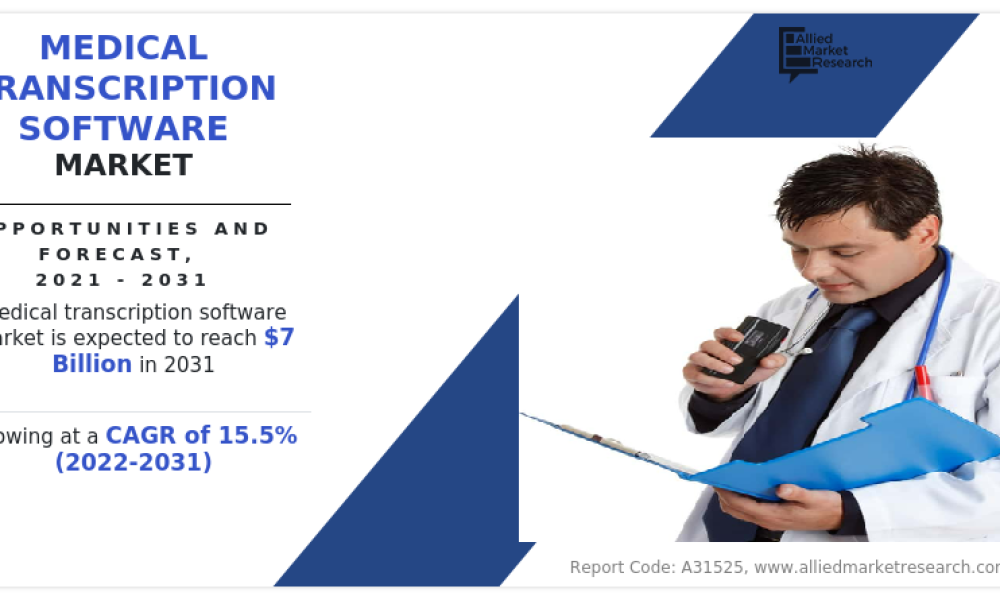
The global healthcare industry is experiencing a digital transformation, and medical transcription software is at the forefront of this evolution. According to market research, the global medical transcription software market was valued at $1.6 billion in 2021 and is projected to reach $7 billion by 2031, expanding at an impressive CAGR of 15.5% from 2022 to 2031. This remarkable growth trajectory underscores the increasing importance of accurate and efficient clinical documentation in delivering quality patient care.
Understanding Medical Transcription Software
Medical transcription involves converting voice-recorded reports dictated by healthcare professionals into written text format. Medical transcriptionists—or increasingly, artificial intelligence-driven transcription software—process these recordings, which may include patient histories, operative reports, consultation notes, discharge summaries, and more. These services are critical for maintaining comprehensive patient records, supporting clinical decision-making, and meeting regulatory compliance standards.
Key Functions of Medical Transcription Software:
Transcribes physician dictations into structured text.
Ensures accuracy in medical terminology.
Integrates with electronic health records (EHR) for seamless data storage.
Provides secure, HIPAA-compliant data handling.
Supports multiple input formats including voice files, phone recordings, and smartphone apps.
Market Drivers Powering Growth
The growing demand for medical transcription software is being driven by multiple factors that align with the broader goals of healthcare modernization and patient-centered care.
Major Growth Drivers:
Rising Awareness of Clinical Documentation: Accurate documentation is crucial for quality care, clinical research, and legal compliance.
Expansion of the e-Health Industry: The rapid development of telehealth, remote monitoring, and digital healthcare platforms fuels demand for transcription services.
Increased Healthcare Expenditure: Governments and private healthcare providers are investing heavily in digital health technologies.
Growing Geriatric Population: Older patients often require complex care management, increasing documentation needs.
Advancements in Speech Recognition: Improved AI-driven transcription solutions reduce errors and turnaround times.
Surge in Chronic Disease Cases: The growing burden of chronic diseases leads to more frequent doctor visits and more documentation.
COVID-19 Impact: A Catalyst for Digital Documentation
While the COVID-19 pandemic disrupted many sectors, it actually accelerated growth in the medical transcription software market. The influx of COVID-19 patients and the urgent need for accurate clinical documentation increased reliance on digital transcription tools. Moreover, the shift to telemedicine created new avenues for transcription software adoption.
COVID-19 Impact Highlights:
Surge in digital documentation needs due to rising patient volumes.
Increased adoption of telehealth platforms that integrate transcription tools.
Product launches like ZyDoc’s free COVID-19 EHR services and Nuance’s Dragon Ambient eXperience (DAX) specifically targeted pandemic-related healthcare challenges.
Market Segmentation Analysis
The medical transcription software market is segmented by deployment, type, end-user facility, and region, each contributing uniquely to the overall growth picture.
1. By Deployment
Cloud-Based Solutions: Dominated the market in 2021, and are expected to maintain this lead due to:
Scalability and easy accessibility.
Cost-effective pricing models.
Continuous software updates and security improvements.
On-Premises Solutions: Still used in some institutions concerned about data privacy and control but are witnessing slower growth.
2. By Type
Voice Recognition: Holds the largest market share and is expected to continue dominating due to:
Higher transcription accuracy.
Reduced operational costs.
Faster turnaround time.
Increasing integration with AI-powered natural language processing (NLP).
Voice Capture: Still relevant but gradually being overshadowed by the superior benefits of voice recognition technology.
3. By End-User Facility
Hospitals and Clinics (Public & Private): Account for the largest share due to the higher volume of patient interactions requiring documentation.
Diagnostic Centers: Rising usage for diagnostic reporting and radiology transcriptions.
Others (Ambulatory Surgical Centers, Healthcare Systems): Gaining traction due to flexible deployment models and cost savings.
Regional Insights: North America Leads, Asia-Pacific Accelerates
North America: The Global Leader
North America holds the largest share of the global medical transcription software market. Several factors contribute to its dominance:
Presence of leading market players.
Rapid adoption of advanced healthcare IT systems.
High healthcare spending and insurance coverage.
Growing geriatric population driving higher healthcare utilization.
Asia-Pacific: The Fastest Growing Region
Asia-Pacific is poised to witness the fastest growth rate during the forecast period due to:
Expanding healthcare infrastructure.
Rising disposable incomes.
Government initiatives to promote digital healthcare.
Growing presence of local and international transcription service providers.
Key Growth Factors in Asia-Pacific:
Increasing population demanding more healthcare services.
Government policies encouraging healthcare digitization.
Rapid technological adoption across emerging economies.
Key Players Shaping the Market Landscape
The global medical transcription software market is highly competitive, with both established giants and emerging startups contributing to innovation. Some of the leading market players include:
3M
Dolbey System, Inc.
Global Medical Transcription
DeepScribe, Inc.
Microsoft Corporation (Nuance Communications, Inc.)
Amazon, Inc. (Amazon Web Services, Inc.)
ZyDoc Medical Transcription
SmartMD
AQuity Solutions
iMedX
These companies are investing heavily in AI-powered solutions, cloud infrastructure, and data security to enhance their product offerings and maintain a competitive edge.
Challenges and Opportunities
Despite its promising outlook, the medical transcription software market faces certain challenges:
Challenges:
Limited adoption in underdeveloped regions.
Concerns regarding data privacy and cybersecurity.
High initial implementation costs for smaller healthcare facilities.
Opportunities:
Emerging markets offer substantial growth potential.
Integration with AI and machine learning to improve transcription accuracy.
Expansion of telemedicine and remote patient monitoring solutions.
Future Outlook: Digital Documentation as the New Standard
The global medical transcription software market is entering a phase of rapid innovation and widespread adoption. With the continuous advancement of artificial intelligence, speech recognition, and cloud computing, medical transcription will become more efficient, accurate, and accessible across the globe. As healthcare providers seek to improve patient outcomes while reducing administrative burdens, the demand for intelligent transcription solutions will only accelerate in the years ahead.




