
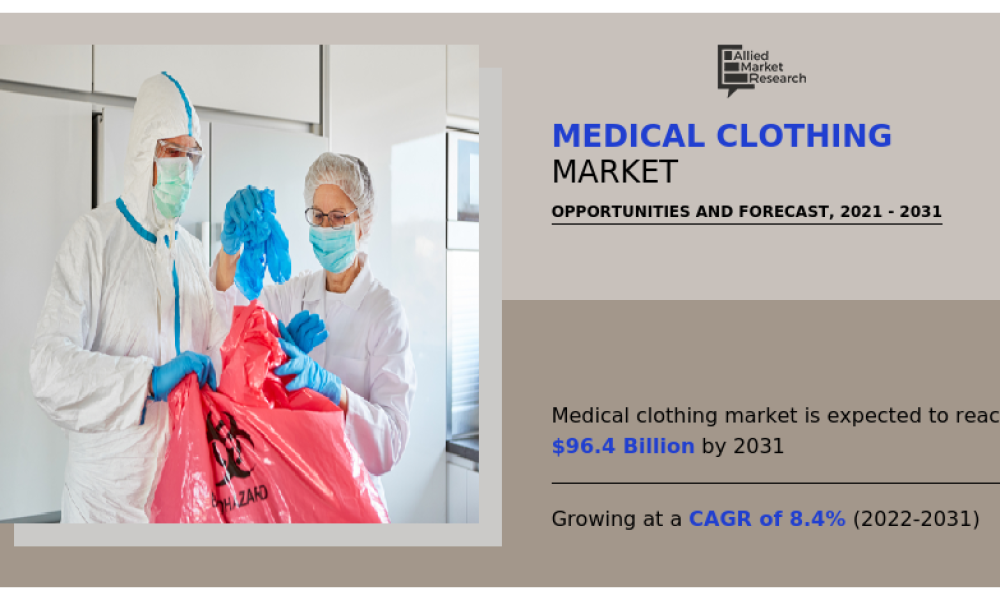
The global medical clothing market has witnessed significant growth in recent years and is projected to continue its upward trajectory. Valued at $42.4 billion in 2021, the market is expected to reach $96.4 billion by 2031, growing at a robust CAGR of 8.4% from 2022 to 2031. This expansion is driven by various factors including a surge in road accidents, a rise in chronic disease prevalence, growing surgical procedures, and heightened awareness of hospital-acquired infections.
Market Drivers and Key Dynamics
Medical clothing plays a crucial role in protecting healthcare professionals and patients from infections and contaminants. The demand for protective garments such as surgical drapes, gowns, gloves, and facial protection has grown due to increasing health threats and a strong emphasis on hygiene.
1. Rise in Road Accidents and Surgical Procedures
The frequency of road accidents has led to a higher number of emergency surgeries and hospitalizations. For instance, according to the U.S. National Highway Traffic Safety Administration (NHTSA), 38,680 fatalities were reported in motor vehicle crashes in 2020 alone. This surge in emergencies fuels the need for sterile medical clothing across trauma centers and emergency rooms.
2. Chronic Disease Burden and Geriatric Population
The aging global population is another significant factor. According to Eurostat, over 20.8% of the EU’s population was aged 65 and above in 2021. Elderly individuals are more prone to chronic diseases such as diabetes, cancer, and cardiovascular conditions, often requiring prolonged hospital stays. This, in turn, increases the need for clean, infection-resistant clothing for both patients and healthcare workers.
3. Hospital-Acquired Infections (HAIs)
Growing concerns over hospital-acquired infections are propelling the market forward. A CDC study highlighted a rise in HAIs during 2020, largely influenced by the COVID-19 pandemic. Medical clothing, especially disposable variants, offers a critical line of defense against such infections.
4. COVID-19 Pandemic Impact
The pandemic significantly heightened the demand for medical clothing, particularly facial protection like masks and face shields. Hospitals, isolation wards, and clinics across the globe ramped up procurement to handle the surge in cases. Additionally, heightened public awareness of personal protection and hygiene continues to drive demand in the post-pandemic era.
Market Segmentation Overview
The medical clothing market is segmented based on product, usage, end user, and region. Each segment plays a distinct role in the overall market development.
Product Segment
Surgical Drapes: Representing the largest share in 2021, these products are essential in operation theaters to maintain sterile environments. Subdivided into reusable and disposable, they are widely adopted across hospitals and clinics.
Facial Protection: This segment is anticipated to grow substantially, thanks to increased awareness about airborne diseases such as COVID-19 and tuberculosis.
Usage Segment
Patients: This group dominated the market in 2021, mainly due to the rise in chronic illnesses and the aging population. As more patients undergo surgeries or long-term treatments, demand for clean and protective clothing continues to grow.
Healthcare Workers: This segment is expected to rise sharply, driven by the increase in healthcare staff and growing government spending on protective gear to ensure the safety of front-line workers.
End User Segment
Hospitals: Holding the majority market share in 2021, hospitals remain the largest consumers of medical clothing. The surge in hospital numbers and ongoing upgrades to hospital infrastructure support this trend.
Ambulatory Surgical Centers (ASCs): ASCs are witnessing growing popularity due to their cost-effective and efficient services. Their expansion is contributing to increased consumption of medical clothing in outpatient settings.
Regional Insights
North America
The region led the global market in 2021 and is expected to maintain its dominance during the forecast period. Factors such as advanced healthcare infrastructure, high healthcare spending, and the presence of industry leaders like 3M and Cardinal Health contribute to this growth.
Asia-Pacific
Expected to show the fastest growth, Asia-Pacific is rapidly catching up due to improvements in healthcare facilities, government initiatives, and a massive patient base. Countries like China and India are particularly key markets, fueled by increasing cases of infectious diseases and a growing middle-class population seeking better healthcare.
Key Players and Industry Trends
Major companies driving innovation and growth in the medical clothing market include:
3M
Medline Industries, Inc.
Cardinal Health
BARCO UNIFORMS
CHEROKEE UNIFORMS
Landau Uniforms
Smith+Nephew
Narang Medical Limited
Vestex Protects
Carhartt, Inc.
These firms are actively investing in R&D, launching new products, and forming strategic partnerships to expand their global footprint. For instance, advancements in fabric technology are leading to the development of antimicrobial and fluid-resistant clothing, increasing product efficiency and appeal.
Future Outlook
The global medical clothing market is set to experience sustained growth due to a blend of rising healthcare awareness, technological advancements, and public and private investments in healthcare infrastructure. Increased focus on infection control, home-based care, and outpatient procedures will further amplify demand. With changing healthcare dynamics and evolving patient needs, medical clothing is becoming not just a requirement but a vital component of modern healthcare.




