
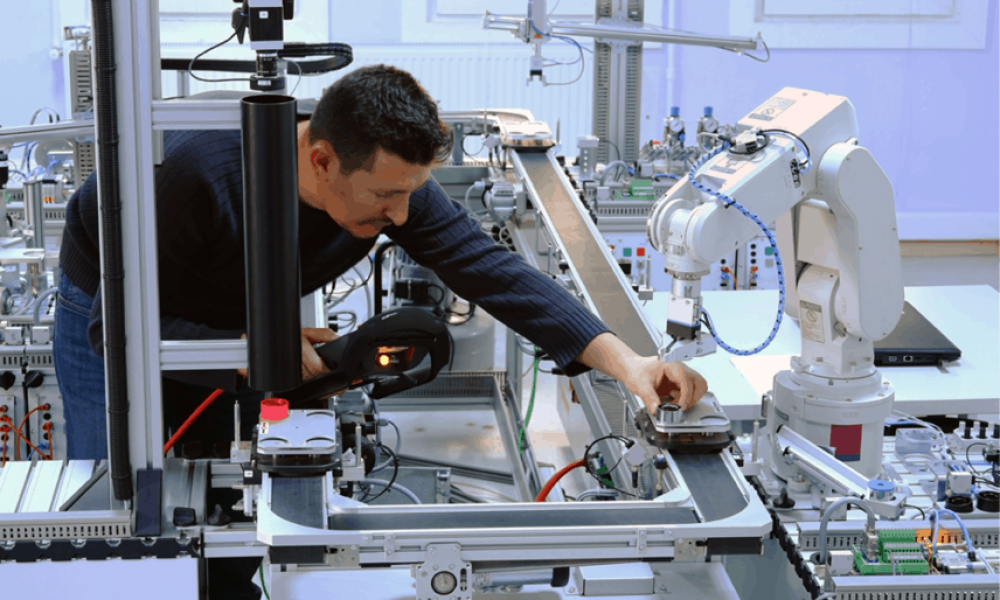
The global medical automation market is witnessing rapid expansion, driven by technological innovations and the increasing demand for efficient healthcare solutions. Medical automation refers to the integration of advanced technologies, including robotics, artificial intelligence (AI), and automated machinery, into healthcare operations to enhance precision, optimize workflow, and reduce human error. This spans applications such as automated diagnostic systems, robotic-assisted surgeries, medication dispensing solutions, laboratory automation, and data management platforms. By leveraging these sophisticated systems, healthcare providers can improve patient outcomes while streamlining operational processes and reducing costs.
In 2023, the global medical automation market was valued at US$48.7 billion, and it is projected to reach US$84 billion by 2030, growing at a CAGR of 8.1%. This surge reflects the convergence of multiple growth drivers, including the rising prevalence of chronic diseases, increasing adoption of telehealth solutions, and the escalating demand for precision and accuracy in medical procedures. Among various segments, hospital and diagnostic centers dominate due to their extensive reliance on automation to improve operational efficiency and patient care. Geographically, North America leads the market, attributed to its robust healthcare infrastructure, high healthcare expenditure, and substantial investments in research and development, making it an ideal hub for advanced medical automation adoption.
Download Your Free Sample & Explore Key Insights: https://www.persistencemarketresearch.com/samples/33959
Key Highlights from the Report
• The global medical automation market is projected to reach US$84 billion by 2030.
• North America currently dominates the market due to high adoption of advanced healthcare technologies.
• Hospital and diagnostic centers remain the leading end-user segment in medical automation.
• The integration of AI and robotics is driving precision and efficiency in healthcare delivery.
• Telehealth and remote patient monitoring present significant growth opportunities.
• High initial costs and complex regulatory requirements remain the primary market restraints.
Market Segmentation
The medical automation market is segmented based on application, end-user, and region. By application, the market includes imaging, therapeutic solutions, laboratory and pharmacy automation, medical software, informatics, and logistics. Imaging and diagnostic automation lead due to the critical role of precise diagnostics in patient care, while laboratory and pharmacy automation are rapidly growing as they reduce errors in medication dispensing and sample handling.
By end-user, hospitals and diagnostic centers account for the largest share of the market, driven by their high patient throughput and need for operational efficiency. Research laboratories and institutes are increasingly adopting automation to enhance accuracy and throughput in experiments, while pharmacies are embracing automated dispensing and workflow solutions to reduce medication errors and improve inventory management. The “others” category includes outpatient clinics and specialty care centers, which are gradually integrating automation into specific workflows.
By region, the market is analyzed across North America, Europe, East Asia, South Asia & Oceania, Latin America, and the Middle East & Africa. Each region is witnessing varying adoption rates influenced by infrastructure, investment capabilities, regulatory frameworks, and technological advancements.
Regional Insights
North America remains the largest market for medical automation due to its advanced healthcare infrastructure, proactive regulatory environment, and extensive investments in R&D. The United States, in particular, has widely implemented robotic-assisted surgical systems and sophisticated imaging technologies, positioning it as a hub for medical automation innovation.
Europe also demonstrates significant adoption, driven by countries such as Germany and France, where hospitals utilize advanced diagnostic and therapeutic automation technologies. The region’s strong focus on precision medicine and regulatory support for innovative healthcare technologies bolster growth.
In East Asia, countries like Japan and China are witnessing increased adoption of robotic surgeries and automated laboratory systems, fueled by technological advancements and government-backed healthcare modernization initiatives. South Asia & Oceania are emerging markets, with rapid population growth, rising chronic disease prevalence, and increasing healthcare investments driving adoption. Latin America and the Middle East & Africa are gradually expanding their automation footprint, although limited healthcare budgets and regulatory complexities pose challenges in these regions.
Get Custom Insights Designed for Your Business: https://www.persistencemarketresearch.com/request-customization/33959
Market Drivers
A primary driver of the medical automation market is the escalating demand for accuracy and precision in healthcare procedures. Modern medical procedures are highly complex, and even minor errors can have significant consequences. Automation minimizes human error in surgeries, diagnostics, and medication dispensing, ensuring consistent and reliable outcomes. Robotic-assisted surgeries, for instance, reduce invasiveness and facilitate faster patient recovery, while AI-driven diagnostic systems analyze vast datasets to provide precise recommendations. Automated pharmacy solutions further reduce the risk of medication errors by ensuring accurate dosage and timely delivery.
Additionally, the growing need for operational efficiency in healthcare institutions is fueling the adoption of medical automation. Hospitals face increasing pressure to manage costs, optimize workforce utilization, and maintain high-quality patient care. Automated solutions streamline workflows, enhance patient throughput, and enable healthcare providers to focus more on patient-centric care. Telehealth integration with automation technologies also facilitates real-time patient monitoring and remote consultations, expanding access to quality healthcare across geographies.
Market Restraints
The medical automation market faces challenges related to high initial investment costs and complex regulatory frameworks. Implementing advanced automation systems, such as robotic surgical platforms and AI-powered diagnostic tools, requires significant capital expenditure for technology acquisition, infrastructure development, and staff training. These costs can be prohibitive for smaller healthcare facilities and developing regions, limiting widespread adoption.
Regulatory complexity further restrains market growth. Different regions have stringent and evolving healthcare regulations regarding safety, efficacy, and data privacy. Companies must navigate jurisdiction-specific requirements, which can slow innovation and delay the deployment of automated solutions. The diversity of technologies—from AI-driven diagnostics to robotic interventions—adds layers of compliance challenges, requiring manufacturers to invest substantial time and resources to meet regulatory standards.
Market Opportunities
The rise of telehealth and remote patient monitoring solutions represents a significant growth opportunity for the medical automation market. Automated systems integrated into telemedicine platforms enable healthcare providers to track patient vitals, chronic conditions, and other health parameters remotely and in real time. This reduces the need for frequent in-person consultations, particularly for patients with chronic diseases, while ensuring timely interventions.
Integration of AI into remote patient monitoring further enhances predictive capabilities, allowing healthcare providers to forecast potential health complications and tailor interventions. Connected devices, sensors, and automated analytics empower patients to actively manage their health, improving engagement and outcomes. Additionally, the expansion of healthcare infrastructure in emerging markets creates opportunities to deploy cost-effective automation solutions that address service quality, accessibility, and affordability.
Checkout Now & Download Complete Market Report: https://www.persistencemarketresearch.com/checkout/33959
Company Insights
The global medical automation market is dominated by several key players who lead innovation, technological expertise, and market penetration. Prominent companies include:
• Siemens Healthineers – Leader in diagnostic imaging and laboratory automation solutions.
• Intuitive Surgical – Pioneer of the da Vinci Surgical System and robotic-assisted surgeries.
• Medtronic Plc. – Specializes in surgical devices, automated medication systems, and medical technology solutions.
• Stryker Corporation – Focused on surgical and orthopedic automation solutions.
• GE Healthcare – Offers advanced diagnostic and imaging automation systems.
• Koninklijke Philips N.V. – Provides integrated healthcare automation solutions in imaging and patient monitoring.
• Tecan Group Ltd. – Known for laboratory automation and high-throughput solutions.
• Swisslog Holding AG – Offers logistics and pharmacy automation solutions.
• Danaher Corporation – Engaged in diagnostics and laboratory automation.
• Zimmer Biomet – Focused on robotic-assisted surgery and orthopedic automation.
• Accuray, Inc. – Specializes in precision radiation therapy automation.
Recent Developments
Becton, Dickinson, and Company’s acquisition of Parata Systems in January 2022 for over $1.5 billion enhances pharmacy automation solutions including robotic dispensers, adherence packaging, and workflow management systems.
Intuitive Surgical’s expansion of its da Vinci Surgical System portfolio to include new robotic-assisted platforms for various complex surgeries globally, increasing adoption in both developed and emerging markets.
Conclusion
The medical automation market is on a strong growth trajectory, fueled by the convergence of technological advancements, rising demand for precision, and the need for operational efficiency in healthcare delivery. With a projected CAGR of 8.1% and an estimated market value of US$84 billion by 2030, the sector is poised for transformative growth. Automation technologies, ranging from robotic-assisted surgeries to AI-powered diagnostics and remote patient monitoring systems, are reshaping the way healthcare is delivered, improving outcomes, and reducing operational burdens.
While challenges such as high upfront costs and regulatory complexity persist, the opportunities presented by telehealth, emerging markets, and ongoing technological innovation are significant. Leading companies like Siemens Healthineers, Intuitive Surgical, and Medtronic are driving market evolution through strategic partnerships, research investments, and portfolio expansion. As healthcare systems increasingly adopt patient-centric models and invest in automation, the medical automation market is set to become a cornerstone of efficient, precise, and accessible healthcare globally.




