
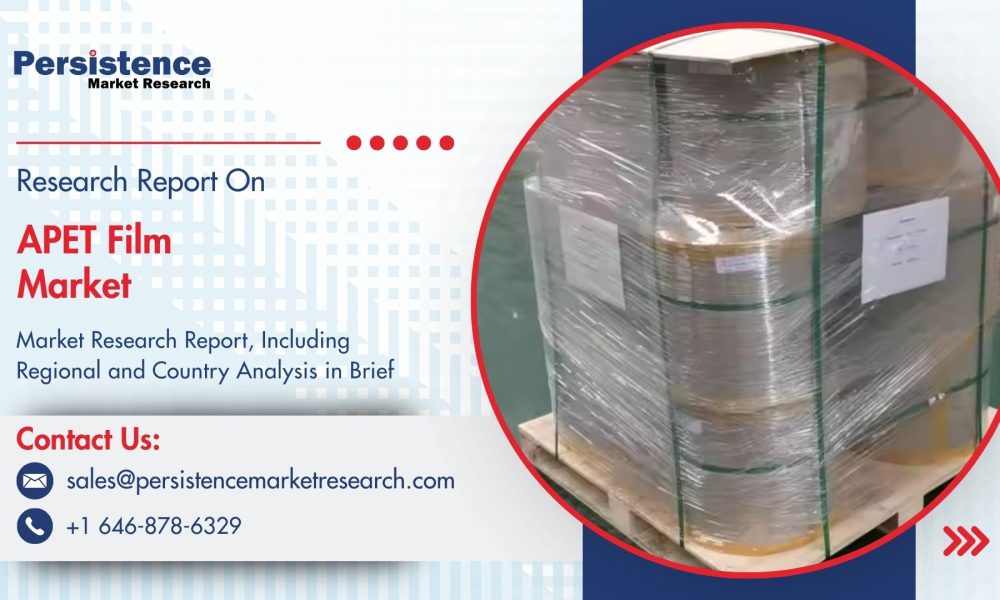
APET Film Market Size and Trends Analysis
The global APET (Amorphous Polyethylene Terephthalate) film market is poised for steady expansion over the coming years, supported by strong demand from packaging, food processing, and consumer goods industries. The APET Film market is projected to be valued at US$ 7.8 billion in 2026 and is expected to reach US$ 12.6 billion by 2033, growing at a compound annual growth rate (CAGR) of 7.1% between 2026 and 2033. This growth trajectory reflects the increasing preference for lightweight, durable, and recyclable packaging materials that meet both performance and sustainability requirements.
APET films are widely recognized for their excellent clarity, impact resistance, thermoformability, and recyclability. These properties make them particularly suitable for packaging applications where product visibility, structural integrity, and extended shelf life are critical. As global industries move toward more sustainable and cost-efficient materials, APET films are gaining traction as a viable alternative to heavier packaging materials such as glass and metal.
Get Your FREE Sample Report Instantly – Click Now: https://www.persistencemarketresearch.com/samples/36101
Market Overview
APET film is a type of polyester film manufactured from polyethylene terephthalate (PET) resin in its amorphous form. Unlike crystalline PET, APET offers high transparency and superior forming characteristics, making it ideal for thermoforming processes. It is extensively used in food trays, clamshell packaging, blister packs, lids, and display packaging.
The expanding role of APET film in packaging applications is largely driven by the need for improved product presentation and protection. Retail environments increasingly demand packaging that enhances shelf appeal while maintaining product safety. APET’s optical clarity and gloss provide high product visibility, supporting brand differentiation in competitive retail settings.
The forecasted growth from US$ 7.8 billion in 2026 to US$ 12.6 billion by 2033 highlights the strong structural demand emerging across developed and developing markets alike.
Key Growth Drivers
- Expanding Use in Food & Beverage Thermoforming Applications
One of the primary growth drivers of the APET film market is its increasing adoption in food and beverage packaging. The global shift toward convenience foods, ready-to-eat meals, and fresh produce packaging has significantly boosted demand for thermoformed trays and containers.
APET films are particularly well-suited for food applications due to their:
- Excellent clarity for product visibility
- Strong barrier performance when laminated or coated
- High stiffness and durability
- Food-grade safety compliance
The rise in organized retail, quick-service restaurants, and packaged fresh produce has further strengthened the demand for transparent and protective packaging solutions. As consumer expectations around hygiene and product freshness increase, APET films are becoming a preferred material choice.
- Shift Toward Lightweight Packaging Materials
The packaging industry is undergoing a major transformation driven by cost efficiency, sustainability concerns, and logistics optimization. Manufacturers are increasingly replacing heavier materials such as glass and metal with lightweight polymer-based alternatives to reduce transportation costs and carbon footprints.
APET films offer significant weight reduction advantages while maintaining structural strength. Compared to glass containers or metal packaging, APET-based packaging:
- Reduces shipping weight
- Lowers fuel consumption in logistics
- Minimizes breakage risks
- Improves handling efficiency
This transition toward lightweight materials is particularly visible in beverage packaging, bakery items, and fresh produce packaging. As companies aim to meet sustainability targets and improve supply chain efficiencies, APET film demand continues to accelerate.
- Rising Demand for Specialty Functional Grades
Innovation in film technology is playing a crucial role in shaping market growth. Beyond conventional transparent APET films, manufacturers are increasingly offering specialty grades such as:
- Anti-fog films for fresh produce and refrigerated displays
- High-barrier films to extend shelf life
- UV-resistant films
- Recyclable multilayer structures
Anti-fog films prevent condensation buildup inside packaging, ensuring clear product visibility in cold storage and retail environments. High-barrier APET films help reduce oxygen and moisture transmission, extending shelf life for perishable goods.
The rising demand for retail-ready display packaging is encouraging manufacturers to invest in value-added film grades that enhance performance while maintaining recyclability. This shift toward functional and specialty films is expected to significantly contribute to the projected 7.1% CAGR.
- Growing Investments in Production Capacity
Leading film manufacturers are investing heavily in expanding production capacities and upgrading processing technologies. These investments are aimed at:
- Meeting rising global demand
- Enhancing production efficiency
- Supporting development of advanced film grades
- Strengthening supply chain resilience
New extrusion lines, recycling integration, and improved thermoforming compatibility are reinforcing the shift toward APET film formats. Increased capacity also helps stabilize supply, ensuring steady availability for packaging converters and brand owners.
Such capacity expansions indicate strong industry confidence in the long-term growth potential of the APET film market.
Get a Customized Market View in One Click: https://www.persistencemarketresearch.com/request-customization/36101
Sustainability and Recycling Trends
Sustainability has become a defining factor in packaging material selection. APET films offer a significant advantage due to their recyclability within existing PET recycling streams. As circular economy initiatives expand globally, recyclable packaging materials are gaining preference over multi-material laminates that are difficult to recycle.
Many manufacturers are incorporating recycled PET (rPET) into APET film production to meet sustainability commitments. The integration of post-consumer recycled content not only reduces environmental impact but also enhances brand reputation among environmentally conscious consumers.
Regulatory pressure in several regions is encouraging the use of recyclable and reusable packaging materials. APET films, being compatible with established PET recycling infrastructure, align well with these policy shifts.
Application Segmentation Insights
The APET film market serves a broad range of applications, including:
- Food trays and clamshell packaging
- Blister packaging for pharmaceuticals and electronics
- Consumer goods packaging
- Industrial thermoforming applications
- Retail display packaging
Among these, food packaging remains the dominant segment due to growing demand for hygienic and transparent packaging formats. The pharmaceutical and consumer electronics sectors also contribute to steady demand through blister packaging solutions.
Retail display applications are gaining importance as brands emphasize product visibility and shelf differentiation. High-clarity APET films provide an aesthetic advantage while maintaining mechanical strength.
Regional Outlook
While demand is expanding globally, growth dynamics vary by region. Emerging economies in Asia-Pacific are witnessing rapid growth due to expanding food processing industries, urbanization, and rising disposable incomes. Increasing supermarket penetration and organized retail development are further accelerating packaging demand.
North America and Europe continue to drive innovation in sustainable film technologies, particularly in recycled and specialty grades. Regulatory frameworks promoting recyclable packaging are expected to sustain demand in these mature markets.
Challenges in the APET Film Market
Despite strong growth prospects, the market faces certain challenges:
- Volatility in PET resin prices
- Regulatory scrutiny around plastic usage
- Competition from alternative biodegradable materials
- Recycling infrastructure limitations in some regions
Raw material price fluctuations can affect profit margins, while increasing regulations on single-use plastics may create uncertainty. However, the recyclability of APET positions it more favorably compared to non-recyclable alternatives.
Future Outlook
The APET film market is positioned for sustained growth, supported by innovation, sustainability integration, and expanding end-use industries. With a projected value increase from US$ 7.8 billion in 2026 to US$ 12.6 billion by 2033, the industry reflects strong long-term fundamentals.
Future developments are expected to focus on:
- Enhanced barrier technologies
- Increased recycled content integration
- Thinner yet stronger film structures
- Smart packaging compatibility
As packaging trends continue to prioritize lightweight design, clarity, and recyclability, APET films are likely to remain a critical material in the global packaging ecosystem.
For In-Depth Competitive Analysis, Buy Now: https://www.persistencemarketresearch.com/checkout/36101
Conclusion
The global APET film market is on a robust growth trajectory, driven by expanding thermoforming applications in food and beverage packaging, a strong shift toward lightweight materials, and rising demand for specialty functional films. Ongoing investments in production capacity and recycling integration further strengthen the industry’s outlook.
With sustainability, performance, and cost efficiency shaping the future of packaging, APET films are well-positioned to meet evolving market demands, making them a key material in the next generation of retail-ready and high-performance packaging solutions.
About Persistence Market Research:
Persistence Market Research delivers strategic research solutions that drive business growth. Founded in 2012 and registered in England and Wales in 2023 as Persistence Research & Consultancy Services Ltd., we have completed 3,600+ custom and syndicated studies and supported 2,700+ projects for leading research firms. Combining traditional methodologies with modern tools, we provide actionable insights to multinational corporations, consultants, investors, and government bodies, earning strong trust through long-term client relationships.
Contact Us:
Persistence Market Research
Second Floor, 150 Fleet Street,
London, EC4A 2DQ, United Kingdom
USA Phone: +1 646-878-6329
UK Phone: +44 203-837-5656
Email: [email protected]
Web: https://www.persistencemarketresearch.com




