
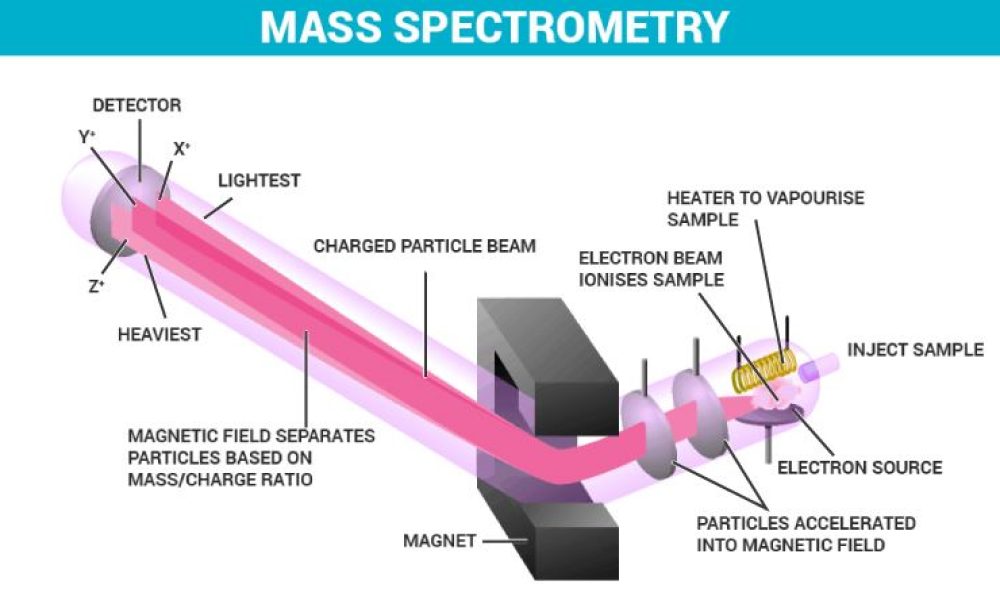
The global mass spectrometry market is witnessing remarkable growth, driven by the increasing demand for high-precision analytical tools across pharmaceuticals, biotechnology, and environmental testing. Mass spectrometry, known for its exceptional sensitivity, accuracy, and versatility, has become a cornerstone in scientific research and quality control processes. The market is projected to reach a value of US$ 11.7 billion by 2032, up from an estimated US$ 7.2 billion in 2025, reflecting a CAGR of 7.2% during the forecast period. The rising adoption of mass spectrometry is fueled by stringent regulatory requirements, growing R&D investments, and the expanding need for environmental, food safety, and clinical testing.
North America dominates the mass spectrometry market, accounting for 35.25% of global market share in 2025, primarily due to its strong pharmaceutical sector, robust R&D infrastructure, and stringent regulatory standards. Instruments represent the leading segment, capturing nearly 70% of the market share, underscoring their critical role in laboratories and research facilities. The pharmaceutical industry emerges as the largest application area, contributing over 35% of total revenue, as mass spectrometry is integral to drug discovery, development, and quality control. Meanwhile, the Asia Pacific region is the fastest-growing market, driven by rapid industrialization, increasing healthcare investments, and heightened demand for precise analytical tools.
Download Your Free Sample & Explore Key Insights: https://www.persistencemarketresearch.com/samples/3634
Key Highlights from the Report
• The mass spectrometry market is expected to grow from US$ 7.2 billion in 2025 to US$ 11.7 billion by 2032.
• North America leads the global market with 35.25% share due to strong pharmaceutical and R&D infrastructure.
• Instruments dominate the market, accounting for nearly 70% of total market revenue.
• Pharmaceuticals hold the largest application segment, generating over 35% of market revenue.
• Asia Pacific is the fastest-growing region, fueled by healthcare investment and industrial expansion.
• Hybrid mass spectrometry systems account for 47% of revenue in 2025, reflecting high adoption across industries.
Market Segmentation
The mass spectrometry market is segmented based on product type, application, and technology. Instruments dominate the product segment, with quadrupole, time-of-flight (TOF), and hybrid systems widely adopted in laboratories for analytical testing due to their accuracy and versatility. Services are the fastest-growing segment, reflecting increasing demand for maintenance, calibration, and technical support as laboratories expand their mass spectrometry capabilities. In terms of technology, hybrid mass spectrometry systems hold the largest market share because they combine multiple analyzers, offering superior resolution and flexibility for complex sample analysis. MALDI-TOF mass spectrometry is the fastest-growing technology, largely driven by applications in clinical diagnostics, microbiology, and biomarker discovery.
Application-wise, the pharmaceutical sector leads the market due to the critical role of mass spectrometry in drug discovery, development, and quality assurance. The environmental testing segment is the fastest-growing, driven by stringent regulations and the increasing use of portable mass spectrometers for on-site monitoring. Other applications include food safety, clinical diagnostics, and biotechnology research, each contributing to overall market expansion. The segmentation highlights the adaptability of mass spectrometry across diverse industries, emphasizing its growing importance in precision analytics.
Regional Insights
North America remains the leading region in the mass spectrometry market, supported by the United States’ strong pharmaceutical industry, regulatory compliance mandates, and extensive R&D capabilities. The presence of major industry players such as Thermo Fisher Scientific and Agilent Technologies further strengthens regional dominance. Europe holds a substantial share, with Germany, the U.K., and France driving growth through investments in healthcare, biotechnology, and environmental monitoring. Initiatives like the EU’s Horizon Europe program promote innovation in analytical technologies, although complex regulatory compliance presents challenges. The Asia Pacific region is the fastest-growing market, led by China, India, and Japan. Rapid industrialization, healthcare expansion, rising environmental concerns, and an increasing middle-class population contribute to accelerated adoption of mass spectrometry tools in both clinical and industrial settings.
Get Custom Insights Designed for Your Businecss: https://www.persistencemarketresearch.com/request-customization/3634
Market Drivers
The mass spectrometry market is primarily driven by the rising demand in pharmaceutical and biotechnology research. Companies increasingly rely on mass spectrometry for drug discovery, biomarker identification, and quality control due to its precision in detecting and quantifying molecules. Advanced mass spectrometry enables faster analysis of complex biological samples, accelerating the development of therapies and personalized medicine. Investments in biologics, gene therapies, and proteomics research further enhance demand for sophisticated analytical instruments. Additionally, the growing adoption of miniaturized and portable mass spectrometers enables real-time, on-site testing across environmental, clinical, and food safety applications, broadening the market’s growth potential. Regulatory compliance, high throughput requirements, and the integration of AI-driven data analysis continue to propel the adoption of mass spectrometry in research and industrial sectors worldwide.
Market Restraints
High initial costs and maintenance expenses remain key challenges in the mass spectrometry market. Advanced instruments equipped with high-resolution detectors or AI integration require significant upfront investment, limiting accessibility for smaller laboratories or emerging markets. Regular calibration, technical support, and maintenance contracts further increase operational expenses. Complex systems also require specialized personnel, adding to ongoing costs. These financial and operational barriers can slow market adoption, particularly in cost-sensitive regions, despite the increasing need for precise analytical tools. Companies and laboratories must weigh the high capital requirements against the long-term benefits of accuracy and efficiency, which can influence purchasing decisions and market growth.
Market Opportunities
The rise of miniaturized and portable mass spectrometers offers significant opportunities for market expansion. These compact systems provide rapid, on-site analysis for applications such as environmental monitoring, food safety, and point-of-care diagnostics. Advances in battery life, wireless connectivity, and AI-powered data interpretation enhance their usability and performance. Collaboration with regulatory bodies supports standardized testing protocols, increasing adoption across various regions, particularly in Asia Pacific. In addition, the pharmaceutical and biotechnology sectors are leveraging portable systems for faster drug development and quality assurance, creating opportunities for innovation in instrument design, software integration, and service offerings. Emerging markets present further potential as governments and institutions increasingly prioritize safety, quality, and compliance in testing.
Checkout Now & Download Complete Market Report: https://www.persistencemarketresearch.com/checkout/3634
Company Insights
• Thermo Fisher Scientific Inc. – Leading in hybrid and high-resolution instruments, with strong R&D and global distribution networks.
• Danaher Corporation (SCIEX) – Known for quadrupole and triple quadrupole mass spectrometers with applications in pharmaceutical research.
• Agilent Technologies – Offers a broad range of instruments and services, focusing on analytical accuracy and innovation.
• Waters Corporation – Specializes in high-throughput and hybrid mass spectrometry systems for pharmaceutical and environmental applications.
• Bruker Corporation – Developer of advanced hybrid and MALDI-TOF systems, expanding into imaging and proteomics solutions.
• Shimadzu Corporation – Provides innovative instruments for clinical diagnostics, environmental, and food testing.
• PerkinElmer Inc. – Focused on environmental and laboratory analytics, offering integrated mass spectrometry solutions.
• LECO Corporation – Offers high-precision mass spectrometry tools for chemical and industrial analysis.
• JEOL Ltd. – Developer of high-resolution mass spectrometers and innovative hybrid systems.
• Kore Technology Ltd. – Emerging player providing cost-effective mass spectrometry instruments and consumables.
Recent Developments:
In June 2023, Thermo Fisher unveiled the Orbitrap Astral mass spectrometer, offering deeper proteome coverage and enhanced throughput for proteomics research.
In June 2024, Bruker Corporation launched the neofleX Imaging Profiler, a high-performance MALDI-TOF/TOF system for tissue imaging at the 72nd ASMS meeting.
Conclusion
The mass spectrometry market is poised for sustained growth, driven by technological advancements, regulatory requirements, and rising demand across pharmaceuticals, biotechnology, and environmental testing. Instruments remain the backbone of this market, while services, hybrid technologies, and portable systems offer new avenues for expansion. North America continues to lead due to its strong pharmaceutical and research infrastructure, while Asia Pacific emerges as a high-growth region supported by industrialization, healthcare investments, and regulatory focus. Challenges such as high capital costs and complex maintenance requirements persist, but innovations in miniaturization, AI integration, and workflow efficiency are opening new opportunities. As the market evolves, industry leaders are emphasizing sustainability, automation, and precision analytics, ensuring mass spectrometry remains central to scientific research and quality assurance globally.




