
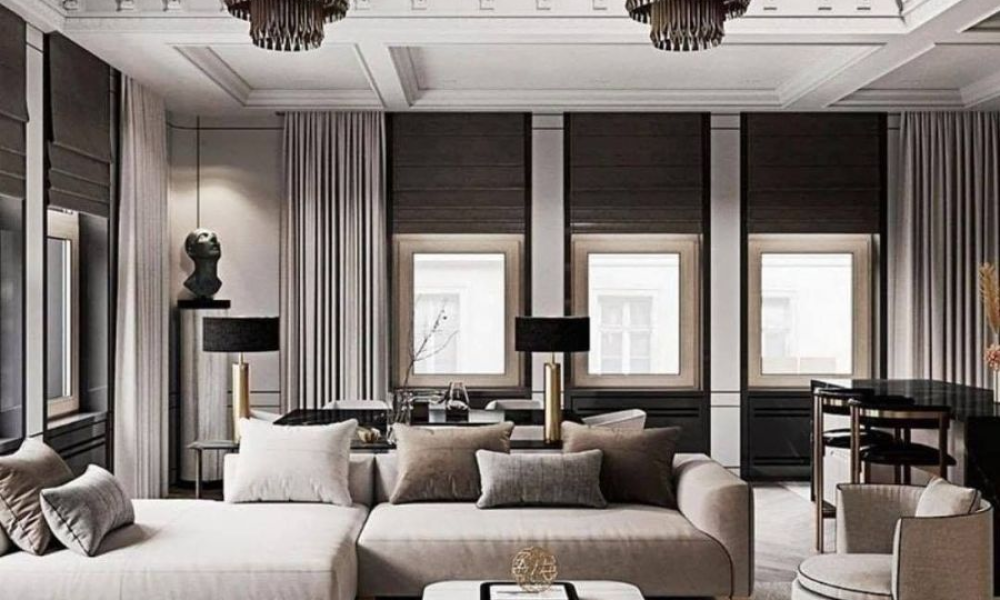
Choosing luxury furniture styles for home interiors is one of the most consequential decisions in any design project — and one of the easiest to get wrong by prioritizing aesthetics over function. A piece that photographs beautifully in a showroom can feel completely wrong in an actual living space once it’s surrounded by your walls, your light, your architecture. Getting it right means understanding not just what each style looks like but what each one is actually built to do.
Contemporary Style: Precision Over Ornamentation
Contemporary luxury furniture is built around restraint. Clean geometric lines, minimal ornamentation, smooth upholstery in neutral tones, and materials like polished metal, lacquered wood, and fine leather define the aesthetic. It works particularly well in homes with open floor plans and strong architectural lines — spaces where the furniture can exist as part of a composed visual environment rather than competing with structural complexity around it.
What makes contemporary luxury furniture genuinely worth the investment is the precision of construction. The clean lines only look intentional when the joinery is tight, the upholstery is perfectly tensioned, and the proportions are correct. Poorly made contemporary pieces expose their flaws immediately because there’s no decorative detail to distract from them.
A well-chosen living room sofa in a contemporary style anchors a room without overwhelming it — which is exactly what a piece that will be the visual center of a space for years needs to do.
Traditional Style: Warmth and Permanence
Traditional luxury furniture takes the opposite approach, leaning into richness rather than restraint. Carved wood details, rolled arms, tufted upholstery, deep jewel tones, and heavy textiles create spaces that feel layered, warm, and permanent in a way that contemporary furniture doesn’t try to achieve.
This style works best in rooms with architectural character to match — coffered ceilings, crown molding, hardwood floors — where the furniture’s visual weight feels appropriate rather than overwhelming. A traditional bedroom furniture set in a room with those architectural bones creates a sense of cohesion that’s genuinely difficult to achieve any other way.
The risk with traditional luxury furniture is going too heavy — choosing pieces with too much carving, too much pattern, or too much scale for the actual room. The best traditional interiors use a restrained hand even when working with an inherently ornate style.
Mid-Century Modern: The Enduring Middle Ground
Mid-century modern has maintained its relevance for decades for good reason. It’s genuinely functional in a way that some more purely aesthetic styles aren’t — the organic shapes, tapered legs, warm wood tones, and balance between form and function produce pieces that are both visually appealing and genuinely comfortable to live with.
It also happens to be the most versatile of the major luxury furniture styles for home use. Mid-century pieces integrate with contemporary spaces, warm up transitional interiors, and can hold their own alongside more traditionally styled accent pieces without creating visual conflict. A quality mid-century sofa or credenza tends to age gracefully rather than looking dated as trends shift around it.
Transitional Style: Flexibility as a Feature
For homeowners who aren’t ready to commit fully to one direction — or who are building out a space gradually over time — transitional luxury furniture offers a genuinely workable approach. It takes the structural clarity of contemporary design and applies traditional warmth through softer lines, gentler curves, and textiles with more depth and texture than strictly contemporary pieces typically use.
The result is furniture that fits comfortably across a wide range of existing décor situations rather than demanding that everything around it conform to a specific aesthetic. That flexibility is a feature rather than a compromise — particularly for interiors that evolve slowly.
Making the Decision
The most useful question when choosing between luxury furniture styles for home use isn’t “which style do I like best” — it’s “which style serves this specific room’s function, architecture, and light.” A contemporary piece in a room with low ceilings and small windows can feel oppressive. A heavily traditional piece in an open, light-filled loft can feel incongruous regardless of its quality.
Visiting a luxury furniture showroom and spending time with pieces in person remains the most reliable way to evaluate how a style actually feels before committing. Photos convey aesthetic but not scale, texture, or the weight a piece carries in actual space — all of which matter as much as visual appearance in making a decision that works for years rather than months.




