Definition
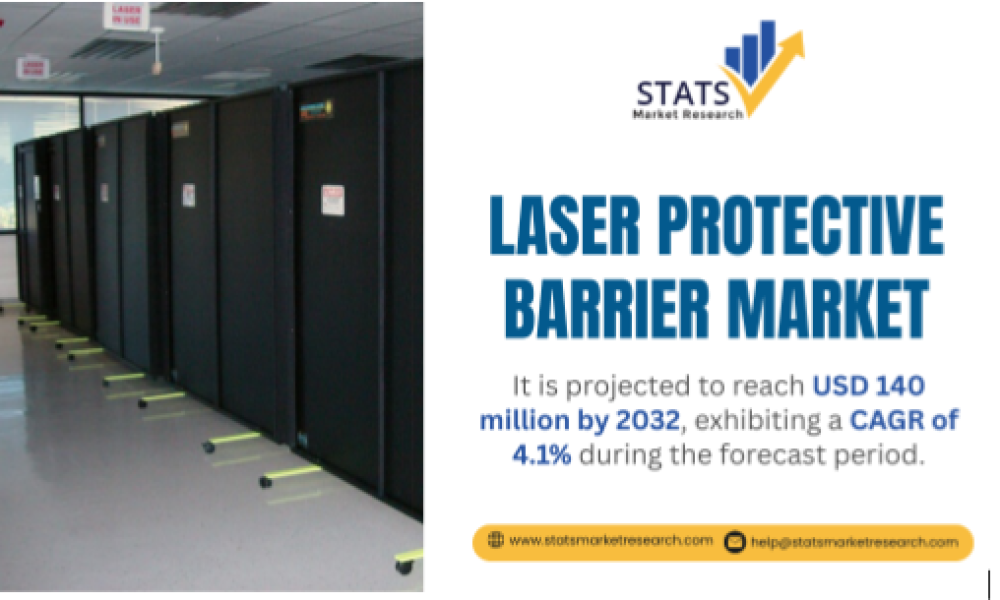
Laser Protective Barriers are specialized safety devices designed to safeguard human eyes and skin from harmful laser radiation in industrial, medical, research, and defense environments. These barriers serve a crucial role in maintaining safety standards in workplaces and laboratories that employ lasers of varying power classes. They are engineered to absorb, scatter, or reflect laser beams, effectively minimizing exposure risks.
The barriers are categorized based on laser power handling capacity, including:
- Low Power (Class 1-3R): Designed for low-energy laser applications such as diagnostic medical devices, barcode scanning, and educational labs.
- Medium Power (Class 3B): Suitable for industrial cutting, engraving, and some research experiments requiring moderate laser output.
- High Power (Class 4): Intended for high-energy applications, including advanced industrial manufacturing, defense-grade systems, and high-intensity medical procedures.
These products comply with international safety standards such as ANSI Z136 in North America and IEC 60825 worldwide, ensuring that operators and personnel remain protected in laser-rich environments. Materials used for laser protective barriers include polycarbonate composites, acrylic sheets, borosilicate glass, and metal-coated panels, each selected based on optical density requirements, durability, and transparency needs.
Recent Developments
The laser protective barrier market is seeing significant innovation, driven by the increasing use of high-power lasers in industrial, medical, and research settings. A key development is the creation of modular and portable barrier systems. These new barriers are designed for quick and easy setup, allowing for flexible workspace configurations that can adapt to different applications, from large-scale manufacturing to confined laboratory environments. Manufacturers are also developing advanced materials that offer superior protection, capable of withstanding both direct laser hits and diffuse reflections. Many of these modern barriers are certified to meet stringent international safety standards, such as ANSI Z136, and are being integrated with “smart” features like interlocks and warning lights, which automatically shut down a laser if the barrier is breached, providing an extra layer of safety.
Major Distribution
The distribution of laser protective barriers is a highly specialized business-to-business (B2B) operation. The primary channel is direct sales from manufacturers to end-users in industries that utilize high-power lasers, including automotive, aerospace, electronics, and medical device manufacturing, as well as academic and research institutions. Due to the highly technical nature of the products and the specific safety requirements, sales are often consultative, with manufacturers’ sales teams or in-house laser safety officers working directly with clients to design and implement a comprehensive laser safety plan. Another significant channel is a network of specialized industrial equipment and scientific supply distributors. These distributors provide not only the barriers but also other complementary safety products like eyewear and warning signs, serving as a one-stop-shop for businesses looking to establish a safe laser-working environment.
Market Size
Global Laser Protective Barrier market was valued at USD 106 million in 2024 and is projected to grow to USD 140 million by 2032, reflecting a CAGR of 4.1% during the forecast period.
Download FREE Sample of this Report @ https://www.statsmarketresearch.com/download-free-sample/8060273/global-laser-protective-barrier-forecast-market
This growth is underpinned by the expanding applications of lasers across industrial manufacturing, healthcare, research, and defense sectors.
Historically, the market has seen steady growth driven by industrial laser adoption. The metal fabrication industry alone accounts for more than 35% of industrial laser usage, which directly influences the demand for protective barriers. Over the past decade, there has been a rising preference for lightweight, portable, and smart laser safety solutions, such as augmented reality-compatible barriers in precision environments.
Regional adoption trends indicate that North America and Europe remain the largest markets due to stringent regulatory mandates, while Asia-Pacific is emerging rapidly as an industrial and technological hub, contributing significantly to future market expansion.
Market Dynamics
Market Drivers
- Expansion of Laser Applications Across Industries
- The rising deployment of laser technology in manufacturing, medical procedures, and research labs is fueling market demand.
- Industrial laser system sales are projected to grow at 6.2% annually, necessitating protective barriers to meet workplace safety standards.
- Modern barriers use advanced polycarbonate composites with optical density ratings exceeding OD7+, capable of blocking 99.99999% of laser radiation across multiple wavelengths.
- Stringent Workplace Safety Regulations
- Regulatory bodies enforce strict safety protocols. For instance, ANSI Z136.1 now mandates permanent engineering controls for Class 3B and Class 4 lasers.
- Medical laser safety protocols per IEC 60825-1 have led to more than 200 hospital laser safety upgrades in the past year.
- Industrial facilities allocate 25–30% of their laser safety budgets for barrier installation, highlighting regulatory influence on market growth.
- Technological Advancements in Laser Safety Solutions
- Development of smart barriers with integrated sensors that monitor laser intensity in real time.
- Multi-functional barriers combine protection with ventilation and visibility features, now present in 40% of high-end industrial installations.
- Portable modular barriers offer OD4+ protection while reducing weight by 45% compared to traditional models.
Market Restraints
- High Initial Investment Costs
- Premium barriers for high-power lasers can exceed USD 25,000 per unit, with full facility setups surpassing USD 500,000.
- Small and medium enterprises, which constitute 60% of potential end-users, often resort to temporary, lower-cost alternatives, affecting adoption rates.
- Specialized materials and certification processes increase manufacturing costs by 35–40% compared to conventional safety solutions.
- Technical Limitations in High-Energy Laser Protection
- Current barriers efficiently handle lasers up to 10kW, but new systems often exceed 30kW, requiring specialized, expensive solutions.
- Reflectivity issues arise in some metal barriers, with spikes of up to 85% at specific wavelengths, slowing adoption in advanced sectors.
Market Challenges
- Lack of Standardization Across Global Markets
- North America follows ANSI Z136, Europe adopts EN 207/208, and China implements GB standards, leading to compliance complexity.
- Manufacturers must produce region-specific variants, increasing R&D costs by 22% and complicating global supply chains.
- Education Gap in Laser Safety Implementation
- 60% of industrial laser accidents occur due to improper barrier placement or incorrect optical density selection.
- Safety training programs have not kept pace with laser technology advancements, with 40% of facilities using non-optimized protection systems, especially in emerging markets.
Market Opportunities
- Emerging Applications in Electric Vehicle Manufacturing
- High-power lasers are increasingly used in battery welding and cutting operations.
- EV manufacturers plan to install 15,000+ new industrial laser systems by 2026, boosting demand for specialized barriers.
- EV-specific barrier products now feature enhanced protection against 1-micron wavelength lasers.
- Advancements in Adaptive Laser Protection Technologies
- Electrochromic barriers automatically adjust optical density based on laser intensity.
- These next-generation systems may command 3–4 times higher pricing than conventional barriers, offering premium solutions for research and medical applications.
- Investment in smart barrier technologies has increased 45% year-over-year.
Regional Analysis
- North America: Dominates due to strict workplace safety standards and high industrial laser adoption.
- Europe: Growth driven by compliance with EN 207/208 and increasing medical laser applications.
- Asia-Pacific: Rapidly expanding manufacturing and R&D sectors are increasing demand for protective barriers.
- Middle East & Africa: Adoption is slower but growing in defense and research applications.
- Latin America: Gradual increase in industrial laser usage is supporting market entry, especially in automotive and electronics sectors.
Competitor Analysis
Key Industry Players
- Laser Safety Industries (U.S.) – Market leader, offering comprehensive low-to-high power barriers.
- Kentek Laser (U.S.) – Dominates North America with established distribution channels.
- Laservision (Australia) – Specializes in customizable medical and aerospace barriers.
- Lasermet (UK) – Focuses on military-grade and high-power protection systems.
- Laser Photonics (U.S.) – Offers diverse barrier solutions.
- Laser Components (Germany) – Innovates with nanomaterials improving durability and clarity.
- Steel Guard Safety (U.S.) – Extends traditional industrial safety offerings.
- Rockwell Laser Industries (U.S.) – Strengthened European presence through acquisitions.
- Rite-Hite (U.S.) – Expanding via product line extensions.
- Beamstop’R (France) – Known for high-end industrial barriers.
- Innovative Laser Safety (Canada) – Focuses on research and laboratory solutions.
- Phillips Safety (U.S.) – Provides general laser protection solutions.
Global Laser Protective Barrier: Market Segmentation Analysis
This report provides a deep insight into the global Laser Protective Barrier market, covering all its essential aspects. This ranges from a macro overview of the market to micro details of the market size, competitive landscape, development trend, niche market, key market drivers and challenges, SWOT analysis, value chain analysis, etc. The analysis helps the reader to shape the competition within the industries and strategies for the competitive environment to enhance the potential profit. Furthermore, it provides a simple framework for evaluating and assessing the position of the business organization. The report structure also focuses on the competitive landscape of the Global Laser Protective Barrier. This report introduces in detail the market share, market performance, product situation, operation situation, etc., of the main players, which helps the readers in the industry to identify the main competitors and deeply understand the competition pattern of the market. In a word, this report is a must-read for industry players, investors, researchers, consultants, business strategists, and all those who have any kind of stake or are planning to foray into the Laser Protective Barrier in any manner.
Market Segmentation (by Application)
- Industrial Manufacturing
- Medical
- Research & Experimentation
- National Defense & Aerospace
- Others
Market Segmentation (by Type)
- Low Power Laser Safety Barrier
- Subtypes: Polycarbonate barriers, acrylic barriers, and others
- Medium Power Laser Safety Barrier
- High Power Laser Safety Barrier
- Subtypes: Metal-coated barriers, glass barriers, and others
Key Company
- Laser Safety Industries (U.S.)
- Kentek Laser (U.S.)
- Laservision (Australia)
- Lasermet (UK)
- Laser Photonics (U.S.)
- Laser Components (Germany)
- Steel Guard Safety (U.S.)
- Rockwell Laser Industries (U.S.)
- Rite-Hite (U.S.)
- Beamstop’R (France)
- Innovative Laser Safety (Canada)
- Phillips Safety (U.S.)
Geographic Segmentation
- North America
- Europe
- Asia-Pacific
- Middle East & Africa
- Latin America
Customize/Section/Part Purchase @ https://www.statsmarketresearch.com/chapters-purchase/8060273/global-laser-protective-barrier-forecast-market
FAQ
Q1: What is the current market size of the Laser Protective Barrier market?
A: The global market size is valued at USD 106 million in 2024 and is projected to reach USD 140 million by 2032 at a CAGR of 4.1%.
Q2: Which are the key companies operating in the Laser Protective Barrier market?
A: Key players include Laser Safety Industries, Kentek Laser, Laservision, Lasermet, Laser Photonics, Laser Components, Steel Guard Safety, Rockwell Laser Industries, Rite-Hite, Beamstop’R, Innovative Laser Safety, and Phillips Safety.
Q3: What are the key growth drivers in the Laser Protective Barrier market?
A: Major drivers include expansion of laser applications across industries, stringent workplace safety regulations, and technological advancements in barrier solutions.
Q4: Which regions dominate the Laser Protective Barrier market?
A: North America and Europe currently dominate the market, while Asia-Pacific is rapidly emerging due to industrial and technological growth.
Q5: What are the emerging trends in the Laser Protective Barrier market?
A: Emerging trends include adaptive electrochromic barriers, smart modular systems, portable barriers, and EV-specific laser safety solutions.
About Us
International: +1 (332) 2424 294
Website: www.statsmarketresearch.com




