
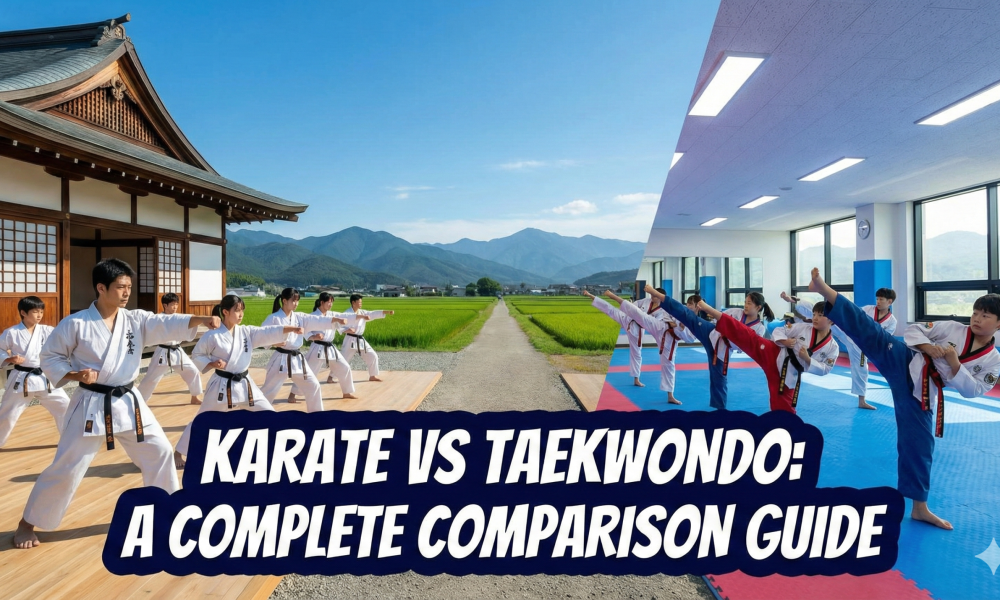
There are so many martial arts to pick from. You might have witnessed strong karate punches or swift high taekwondo kicks and asked yourself which is best. In fact, both martial disciplines are respected ones with long-standing traditions and individual strengths.
In this complete comparison guide, we are going to break down karate vs taekwondo in an accessible and easy-to-understand manner. By the end, you’ll know their history, techniques, and training styles — so you can decide which is best for your goals.
The Origins: Where It All BeganKarate: The Art of the Empty Hand
Karate began in Okinawa, Japan. It was influenced by Chinese martial arts and eventually became an organized system in Japan.
The term karate means “empty hand.” Its main emphasis is on punches, kicks, knee strikes, and elbow strikes. Etiquette, respect, and mental discipline are also stressed in old-fashioned karate.
Taekwondo: The Way of the Foot and Fist
Taekwondo originated in Korea. It became hugely popular after World War II and is now an Olympic sport.
The term taekwondo loosely translates as “the way of the foot and fist.” Like what it sounds like, it focuses on kicks, specifically fast and high kicks.
Key Differences in Techniques
One of the biggest differences in karate vs taekwondo is how they approach striking.
Striking Style
Karate
- Strong, direct punches
- Low to mid-level kicks
- Balanced use of hands and feet
- Focus on power and precision
Taekwondo
- Fast, high, and spinning kicks
- Dynamic footwork
- Fewer hand strikes in competition
- Focus on speed and flexibility
Karate often feels grounded and powerful. Taekwondo looks fast and athletic, especially during sparring.
Taekwondo involves more kicking than karate. It puts a heavier emphasis on kicks and uses hands as backup. You will learn a variety of kick moves, including spinning and jumping kicks. Because karate uses many more hand attacks, legs often stay grounded. Taekwondo, on the other hand, uses a different leg stance because the body needs to be ready to perform fast kicks. Today, the World Taekwondo Federation sets the standards for competition rules and new developments in the sport. It’s practiced by people around the world.
Training and PracticeKarate Training
Karate classes usually include:
- Kihon (basic techniques)
- Kata (pre-arranged forms)
- Kumite (sparring)
Training often emphasizes strong stances, controlled movements, and mental discipline. Students learn how to generate power from the hips and core.
Taekwondo Training
Taekwondo classes often focus on:
- Repetitive kicking drills
- Flexibility training
- Forms (called poomsae)
- Olympic-style sparring
Students spend a lot of time improving balance, speed, and kicking height.
Competition Rules and Sport Style
Another major difference between karate vs taekwondo setups is the way competitions work.
Karate Competitions
Karate tournaments include:
- Kata (performance of forms)
- Point-based sparring
Clean, controlled blows earn points. Games are usually fast-moving, tactical affairs.
Taekwondo Competitions
Taekwondo is an Olympic sport. Matches use electronic scoring systems.
Points are awarded mainly for:
- Kicks to the body
- Kicks to the head
- Spinning techniques
Because of the rules, taekwondo competitions highlight dynamic kicking skills.
Self-Defense Applications
Both martial arts can be effective in self-defense, but they respond to it differently.
Karate is all about solid hits and blocks at a direct angle. Most traditional styles have self-defense drills against grabs and close-range attacks.
Taekwondo develops distance control in addition to very powerful kicks. Some contemporary sport-based schools will place more emphasis on competition than street scenarios.
Its power is frequently based more on the quality of training than on the art itself.
Physical and Mental Benefits
No matter which style you choose, martial arts training offers many benefits.
Physical Benefits
- Improved strength
- Better coordination
- Increased flexibility
- Enhanced balance
- Cardiovascular fitness
Taekwondo may improve flexibility faster due to high kicking drills. Karate may develop strong core power and stability.
Mental Benefits
- Discipline
- Focus
- Confidence
- Stress relief
- Respect for others
Both arts teach goal-setting through belt rankings, which helps build motivation and resilience.
Which One Is Better for Beginners?
There isn’t a “best” when it comes to karate vs taekwondo. It depends on your goals.
- If you like strong hand strikes and formal movement, karate may be what you are looking for.
- If you’re a big fan of dynamic kicks and high-energy action, then taekwondo may be more your speed.
- If you want to compete in the Olympics, taekwondo is your ticket.
- If you like classic disciplines with different techniques, karate is more your fit.
The style of teaching and quality of the instructor also matter more than the art.
Similarities Between Karate and Taekwondo
However, they do have many fundamental values in common:
- Respect and discipline
- Structured belt systems
- Forms practice
- Controlled sparring
- Personal growth
Both are aimed not just at developing physical skills, but character.
FAQs
1. Is karate stronger than taekwondo?
Not necessarily. Powerful punches are also a staple of karate, whereas taekwondo has more of a focus on fast kicks. Strength comes from the practitioner, not just the art.
2. Which is better for self-defense: karate or taekwondo?
Both can be effective. Karate tends to have more close-range techniques, while taekwondo’s emphasis is on kicking and control of distance.
3. Is taekwondo only about kicking?
Taekwondo also uses punches and blocks; however, it is famous for its powerful kicks.
4. Can children learn karate or taekwondo?
Yes. Both are child-friendly and useful for gaining confidence, discipline, and coordination.
5. Which martial art is harder to learn?
Both require dedication and practice. Taekwondo might challenge one’s flexibility, and karate may require strong stances and accurate technique.
Conclusion: Finding the Right Path for You
In a karate vs taekwondo match, no one wins. It’s about which methodology is best for your lifestyle, goals, and interests.
Karate brings lethal punches and a deep heritage. Taekwondo brings speed, athletic kicks, and Olympic-level competition to the mix. Both help young people develop strength, discipline, and confidence.
If you’d like to know the answer, the best next step is a simple one:
Observe a class, experience a session, and feel the training for yourself. Visit Team Carlo to explore your options and book a trial class today!




