
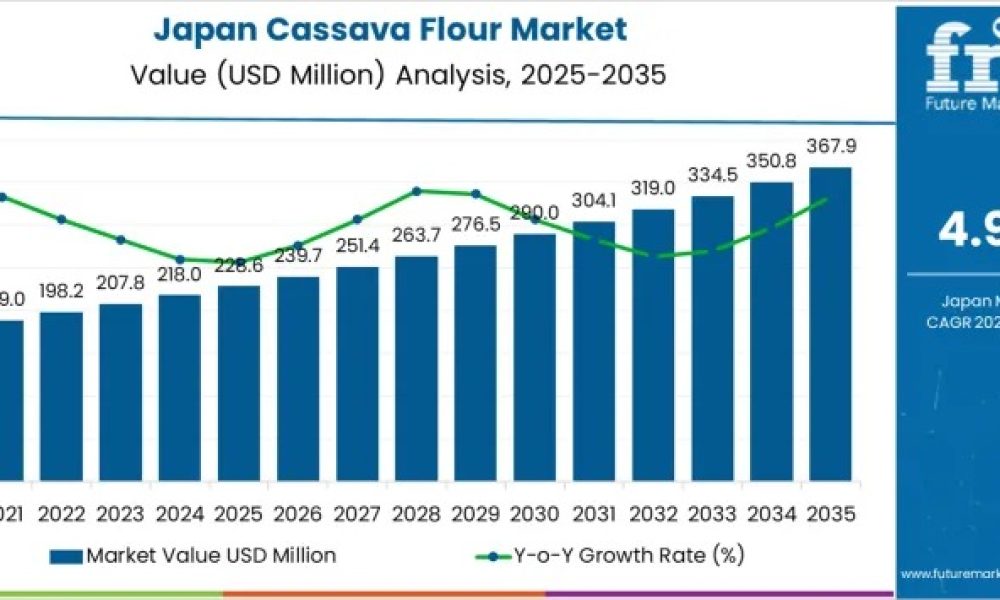
Japan’s cassava flour demand is witnessing steady momentum as dietary habits evolve toward gluten-free, allergen-friendly, and plant-based alternatives. Valued at USD 228.6 million in 2025, the market is forecast to reach USD 367.9 million by 2035, reflecting a 4.9% CAGR over the assessment period. The transition is closely tied to rising health awareness, increased gluten intolerance diagnoses, and broader adoption of clean-label food ingredients across Japanese households and commercial food production.
Cassava flour’s neutral flavor, high functionality, and compatibility with traditional and modern recipes make it an increasingly preferred substitute for wheat flour. Its naturally gluten-free composition, fiber content, and low glycemic index profile are aligning with consumer demand for digestive wellness and balanced blood sugar management.
Request For Sample Report | Customize Report | Purchase Full Report – https://www.futuremarketinsights.com/reports/sample/rep-gb-29594
The food & beverage sector, accounting for 38% of total demand, remains the primary growth engine. Cassava flour is gaining usage in gluten-free bakery products, snacks, noodles, coatings, and plant-based meat alternatives. Manufacturers are reformulating products to meet “free-from” labeling trends, which is accelerating ingredient substitution away from wheat.
Beyond food applications, cassava flour is also seeing measured adoption in:
- Animal feed formulations
- Nutraceutical and pharmaceutical excipients
- Personal care and cosmetic starch bases
The surge in plant-based lifestyles is another catalyst. Vegan and vegetarian consumers are using cassava flour in home cooking, while restaurants and specialty bakeries are expanding gluten-free menus, particularly in urban regions.
Key Market Highlights
- 2025 Market Value: USD 228.6 million
- 2035 Forecast Value: USD 367.9 million
- CAGR (2025–2035): 4.9%
- Leading Application: Food & Beverages (38% share)
- Dominant Nature Type: Conventional cassava flour (79%)
Why Demand is Rising
Health and wellness awareness in Japan is shifting purchasing decisions toward functional ingredients. Cassava flour’s resistant starch supports gut microbiome health, while its allergen-free profile makes it suitable for consumers with wheat sensitivity. The ingredient’s versatility in texture-building and moisture retention allows food processors to maintain product quality without gluten.
Clean-label preferences are also encouraging interest in organic cassava flour, although conventional variants dominate due to affordability and supply consistency.
Segment Outlook
By Nature: Conventional cassava flour leads with a 79% share, favored for cost efficiency and industrial scalability. Organic options are growing but remain niche.
By Application: Food & beverages dominate at 38%, followed by animal feed, pharmaceuticals, and personal care uses.
By Distribution: Direct B2B channels serve industrial food producers, while B2C retail and e-commerce platforms are expanding access to home bakers.
Regional Growth Dynamics
Demand is geographically diversified, with urban dietary trends influencing consumption patterns.
- Kyushu & Okinawa: 6.1% CAGR – Strong health-focused consumer base
- Kanto: 5.6% CAGR – Urban gluten-free demand led by Tokyo
- Kansai: 4.9% CAGR – Culinary innovation and specialty food adoption
- Chubu: 4.3% CAGR – Expanding wellness-driven food culture
- Tohoku: 3.8% CAGR – Gradual adoption of alternative flours
- Rest of Japan: 3.6% CAGR – Steady but slower rural uptake
Innovation Supporting Market Expansion
Advancements in milling technology are improving cassava flour’s texture consistency and baking performance. Ingredient blending techniques with rice or legume flours are enhancing elasticity and structure in gluten-free dough systems. Improved import logistics and specialty retail expansion are also making the ingredient more accessible.
Challenges to Adoption
Despite momentum, several barriers remain:
- Limited consumer familiarity compared to rice and wheat flour
- Higher price points relative to traditional staples
- Cultural reliance on established grain-based recipes
- Dependence on imported raw material supply chains
Education, recipe integration, and foodservice exposure will play critical roles in overcoming these hurdles.
Access the full report for detailed market trends. https://www.futuremarketinsights.com/reports/brochure/rep-gb-29594
Competitive Landscape
Global suppliers play a vital role in supporting Japan’s cassava flour ecosystem. Leading companies include:
- DADTCO Rivers Cassava Processing Company
- Green Hills Natural Foods
- MHOGO Foods
- Mocaf Factory
- Psaltry International
These suppliers enable consistent quality and volume supply, helping Japanese manufacturers meet rising gluten-free product demand.
As dietary shifts accelerate and food innovation continues, cassava flour is emerging as a strategic ingredient within Japan’s evolving alternative flour landscape.
About Future Market Insights (FMI)
Future Market Insights, Inc. (FMI) is an ESOMAR-certified, ISO 9001:2015 market research and consulting organization, trusted by Fortune 500 clients and global enterprises. With operations in the U.S., UK, India, and Dubai, FMI provides data-backed insights and strategic intelligence across 30+ industries and 1200 markets worldwide.



