
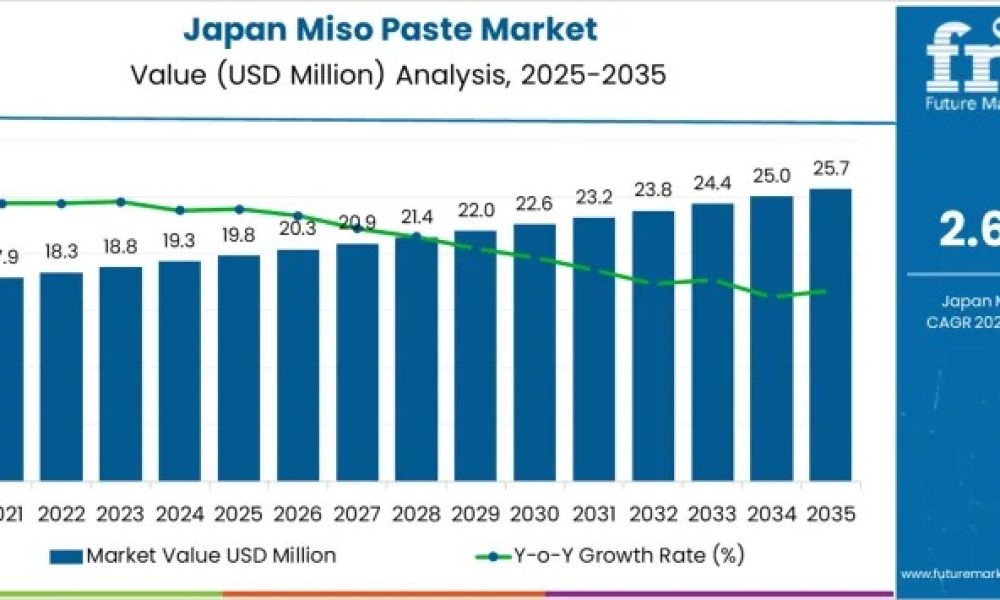
Japan’s miso paste demand is projected to rise from USD 19.8 million in 2025 to USD 25.7 million by 2035, reflecting a 2.6% CAGR over the forecast period. The market shows a gradual and resilient growth pattern, supported by miso’s deep-rooted presence in traditional Japanese cuisine and its expanding relevance in modern dietary habits.
From a valuation of USD 17.4 million in 2021, the industry continues on a stable upward trajectory. Miso paste remains a foundational ingredient in soups, sauces, marinades, and seasonings, ensuring consistent demand from households, restaurants, and the broader foodservice sector. Cultural continuity and culinary heritage play a crucial role in maintaining consumption levels across generations.
Request For Sample Report | Customize Report | Purchase Full Report – https://www.futuremarketinsights.com/reports/sample/rep-gb-29585
Health awareness is emerging as a secondary but influential growth lever. Consumers are increasingly recognizing fermented foods like miso for their digestive and probiotic benefits. This shift aligns with broader preferences for plant-based, minimally processed, and functional food ingredients, reinforcing miso’s relevance in contemporary Japanese diets.
Key Market Highlights
- Market Value (2025): USD 19.8 million
- Forecast Value (2035): USD 25.7 million
- CAGR (2025–2035): 2.6%
- Leading Product Type: Red miso (41% share)
- Leading End User: Food services (55% share)
- Key Regions: Kyushu & Okinawa, Kanto, Kansai, Chubu, Tohoku
Red Miso Maintains Product Leadership
Red miso leads product demand with a 41% market share, driven by its strong umami profile and longer fermentation process. Its rich flavor makes it essential in classic dishes such as miso soup, ramen broths, sauces, and marinades. Regions such as Kanto and Kansai show particularly high usage, where bold flavor profiles are widely preferred.
The adaptability of red miso in both traditional and fusion recipes ensures sustained relevance. Foodservice operators value its consistency, depth of taste, and versatility across menu formats.
Food Services Dominate End-User Consumption
Food services account for 55% of total miso paste demand, highlighting the ingredient’s importance in restaurants, hotels, catering operations, and institutional kitchens. High-volume dishes like miso shiru (miso soup) and miso-based sauces drive continuous procurement.
Urbanization and a strong dining-out culture, particularly in regions such as Kanto and Kansai, continue to support bulk consumption. Foodservice providers are also incorporating miso into modern menu innovations, including dressings, glazes, and fusion preparations.
Regional Growth Patterns
Regional demand remains balanced, with moderate but reliable growth across Japan.
- Kyushu & Okinawa: 3.3% CAGR, supported by strong culinary traditions and tourism
- Kanto: 3.0% CAGR, driven by urban households and convenience-focused cooking
- Kansai: 2.7% CAGR, reflecting deep cultural integration of miso-based dishes
- Chubu: 2.3% CAGR, supported by regional specialties such as miso katsu
- Tohoku & Rest of Japan: Stable demand, anchored in traditional home cooking
Kyushu & Okinawa lead growth as tourism and regional food identity reinforce demand for authentic miso-based dishes. Meanwhile, Kanto benefits from busy urban consumers seeking ready-to-use traditional ingredients.
Drivers Supporting Steady Expansion
Several structural factors are sustaining long-term growth:
- Strong cultural attachment to traditional Japanese cuisine
- Rising interest in fermented foods and gut health
- Product innovation including low-sodium, organic, and premium variants
- Wider availability through modern retail and online channels
- Expanding use in fusion and contemporary recipes
These trends allow miso paste to remain both traditional and adaptable, a rare combination in a mature food category.
Market Restraints and Challenges
Despite its stability, the market faces moderate pressures. Western-style dietary shifts, convenience eating patterns, and growing exposure to international cuisines may reduce frequency of traditional miso usage among younger consumers. Additionally, concerns over sodium intake are prompting demand for reduced-salt formulations.
Competition from alternative seasonings and imported condiments is increasing, though it has not significantly eroded miso’s core household role.
Access the full report for detailed market trends. https://www.futuremarketinsights.com/reports/brochure/rep-gb-29585
Competitive Landscape
Leading suppliers continue to shape product availability and innovation. Marukome holds a leading industry position with an estimated 32% share, offering a broad portfolio across traditional and modern formats. Other prominent players include:
- Hikari Miso Co. Ltd.
- Saikyo-Miso Co.
- Yamato Soysauce & Miso Co.
- Source Foods
These companies are investing in product differentiation, packaging innovation, and health-oriented variants to capture evolving consumer preferences.
Miso paste remains a pillar of Japan’s food identity. Its combination of heritage value, health relevance, and culinary versatility ensures a stable, long-term growth outlook despite gradual market maturity.
About Future Market Insights (FMI)
Future Market Insights, Inc. (FMI) is an ESOMAR-certified, ISO 9001:2015 market research and consulting organization, trusted by Fortune 500 clients and global enterprises. With operations in the U.S., UK, India, and Dubai, FMI provides data-backed insights and strategic intelligence across 30+ industries and 1200 markets worldwide.



