
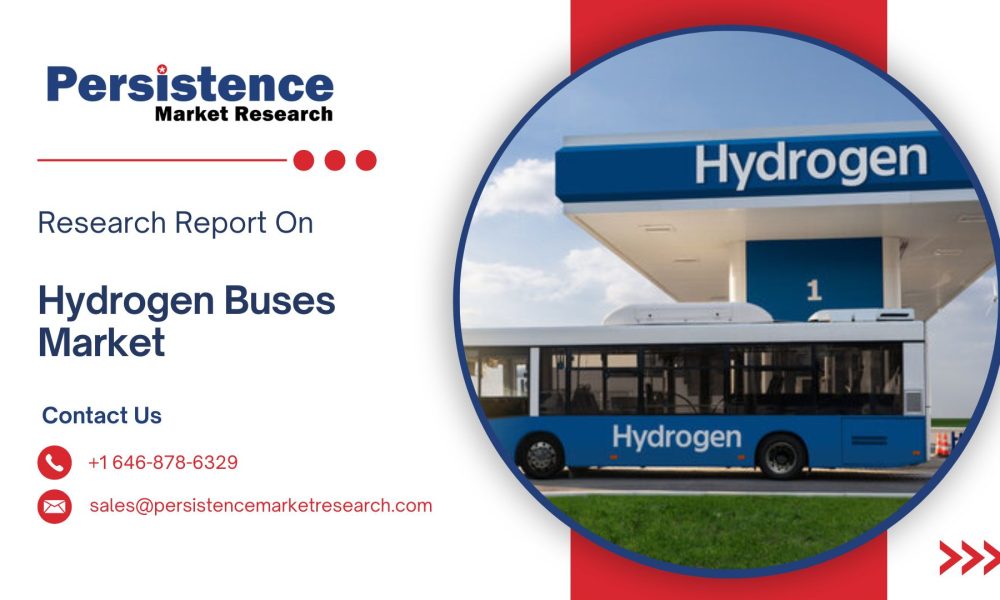
The global hydrogen buses market is poised for significant growth in the coming years. According to recent findings, the market size is anticipated to rise from US$ 1,172.7 Mn in 2025 to US$ 2,625.1 Mn by 2032, reflecting a CAGR of 12.2% during the forecast period. The market’s expansion is driven by increasing environmental concerns, government initiatives to reduce carbon emissions, and the growing adoption of zero-emission public transport solutions worldwide. Hydrogen fuel cell technology is gaining momentum as an efficient and sustainable alternative to traditional diesel and electric buses, offering extended range, quick refueling times, and reduced greenhouse gas emissions.
In terms of market statistics, Asia-Pacific emerges as a leading region due to large-scale government investments in clean energy infrastructure and supportive policies for public transportation electrification. The bus segment with medium and large capacities is witnessing robust growth, largely attributed to increasing urbanization, rising demand for mass transit solutions, and the development of hydrogen fueling infrastructure. The leading growth drivers include regulatory frameworks supporting low-emission vehicles, technological advancements in fuel cell systems, and collaborations between vehicle manufacturers and energy providers to enhance hydrogen supply chains.
Get a Sample Copy of Research Report (Use Corporate Mail id for Quick Response): https://www.persistencemarketresearch.com/samples/35127
Key Highlights from the Report
➤ The global hydrogen buses market is projected to reach US$ 2,625.1 Mn by 2032.
➤ The market is expected to grow at a CAGR of 12.2% from 2025 to 2032.
➤ Asia-Pacific is the leading region for hydrogen bus adoption due to government initiatives.
➤ Rising concerns over air pollution are driving the adoption of hydrogen fuel buses.
➤ Medium and large-capacity buses dominate the market in terms of sales volume.
➤ Technological advancements in fuel cell systems are boosting market growth.
Market Segmentation
The hydrogen buses market is segmented by bus type, end-user, and fuel cell technology. Based on bus type, the market includes small, medium, and large buses, with medium and large buses leading the market due to their higher passenger capacity and extended range capabilities. In terms of end-users, public transportation authorities represent the largest segment, driven by policies promoting zero-emission buses in urban areas. Additionally, private transportation operators and corporate fleets are gradually adopting hydrogen buses for corporate mobility solutions and shuttle services, expanding the market footprint across different sectors.
Fuel cell technology segmentation further enhances market analysis, dividing buses into proton exchange membrane fuel cells (PEMFC) and solid oxide fuel cells (SOFC). PEMFCs dominate the market due to their high energy efficiency, lightweight design, and faster refueling capabilities. Market adoption is influenced by regional infrastructure availability, cost considerations, and operational efficiency. The end-user preference for hydrogen buses also varies by geography, where developed regions prioritize environmental compliance, while developing regions emphasize scalability and infrastructure readiness for mass transit applications.
Regional Insights
Asia-Pacific remains the largest market for hydrogen buses, with countries like China, Japan, and South Korea leading adoption due to aggressive government subsidies and extensive hydrogen fueling infrastructure development. The region benefits from strong automotive manufacturing capabilities, a growing focus on clean energy, and urban population density that necessitates efficient mass transit solutions. Policy incentives, such as grants for zero-emission buses and investments in renewable hydrogen production, further support market expansion in this region.
Europe is also a significant market, particularly in countries like Germany, France, and the United Kingdom, where stringent emission regulations and carbon neutrality goals are accelerating hydrogen bus adoption. Government-funded pilot programs and partnerships between transport authorities and fuel cell manufacturers are driving technology deployment. Additionally, awareness campaigns and public demand for sustainable transport alternatives are key factors influencing regional growth trends in Europe.
Market Drivers
The global hydrogen buses market is primarily propelled by environmental regulations and sustainability goals. Governments worldwide are mandating lower emissions in public transportation, creating demand for hydrogen-powered buses as a zero-emission alternative to diesel and compressed natural gas buses. Technological advancements in fuel cells, including improved efficiency, longer lifespans, and reduced operating costs, have also contributed to market adoption. Urbanization and increasing traffic congestion are pushing cities to invest in cleaner, more efficient mass transit solutions, thereby encouraging hydrogen bus deployment.
Another driver is the expansion of hydrogen infrastructure, including production, storage, and distribution networks. Collaborations between vehicle manufacturers and energy providers are enhancing hydrogen availability and reducing operational challenges. Moreover, rising investments in research and development are enabling innovations such as hybrid hydrogen-electric buses, which further strengthen market growth by combining fuel efficiency with environmental benefits.
Market Restraints
Despite the growth potential, several factors restrain the hydrogen buses market. High upfront costs of hydrogen buses and fueling infrastructure remain a significant challenge for widespread adoption. Unlike conventional diesel or electric buses, hydrogen vehicles require specialized production and maintenance facilities, increasing capital expenditure for transport authorities and private operators. Additionally, limited hydrogen refueling stations in some regions pose logistical constraints, slowing down market penetration.
Technological challenges also act as restraints, including the storage of hydrogen under high pressure, safety concerns, and limited awareness about fuel cell technology among operators. Regional disparities in infrastructure development and government incentives may further delay adoption in certain markets. As a result, while demand is growing, cost and infrastructure barriers continue to influence market dynamics.
Market Opportunities
The hydrogen buses market presents substantial opportunities for growth. Expanding public-private partnerships in hydrogen production and distribution can improve infrastructure readiness and reduce costs for operators. Additionally, rising environmental awareness among governments and the public is creating opportunities for large-scale adoption in urban transport systems. Countries with high urban population densities are particularly attractive for hydrogen bus deployment due to the need for efficient, low-emission mass transit solutions.
Technological innovation also opens new avenues, including hybrid hydrogen-electric buses, enhanced fuel cell efficiency, and the development of lightweight, cost-effective bus designs. Investments in renewable hydrogen production from wind, solar, and other clean energy sources are expected to further strengthen market potential. These developments can lead to greater adoption in emerging economies and drive global market expansion through 2032.
Reasons to Buy the Report
- Comprehensive analysis of the global hydrogen buses market and key segments.
- In-depth insights on market growth drivers, restraints, and opportunities.
- Detailed regional market analysis with a focus on Asia-Pacific and Europe.
- Strategic assessment of leading players and competitive landscape.
- Forecast of market size, CAGR, and trends through 2032.
Company Insights
Key players operating in the hydrogen buses market include Toyota Motor Corporation, Hyundai Motor Company, Ballard Power Systems, Van Hool NV, BYD Company Ltd., Solaris Bus & Coach S.A., and NFI Group Inc. These companies are focusing on product innovation, strategic collaborations, and expanding production capacities to capitalize on market growth.
Recent Developments:
- Hyundai launched a new fleet of hydrogen fuel cell buses in Europe to strengthen its position in the zero-emission transport segment.
- Toyota partnered with several European transport authorities to expand hydrogen fueling infrastructure and support large-scale deployment of hydrogen buses.
Explore more related market insights and reports by visiting our website.




