

The patio door is one of the most used and most visible entry points in a home, and it’s also one of the most consistently underspecified. Homeowners who spend considerable time researching window glass packages and frame materials often make the patio door decision quickly — picking whatever style looks similar to what’s already there, or defaulting to the cheapest option that fits the opening. The result is a door that works adequately for a few years and then starts showing performance problems: drafts along the frame, difficulty operating the panel, condensation on the glass, or hardware that fails because it wasn’t built for the cycle count a frequently used door experiences.
Making a genuinely good patio door decision requires understanding what the options actually are, what the differences between them mean in practice, and what questions to ask before committing to a specific product. It’s not a complicated process, but it does require more than a five-minute conversation at a big-box store.
Sliding vs. French: More Than a Style Choice
The first decision most homeowners face is whether to go with a sliding patio door or a hinged French-style door, and it’s a choice with functional implications that go beyond aesthetics. Sliding doors operate on a track system — one panel is fixed and one slides horizontally to open. They don’t require clearance on either side of the opening to swing, which makes them the practical choice for spaces where furniture or deck structures are close to the door. They also tend to be more accessible, since there’s no threshold step required by a hinged door’s operation.
French-style patio doors swing outward or inward on hinges, which means they require clearance in the swing path — something not every deck or patio layout can accommodate. What they offer in return is a more traditional appearance, a wider unobstructed opening when both panels are open, and a different feel when operating. Many homeowners prefer the solid, substantial feel of a hinged door over the sliding action of a track-based system, and that preference is a legitimate factor.
The track system in a sliding door deserves specific attention during product evaluation. A track that accumulates debris, becomes difficult to operate over time, or allows a panel to lift out easily represents a security and performance problem. Quality vinyl patio doors use multi-point locking systems and track designs that stay clean and operate smoothly under the kind of frequent daily use a back door receives — which is meaningfully different from what budget sliding door products deliver over the same timeframe.
Glass Performance in Patio Doors: Why It Matters Even More Than in Windows
A patio door contains significantly more glass area than a typical window. A standard six-foot sliding door has roughly 45 to 50 square feet of glass. That large glass area means the door’s thermal performance has a proportionally large effect on the room it serves — more so than any individual window in the same space. A patio door with poor insulating glass performance creates a significant cold zone in winter and a solar heat gain problem in summer that the room’s HVAC system has to compensate for.
The same glass performance specifications that matter in windows — U-factor, Solar Heat Gain Coefficient, Low-E coating specification — matter equally in patio door glass, but the stakes are higher because of the surface area involved. A door with standard double-pane glass and no Low-E coating in a room with significant western or southern exposure will drive meaningful cooling load increases in summer. A door with a high-performance Low-E package and warm-edge spacer technology in the same room will perform dramatically differently, and the difference will show up in utility bills and comfort levels year-round.
Reviewing the energy efficiency and glass package options available for patio doors — rather than accepting whatever glass comes standard with the base product — is one of the most impactful decisions in the door specification process. The upgrade cost from standard glass to a high-performance package is typically modest relative to the total door cost, and the return in comfort and energy performance extends for the life of the door.
The Case for Adding a Storm Door
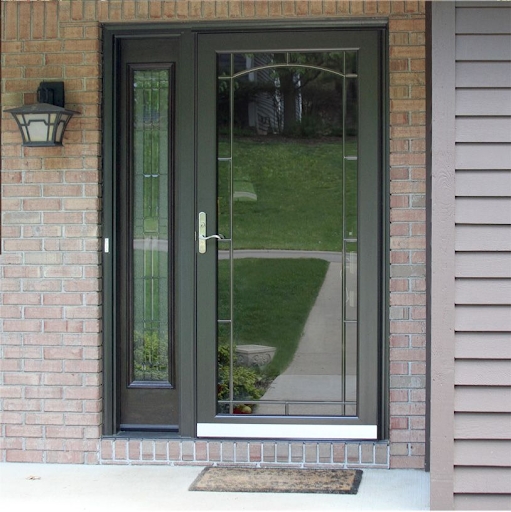
For homes with a traditional front entry door, a storm door provides a layer of thermal protection, weather resistance, and ventilation flexibility that the primary door alone can’t offer. A quality storm door creates an air buffer zone between the exterior and the primary door, which reduces heat loss in winter and keeps the primary door protected from direct weather exposure — extending its finish life significantly.
The ventilation function is one that homeowners in mild climates particularly appreciate. A storm door with a retractable or removable glass panel allows the primary door to be left open to bring fresh air into the home while the storm door’s screen keeps insects out — a simple, low-tech comfort benefit that works in any season where outdoor temperatures are pleasant enough to want airflow.
Storm doors are available in full-view glass configurations that maximize light and visibility, or in partial-view configurations with a solid lower panel that provides additional insulation and is more resistant to impact damage at the bottom where it’s most vulnerable. The right configuration depends on the entry’s exposure, the climate, and how much light the entryway needs — but in most cases a quality storm door delivers enough energy savings and primary door protection to justify its cost within a few years of installation.
Installation Is Where Patio Door Performance Gets Made or Lost
A well-specified patio door installed incorrectly will underperform a modestly specified door installed correctly. Patio door installation involves flashing, weatherstripping, threshold sealing, and precise leveling that determine whether the door operates smoothly, whether it seals against air and water infiltration, and how long the hardware lasts under daily use. An unlevel installation creates panel bind. Inadequate flashing creates water infiltration at the frame. Compressed or missing weatherstripping eliminates the air seal the door’s performance ratings assume.
The consistent thread running through patio door complaints — panels that stick, doors that let in drafts despite appearing well-fitted, hardware that fails prematurely — is installation quality rather than product quality. Specifying the right door and having it installed by someone who understands the details of the process produces a result that performs consistently for decades. Cutting corners on installation to save a few hundred dollars on a product that will be used multiple times a day for the next twenty years is almost never the right trade-off.