
Most homeowners don’t think much about their windows until something goes visibly wrong. A crack in the glass, a frame that swells so badly in summer it won’t open, condensation trapped between panes that fogs up permanently. Those are obvious signs. The more common situation is a set of windows that seem fine on the surface but have been quietly costing the homeowner money in energy losses, comfort problems, and deferred maintenance for years. Knowing the difference between windows that need replacing and windows that just need maintenance is the foundation of making a smart decision about one of the bigger investments a homeowner can make.
The Signs That Actually Mean It’s Time
The most reliable indicator that windows are past their useful life isn’t visible damage — it’s what you feel standing near them. Drafts around window frames during cold months, rooms that run persistently hotter than the rest of the house in summer, and noticeable temperature variation near the glass even when the window is fully closed are all signs that the thermal performance of the window has degraded past the point where it’s doing its job.
For older double-pane windows, the most common failure mode is seal failure — the edge seal that keeps the insulating gas between panes degrades over time, the gas escapes, and the window fills with humid air that causes the persistent fogging between panes that no amount of cleaning will fix. Once that seal has failed, the window’s insulating performance has dropped significantly. It’s not just an aesthetic problem; it’s a performance problem that’s costing the homeowner money every month in heating and cooling costs.
Frames tell their own story. Wood frames that have been painted and repainted over the years tend to develop rot in the corners and along the sill, where water collects and sits. Aluminum frames that feel cold to the touch in winter are transferring heat directly through the frame — a phenomenon called thermal bridging that undermines the performance of even good glass. Vinyl frames don’t rot, don’t conduct heat the way aluminum does, and don’t require the ongoing painting and sealing that wood frames demand. For homeowners who’ve been maintaining wood or aluminum windows for years, the labor and material cost of that maintenance is a real number worth factoring into the replacement decision.
Why Vinyl Specifically Makes Sense for Most Residential Applications
The window material conversation used to be more complicated than it is now. Wood was considered the premium choice. Aluminum was the budget option. Vinyl was somewhere in between, carrying a reputation for inconsistent quality that made some homeowners hesitant. That reputation reflected the reality of early vinyl window manufacturing, which has little bearing on what well-engineered vinyl windows deliver today.
Modern vinyl window frames are constructed from extruded PVC profiles with multi-chamber designs that trap air inside the frame itself, contributing to the window’s overall thermal performance rather than just filling space. The material doesn’t expand and contract with temperature changes the way it did in earlier formulations, which means frames stay square over decades rather than warping in ways that cause operability problems and seal failures. And unlike wood, vinyl requires essentially no maintenance — no painting, no sealing, no sanding, no annual inspections for rot.
From an energy performance standpoint, the frame material is only one part of the picture. The glass package — the specific combination of pane count, gas fill, Low-E coating specification, and spacer technology — determines the majority of the window’s thermal performance. Vinyl window styles and options that pair well-engineered vinyl frames with high-performance glass packages produce total window performance that competing materials can’t match at the same price point. The combination is what makes vinyl the right choice for most residential replacement projects rather than a compromise.
Understanding Glass Performance Before You Buy
The part of window shopping that most homeowners find confusing is the glass specification. U-factor, Solar Heat Gain Coefficient, Low-E coatings, argon fills, warm-edge spacers — these terms get used in spec sheets without much explanation of what they actually mean for the homeowner’s daily experience.
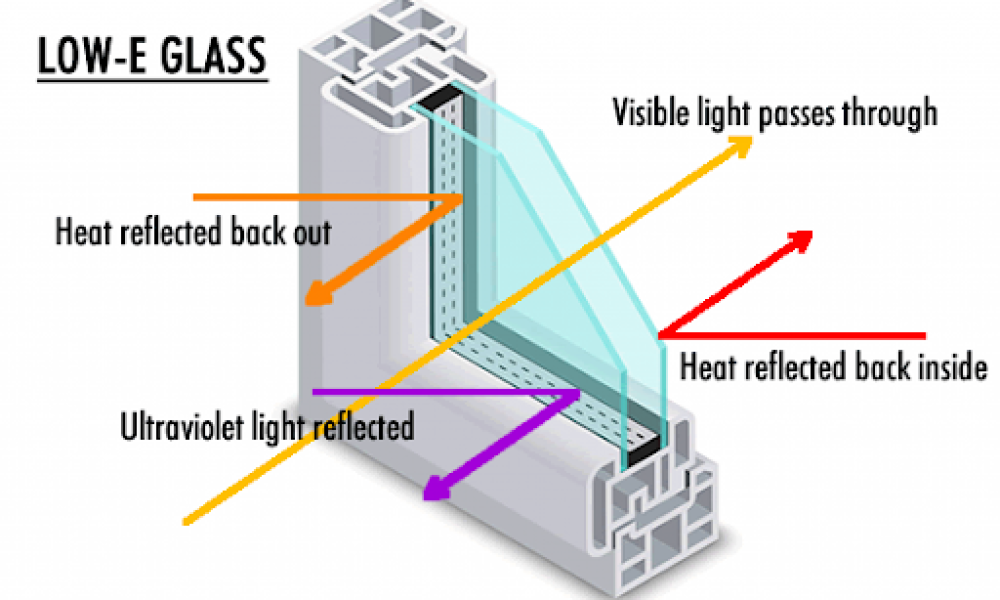
The short version: U-factor measures how well the window resists heat transfer. Lower is better. SHGC measures how much solar heat passes through the glass. Lower is better for cooling-dominated climates; higher can be an advantage in heating-dominated climates for south-facing windows. Low-E coatings are microscopically thin metallic layers on the glass surface that selectively block infrared radiation — keeping heat where you want it and blocking it where you don’t. The energy efficient glass packages available for residential vinyl windows range from standard double-pane configurations to high-performance triple-pane units with multiple Low-E coatings and krypton gas fills, and the right choice depends on the climate, the home’s orientation, and how the space is used.
What matters more than the individual spec numbers is whether the overall window system — frame, glass, and installation — performs consistently over time. A window with impressive specs that’s poorly installed, or that uses a spacer system prone to edge seal failure, will underperform a more modest specification that’s correctly executed. Asking the right questions about installation standards and the quality of the spacer and seal system is as important as comparing U-factors between competing products.

What the Replacement Process Actually Looks Like
For most residential replacement projects, windows are replaced using an insert method — the existing frame stays in place and a new window unit is sized to fit within it. This approach minimizes disruption to interior and exterior finishes, reduces labor costs, and is typically completed room by room without major construction impact. Full-frame replacement, where the entire window opening is rebuilt from scratch, makes sense when frames are significantly damaged, when the existing opening needs to be resized, or when the installation is part of a larger renovation project.
Getting an accurate measurement of each opening before ordering is essential regardless of which method is used, because vinyl replacement windows are manufactured to specific dimensions and a window that doesn’t fit correctly creates installation problems that compromise both performance and appearance. Working with an authorized dealer who handles measurement, ordering, and installation as a coordinated process eliminates most of the risk that comes with specifying and sourcing windows independently.