
Overview
The Global Healthcare Supply Chain Outsourcing Market size is expected to be worth around USD 5.4 Billion by 2033 from USD 3.1 Billion in 2023, growing at a CAGR of 5.8% during the forecast period from 2024 to 2033.
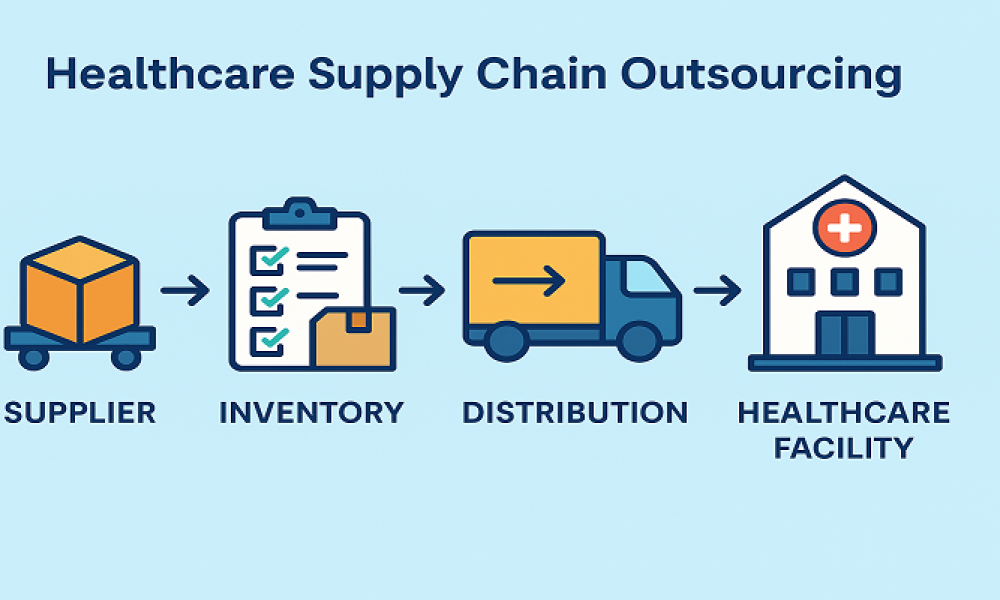
The global Healthcare Supply Chain Outsourcing Market is experiencing steady expansion, driven by the increasing need for operational efficiency, regulatory compliance, and cost containment across healthcare systems. Outsourcing supply chain management allows healthcare providers including hospitals, clinics, and diagnostic laboratories to streamline procurement, inventory control, distribution logistics, and supplier coordination through third-party service providers with advanced capabilities.
This strategic shift is primarily motivated by the complexity of handling multi-tiered supply chains, fluctuating medical demand, and growing pressure to maintain lean inventories. By delegating supply chain functions to specialized partners, healthcare institutions can improve service delivery, ensure timely availability of critical medical supplies, and reduce administrative burden.
Furthermore, the integration of digital technologies such as AI, RFID tracking, and data analytics by outsourcing providers enables real-time visibility, predictive demand forecasting, and enhanced decision-making. These innovations contribute to better resource allocation, minimize stockouts, and optimize supply chain performance across the continuum of care.
North America holds a dominant share of the market, owing to the presence of well-established healthcare infrastructure and prominent outsourcing companies. However, the Asia-Pacific region is projected to register the highest growth due to rising healthcare investments and increasing adoption of third-party logistics (3PL) services.
The healthcare supply chain outsourcing trend is expected to continue its upward trajectory, offering improved scalability and cost-effectiveness for healthcare delivery.
Click here to get a Sample report copy @ https://market.us/report/healthcare-supply-chain-outsourcing-market/free-sample/

Key Takeaways
- Market Size Outlook: The Healthcare Supply Chain Outsourcing Market is projected to reach approximately USD 5.4 Billion by 2033, rising from a valuation of USD 3.1 Billion in 2023.
- Growth Rate: The market is expected to expand at a compound annual growth rate (CAGR) of 5.8% between 2024 and 2033.
- Service Segment Insights: Transport Management emerged as a key service segment, accounting for a significant 25% share of the global market in 2023.
- End-User Analysis: Biotechnology and pharmaceutical companies represented the largest end-user group, contributing 37% to the overall market share in 2023.
- Regional Leadership: North America dominated the global landscape in 2023, capturing a substantial 50.0% share of the Healthcare Supply Chain Outsourcing Market.
- Technological Integration: The deployment of advanced technologies such as artificial intelligence (AI), the Internet of Things (IoT), and blockchain has significantly improved supply chain visibility, traceability, and operational efficiency.
- Cost Optimization: Outsourcing supply chain functions enables healthcare organizations to reduce operational expenditures and optimize inventory management processes.
Segmentation Analysis
- Service Analysis: The Healthcare Supply Chain Outsourcing Market is segmented into key services such as Transport Management, Order Management, Inventory Management, Manufacturing Management, and Sustainability Services. Transport Management leads with a 25% market share in 2023 due to rising demand for timely, compliant delivery of medical goods. Order and Inventory Management improve operational efficiency, while Manufacturing Management reduces production costs. Sustainability Services are also gaining prominence, driven by the healthcare sector’s increasing focus on environmental and social governance.
- End-User Analysis: Biotechnology and pharmaceutical companies dominate the market with a 37% share, driven by the need for highly specialized and compliant logistics. Their reliance on outsourced solutions ensures precise handling of sensitive materials. Academic and government research institutes also contribute significantly by outsourcing for efficient research material management. Hospitals and clinics, categorized under ‘Others,’ adopt outsourcing to focus on patient care while minimizing supply chain burdens. Each end-user segment supports market growth by enhancing efficiency and regulatory adherence.
Market Segments
By Service
- Order Management
- Inventory Management
- Transport Management
- Manufacturing Management
- Sustainability Services
- Others
By End-user
- Biotechnology & Pharmaceutical Companies
- Academic and Government Research Institutes
- Others
To Purchase this Premium Report @ https://market.us/purchase-report/?report_id=128540
Regional Analysis
In 2023, North America held a dominant position in the Healthcare Supply Chain Outsourcing Market, accounting for a substantial 50.0% market share. This leadership is attributed to the region’s advanced healthcare infrastructure and the widespread adoption of innovative technologies in supply chain operations. Healthcare organizations across North America increasingly rely on outsourcing to enhance efficiency, reduce operational costs, and improve patient care outcomes.
Additionally, strong regulatory compliance and a focus on data security further strengthen the region’s role as a global leader in healthcare supply chain outsourcing.
Key Players Analysis
The Healthcare Supply Chain Outsourcing Market report provides a comprehensive assessment of the competitive landscape, offering detailed profiles of key market players. These profiles evaluate companies based on their service portfolios, financial health, strategic positioning, geographic reach, and other critical performance indicators. A focused SWOT analysis is conducted for the top three to five companies, highlighting their core strengths, weaknesses, emerging opportunities, and potential risks.
This section further outlines essential success factors, prevailing strategic initiatives, and emerging competitive threats. Clients have the flexibility to tailor the company profiles to align with specific business objectives.
The report also delivers in-depth insights into the top five market participants, covering recent developments, strategic alliances, mergers and acquisitions, product innovations, and market presence both regionally and globally based on key industry metrics and the proprietary Ace matrix. This analysis serves as a valuable tool for stakeholders to navigate the evolving competitive dynamics of the Healthcare Supply Chain Outsourcing Market.
Market Key Players
- Stanley Security Solutions Inc.
- CenTrak Inc.
- AiRISTA Flow Inc.
- GE Healthcare Inc.
- INFOR INC.
- Nebula Surgical Pvt. Ltd
- Siemens Healthcare AG
- Accenture PLC
- Sonitor Technologies Inc.
- Zebra Technologies Corporation
- Tyco International Ltd
Market Dynamics
- Market Driver: A key driver of the Healthcare Supply Chain Outsourcing Market is the increasing pressure on healthcare providers to reduce operational costs while improving service efficiency. By outsourcing logistics, inventory, and transport management, organizations can focus on core clinical functions. This approach enables better resource allocation, faster response times, and minimized overhead expenses. The rising complexity of supply chains, especially for pharmaceuticals and biologics, further fuels demand for specialized outsourcing partners with regulatory expertise and advanced technological capabilities.
- Market Trend: A prominent trend in the market is the integration of advanced technologies such as artificial intelligence (AI), blockchain, and the Internet of Things (IoT). These technologies enhance supply chain transparency, automate inventory tracking, and improve regulatory compliance. AI-driven analytics are increasingly used to forecast demand and manage procurement more effectively. As healthcare shifts toward digital transformation, these tech-enabled outsourcing solutions are becoming essential to maintaining agility, improving decision-making, and ensuring uninterrupted supply chain operations across the healthcare ecosystem.
- Market Opportunity: The growing emphasis on environmental sustainability presents a significant opportunity in healthcare supply chain outsourcing. Companies are increasingly seeking partners that can support green logistics, waste reduction, and carbon-neutral operations. As global regulatory bodies and stakeholders push for greater sustainability compliance, outsourcing providers that offer eco-friendly solutions are likely to see increased demand. This shift not only aligns with corporate responsibility goals but also enhances brand reputation and long-term operational resilience within the healthcare sector.
Conclusion
The Healthcare Supply Chain Outsourcing Market is poised for steady growth, driven by the demand for operational efficiency, cost reduction, and compliance across healthcare systems. With a projected market value of USD 5.4 billion by 2033 and strong adoption in regions like North America, outsourcing has become a strategic imperative.
Integration of advanced technologies, rising sustainability goals, and complex supply chain requirements further amplify market potential. Key players are leveraging innovation and strategic partnerships to gain competitive advantage, positioning the market for continued expansion and value-driven transformation in the global healthcare ecosystem.
View More Reports:
Health IT Security Market Toward US$ 67.3 Billion By 2034
Electronic Health Records Market Toward USD 45.9 Billion by 2033
Women’s Health App Market to USD 24.2 Billion | Digital Solutions



