
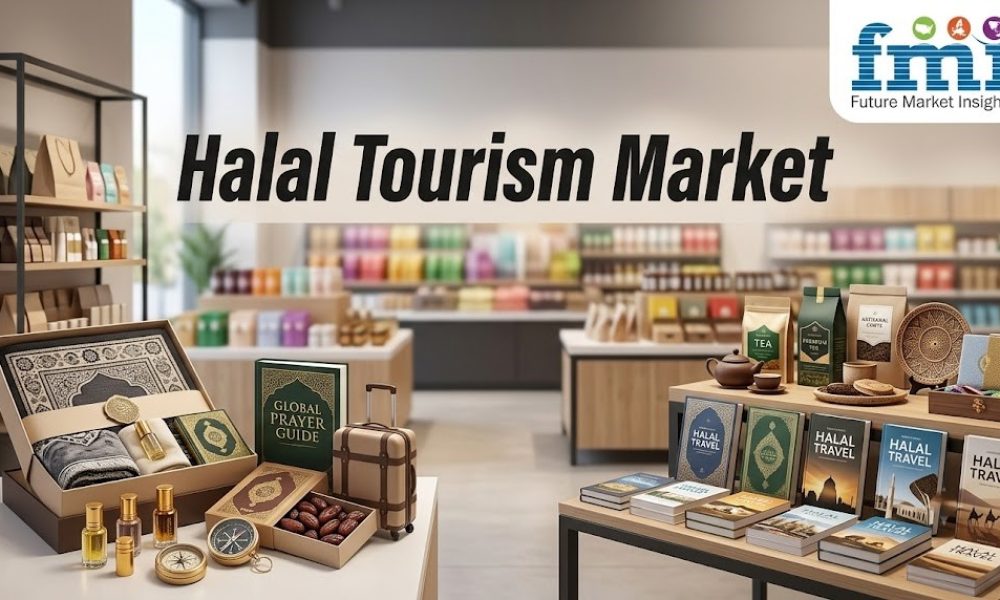
The global halal tourism market is estimated at USD 320.3 billion in 2026 and is projected to reach USD 579.0 billion by 2036, expanding at a 6.1% CAGR during the forecast period, according to Future Market Insights (FMI). The market is being shaped by demand for halal food access, prayer facilities, family privacy and culturally aware hospitality across domestic and international travel.
Domestic travel is expected to account for 52.0% of tour type demand in 2026, reflecting the role of shorter routes in reducing visa requirements, travel costs and service uncertainty. Women travelers are projected to represent 51.0% of tourist demography demand, while package travelers are estimated to hold 42.0% of tourist type demand as bundled hotels, meals and route planning simplify travel for families.
Get detailed market forecasts, competitive benchmarking, and pricing trends: https://www.futuremarketinsights.com/reports/sample/rep-gb-3050
Clear Service Information Becomes Central to Halal Travel Planning
Travelers increasingly evaluate service details before confirming accommodation and tour arrangements. Information on halal meals, prayer rooms, family rooms, privacy facilities and nearby worship spaces can influence destination and hotel selection.
Digital booking is becoming an important part of this process. Online booking is projected to account for 38.0% of booking channel demand in 2026, as travelers use digital platforms to compare halal-ready services before making payments. Clear service descriptions can reduce the need for travelers to contact hotels directly for basic information.
Package travel also supports market expansion. Fixed itineraries can combine accommodation, meals and destination activities, helping families manage faith-related requirements throughout a trip. Independent travelers, meanwhile, rely more heavily on reviews and online service information when evaluating individual hotels and destinations.
FMI identifies uneven certification and inconsistent service information as continuing challenges. Differences in how destinations communicate halal readiness can create uncertainty, particularly for long-haul travel. Higher international travel costs and limited trained staff in some destinations can also affect adoption.
Saudi Arabia and Indonesia Lead Country Growth
Saudi Arabia is projected to record the fastest growth among the countries analyzed by FMI, with a 10.4% CAGR through 2036. Tourism investment linked to Vision 2030 is expanding accommodation, leisure attractions and destination infrastructure beyond traditional pilgrimage routes. The Saudi Ministry of Tourism reported that international visitor spending increased 9.7% in the first quarter of 2025, supporting the development of tourism capacity.
Indonesia follows with a projected 10.1% CAGR, supported by its large domestic Muslim travel base, resort destinations and city tourism. Lombok, Jakarta and other destinations provide opportunities for operators combining accommodation, halal dining and family-oriented travel services.
Turkey is forecast to expand at 9.8% CAGR, supported by resort infrastructure and travel connections with Gulf and European markets. The UAE follows at 9.6% CAGR, with Dubai and Abu Dhabi benefiting from extensive hotel capacity and international connectivity. India is projected to grow at 9.3% CAGR, while Malaysia is forecast at 9.1% CAGR as halal branding and established Muslim-friendly tourism services support demand.
The United Kingdom is expected to record a 7.4% CAGR, with London, Manchester and Birmingham representing important city-level markets for halal dining, accommodation and culturally aware travel services.
Digital Filters and Verified Services Create Opportunities
The expansion of digital travel platforms creates opportunities for businesses to make halal service information easier to find. Hotels and booking platforms can provide structured details covering food certification, prayer facilities, room privacy and family services.
Destinations can also strengthen their tourism offers by connecting halal-ready hotels with dining, cultural attractions and transportation. Domestic and regional routes provide another opportunity because shorter trips can encourage repeat travel while allowing operators to test and refine service standards.
FMI notes that the market is moving beyond a narrowly defined travel niche toward a broader tourism service category. Suppliers that clearly communicate available services can address a key planning requirement for Muslim travelers while supporting greater transparency across the booking journey.
Ronak Shah, Associate Vice President at Future Market Insights, said, “I see halal tourism moving from special trip planning into routine travel choice. Families are checking food access and prayer rooms before they compare leisure extras. The pressure is coming from uneven service proof across destinations and from higher travel costs on long routes.”
Competitive Landscape
The halal tourism market includes destination organizations, digital booking platforms, hotel groups, travel companies and specialist service providers. Key organizations and companies profiled by FMI include Malaysia Tourism Promotion Board, JTB Group, Hilton Worldwide, Trip.com Group, HalalBooking, Al-Haramain, CrescentRating, Muslim Travel Girl, Halal Trip and Have Halal, Will Travel.
Malaysia Tourism Promotion Board supports destination promotion and halal tourism positioning, while Trip.com Group provides broad digital booking access. HalalBooking focuses on Muslim travelers through halal food, privacy and family-oriented property information. CrescentRating provides research, advisory and halal travel rating frameworks, while major hotel and travel groups contribute accommodation and structured travel infrastructure.
Access the Complete Report in PDF Format: https://www.futuremarketinsights.com/reports/brochure/rep-gb-3050
Market Scope
Future Market Insights’ Halal Tourism Market study covers tour type, tourist type, booking channel, age group, tourist demography and travel purpose across major global regions. The report provides forecasts for 2026 to 2036 and analyzes more than 40 countries.
Business Impact
FMI helps organizations transform market complexity into strategic clarity, enabling leadership teams to identify growth opportunities faster, optimize resource allocation, strengthen competitive positioning, and make high-stakes business decisions with confidence.
To explore how FMI Custom Research can support your strategic priorities, please connect with our team at – [email protected]
About Future Market Insights (FMI)
Future Market Insights, Inc. (FMI) is an ESOMAR-certified, ISO 9001:2015 market research and consulting organization, trusted by Fortune 500 clients and global enterprises. With operations in the U.S., UK, India, and Dubai, FMI provides data-backed insights and strategic intelligence across 30+ industries and 1200 markets worldwide.



