
The global cross-linked polyethylene (PEX) pipes market is positioned for sustained long-term growth through 2036, driven by expanding construction activity, increased adoption of sustainable piping materials, renovation and retrofit demand, and technological innovations in manufacturing and product performance. PEX pipes are widely used in plumbing, heating, and other fluid transport systems — offering flexibility, corrosion resistance, and cost advantages over traditional materials like copper and rigid PVC. While existing forecasts typically cover through 2035, extrapolating these trends through 2036 reveals opportunities and strategic imperatives for industry players in R&D, capacity expansion, and market development.
To access the complete data tables and in-depth insights, request a Discount On The Report here: https://www.factmr.com/connectus/sample?flag=S&rep_id=10993
Market Size and Growth Projections
Global Market Trajectory
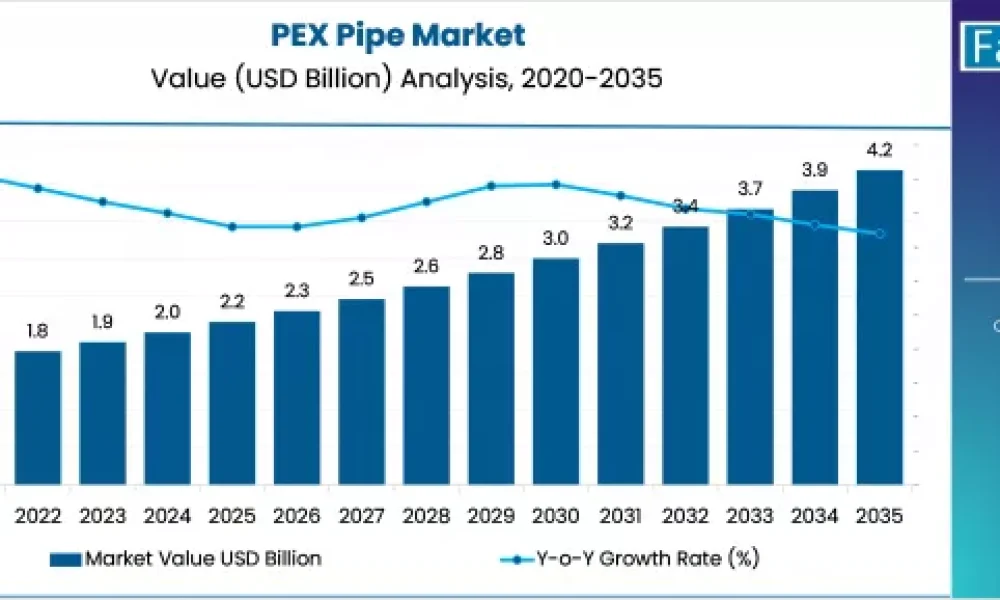
Recent market analysis indicates that the global PEX pipe market was valued around USD 2.2 billion in 2025, with expectations to reach USD 4.2 billion by 2035, growing at a compound annual growth rate (CAGR) of approximately 6.8% from 2025 to 2035.
Extended to 2036, this trajectory suggests continued momentum — assuming similar growth drivers remain robust — with market value likely exceeding USD 4.4 billion by 2036, guided by persistent global demand for efficient plumbing and heating infrastructure.
Competitive Forecast Variability
Other industry estimates suggest a CAGR in the 3.9–6.8% range through 2035 depending on segmentation and end-use modeling.
Despite these modeling differences, all credible projections reinforce steady, long-term expansion of PEX pipes, supported by:
Growing residential and commercial construction, particularly in Asia-Pacific and North America.
Rising adoption of radiant heating and energy-efficient building systems.
Shift toward sustainable plumbing solutions as copper and traditional materials face environmental and cost pressures.
Key Market Drivers
1. Construction and Urbanization
Expanding urban populations and infrastructure investment in emerging markets are major drivers of PEX pipe demand. With rapid housing growth, especially in China, India, and Southeast Asia, the need for efficient water distribution and heating systems is a central demand driver.
In developed regions like North America and Europe, renovation and retrofit markets fuel PEX adoption as aging metal pipe systems are replaced with lower-maintenance, corrosion-resistant alternatives.
2. Sustainability and Green Building Initiatives
Environmental sustainability standards and green building certifications increasingly favor non-metallic, recyclable materials. PEX pipes — particularly those with eco-friendly formulations — are gaining traction as lower-carbon alternatives to copper and steel.
Manufacturers are engaging in R&D to enhance recyclability, reduce emissions, and develop bio-based resin formulations — a strategic imperative to align with international sustainability trends.
3. Technological Advancements
The evolution of cross-linking technologies (PEX-A, PEX-B, PEX-C) enhances thermal performance, pressure tolerance, and durability. PEX-A remains dominant due to flexibility and freeze resistance, while PEX-B and PEX-C serve cost-sensitive or specialty niches.
Product innovation extends beyond materials to smart pipe technologies — integrating sensors for leak detection, real-time analytics, and IoT connectivity — expanding PEX relevance in smart building systems.
Application Landscape
Plumbing and Potable Water Systems
Plumbing applications represent the largest share of PEX pipe demand globally, driven by residential water supply needs and the replacement of legacy systems. PEX’s corrosion resistance, flexibility, and ease of jointing lower installation time and maintenance costs, reinforcing its appeal.
Heating Systems
Radiant heating and hydronic systems are rapidly adopting PEX due to its favorable thermal properties and installation benefits, particularly in cold climates and energy-efficient buildings. Over time, heating applications are poised to grow as integrated system design expands.
Other Emerging Uses
Beyond traditional markets, PEX is gradually making inroads into:
Geothermal loops
Snow-melt systems
Industrial fluid transport
Specialty irrigation solutions
Though smaller, these segments offer diversification opportunities for product innovation and market expansion.
Regional Market Dynamics
Asia-Pacific: Fastest Growing Hub
Asia-Pacific is forecast to lead PEX adoption growth thanks to rapid urbanization, industrialization, and major infrastructure projects. Local manufacturing expansion and competitive raw material availability enhance adoption potential.
North America: Dominant Installed Base
North America remains a mature and high-value market, propelled by stringent building codes favoring high-performance piping systems and ongoing renovation demand. Residential and commercial retrofits continue to sustain PEX volume growth.
Europe: Sustainability and Retrofit
Europe’s strict energy and environmental standards push PEX innovation and adoption. Growing green building investment and renovation markets also support long-term demand.
Strategic Imperatives for Industry Players
R&D Focus Areas
To remain competitive through 2036, manufacturers and stakeholders should prioritize:
Advanced Materials — focus on high-temperature, pressure-resistant, and long-life formulations.
Smart Integration — develop integrated sensor and monitoring systems for predictive maintenance.
Eco-Innovation — lead recycling and low-footprint production to meet tightening sustainability standards.
Expansion and Market Development
Key strategic actions include:
Capacity Expansion — invest in regional production facilities in high-growth markets like Asia and Latin America to reduce lead times and logistics costs.
Diverse Product Lines — tailor PEX products to emerging segments like industrial fluid transport and smart infrastructure.
Partnerships and Alliances — build alliances with construction firms, HVAC specialists, and smart building integrators to expand use cases.
Challenges and Risk Mitigation
Despite strong growth prospects, the PEX industry faces:
Raw Material Price Volatility — polymer feedstock price fluctuations can squeeze margins.
Competition from Alternatives — rigid PVC and metal alloys remain entrenched in some markets.
Regulatory Uncertainty — evolving environmental mandates require agile compliance and standards certification.
Proactive supply-chain diversification, flexible contract pricing, and robust regulatory monitoring are crucial risk mitigation strategies.
Conclusion
The Global PEX Pipes Industry is on a growth trajectory extending into 2036, bolstered by construction demand, sustainable system requirements, and technological innovations. While current forecasts extend through 2035, extrapolation suggests continued expansion into 2036 and beyond with strategic investments in R&D, regional expansion, and smart product development.
Industry participants who align with sustainability imperatives, embrace advanced manufacturing, and tailor solutions to evolving market demands will capture significant value in the decade ahead.
Have a specific Requirements and Need Assistant on Report Pricing or Limited Budget please contact us – [email protected]
To View Related Report :



