
Global Heart Closure Devices Market Forecasted to Reach New Heights by 2036 Amid Shift Toward Minimally Invasive Cardiac Care
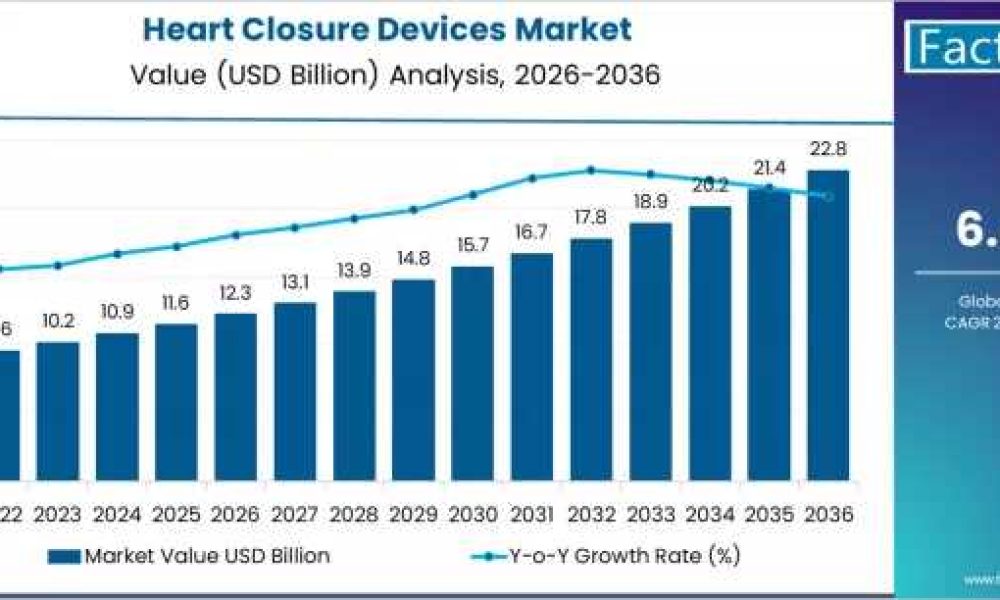
The global heart closure devices market is entering a decade of transformative growth, driven by a fundamental shift in cardiovascular treatment from traditional open-heart surgery to advanced, catheter-based interventions. According to the latest industry analysis for the 2026–2036 forecast period, the market—valued at approximately USD 4.57 billion in 2026—is projected to expand at a steady compound annual growth rate (CAGR) of 8.8%, positioned to surpass USD 10.6 billion by 2036.
This sector’s evolution is being catalyzed by the rising global prevalence of structural heart defects and the rapid adoption of Left Atrial Appendage (LAA) and Patent Foramen Ovale (PFO) closure technologies. As healthcare providers prioritize reduced recovery times and lower hospital readmission rates, these biocompatible medical instruments have transitioned from niche alternatives to primary standards of care.
Request for Sample Report | Customize Report | Purchase Full Report – https://www.factmr.com/connectus/sample?flag=S&rep_id=12748
Who, What, and Why: The Mechanics of Market Growth
The expansion of the heart closure ecosystem is underpinned by several converging clinical and economic factors:
Who: Industry leaders including Abbott, Boston Scientific, W. L. Gore & Associates, and Medtronic are spearheading R&D efforts. Their focus has shifted toward next-generation devices—such as the Amulet 360 and Gore Cardioform—which offer enhanced recapturability and conformable frames for complex anatomies.
What: The market is dominated by transcatheter closure systems. LAA closure devices currently hold the largest market share, nearly 49%, fueled by the rising incidence of non-valvular atrial fibrillation (AFib) and the desire for patients to forgo long-term blood-thinning medications.
Where: While North America remains the largest regional market due to advanced healthcare infrastructure, the Asia-Pacific region is projected to be the fastest-growing. Countries like India and China are seeing double-digit growth (11.3% and 10.4% respectively) as private cardiac centers prioritize early patient ambulation and high-volume throughput.
Why: A primary driver is the increasing burden of congenital heart defects (CHDs) and lifestyle-related cardiovascular diseases. Minimally invasive procedures now allow for successful closure in over 93% of cases, offering a safer profile for the growing geriatric population.
Technological Innovations and Strategic Trends
The 2026–2036 decade marks a critical era for Industry 4.0 integration in MedTech. Key trends anticipated to shape the landscape include:
1. Advanced Imaging and AI-Driven Diagnostics
The integration of Intracardiac Echocardiography (ICE) and 3D imaging is replacing traditional transesophageal methods. These imaging-first workflows enable conscious-sedation procedures, reducing anesthesia needs and radiation exposure for both patients and clinicians.
2. Bioresorbable and Smart Materials
Manufacturers are increasingly utilizing nitinol wireframes combined with bioresorbable layers that promote rapid re-endothelialization (tissue growth). This reduces the risk of long-term complications such as device thrombosis or nickel sensitivity.
3. Shift Toward Ambulatory Surgical Centers (ASCs)
Economic pressures are shifting procedures from traditional hospitals to specialized ASCs. These centers benefit from faster turnover and lower infection rates, creating a high-demand environment for devices that offer simplified, reproducible deployment.
Navigating Market Challenges
Despite the optimistic outlook, the industry faces headwinds. High production costs and stringent regulatory requirements remain barriers for new entrants. Furthermore, a global shortage of specialized interventional cardiologists persists. However, industry players are countering these challenges through structured operator training programs and strategic partnerships with academic institutions to standardize clinical outcomes.
The transition toward outcomes-anchored, image-guided solutions is positioning heart closure devices as a validated pillar within multidisciplinary stroke prevention strategies, says a lead analyst. Companies that embrace digital health integration and address affordability in emerging markets will lead this evolving space.
About the Heart Closure Devices Market Report
This comprehensive analysis provides granular data on total interventions, unit sales, and average selling prices across the cardiovascular therapeutic area. The forecast covers 2026–2036, offering stakeholders a strategic roadmap for investment and development in the structural heart sector.
Related Reports
Heart Attack Diagnostics Market https://www.factmr.com/report/heart-attack-diagnostics-market
– Contact Us –
11140 Rockville Pike, Suite 400, Rockville,
MD 20852, United States
Tel: +1 (628) 251-1583 | [email protected]
About Fact.MR
Fact.MR is a global market research and consulting firm, trusted by Fortune 500 companies and emerging businesses for reliable insights and strategic intelligence. With a presence across the U.S., UK, India, and Dubai, we deliver data-driven research and tailored consulting solutions across 30+ industries and 1,000+ markets. Backed by deep expertise and advanced analytics, Fact.MR helps organizations uncover opportunities, reduce risks, and make informed decisions for sustainable growth.



