
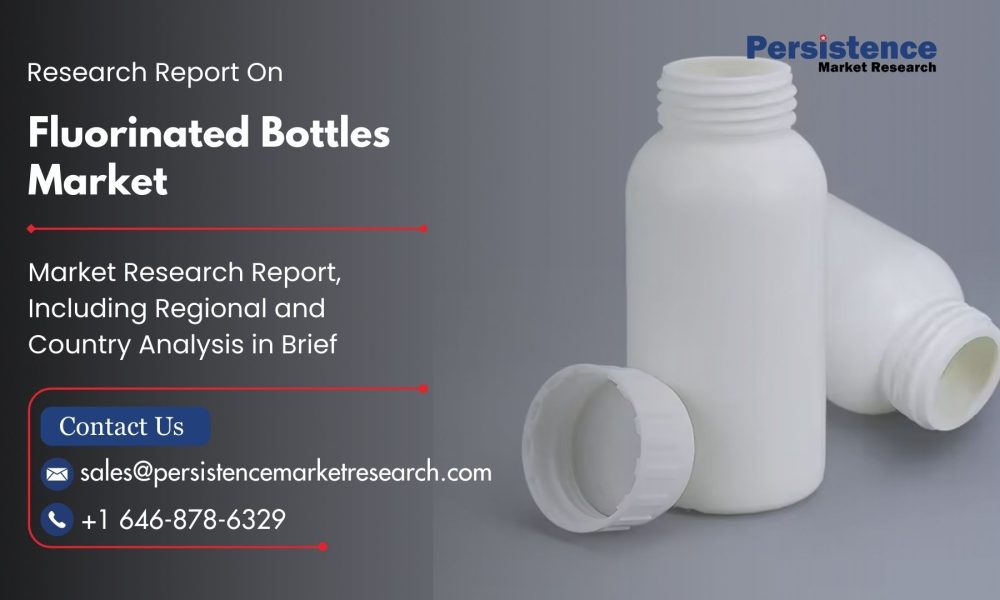
Fluorinated Bottles Market: Ensuring Safe, High-Performance Packaging in a Chemical-Driven World
In an increasingly safety-conscious industrial landscape, packaging technology continues to evolve well beyond mere containment. One of the most important innovations in this sphere is the fluorinated bottle — a specially treated plastic container designed for safe storage and transportation of aggressive, corrosive, or sensitive chemical contents. As hazardous materials handling regulations tighten and end-use industries demand greater product integrity, the fluorinated bottles market has emerged as a significant segment within the rigid plastic packaging industry, poised for substantial growth through the next decade.
What Are Fluorinated Bottles and Why Do They Matter?
Fluorinated bottles are plastic containers that have undergone a fluorination process, where fluorine gas is used to modify the inner surface of the bottle. This creates a highly inert, non-stick barrier layer that dramatically improves the container’s resistance to chemical permeation, degradation, and interaction with its contents. The fluorination treatment enhances the chemical resistance of polymers such as high-density polyethylene (HDPE) and polypropylene (PP), transforming ordinary plastic bottles into high-performance chemical packaging solutions.
This enhanced chemical resistance is critical in packaging aggressive solvents, corrosive agrochemicals, volatile industrial fluids, and sensitive pharmaceutical formulations. Without this barrier, standard plastics can swell, deform, react with contents, or allow permeation that compromises product safety and stability — outcomes that are unacceptable in regulated sectors such as pharmaceuticals and hazardous materials transport.
Get Your FREE Sample Report Instantly – Click Now: https://www.persistencemarketresearch.com/samples/35979
Market Size and Growth Forecast
According to Persistence Market Research, the global fluorinated bottles market was valued at approximately US$2.0 billion in 2026 and is forecast to reach around US$3.2 billion by 2033, registering a compound annual growth rate (CAGR) of about 6.9% over the forecast period. This robust growth underscores both an expanding base of industrial applications and a rising global emphasis on packaging safety, regulatory compliance, and chemical containment performance.
The primary drivers behind this expansion include stringent global regulations for hazardous material packaging, accelerated demand from the agrochemical and pharmaceutical sectors in emerging markets, and an ongoing shift away from traditional plastic containers toward higher-performing fluorinated alternatives.
Key Drivers of Market Growth
Regulatory Requirements and Safety Standards
One of the chief forces propelling the fluorinated bottles market is the tightening of safety, environmental, and transport regulations worldwide. Agencies such as the U.S. Environmental Protection Agency (EPA), Department of Transportation (DOT), and Food and Drug Administration (FDA) mandate compliance with strict container integrity standards for hazardous and chemically active products. Fluorinated bottles — with their superior resistance to permeation and chemical interaction — help manufacturers meet these regulatory benchmarks while minimizing leak-related risks throughout the supply chain.
Stringent rules concerning hazardous goods transportation also incentivize adoption, particularly in developed markets where regulatory scrutiny is highest. This has been a major factor in North America’s leading market position, where well-established industrial sectors and rigorous compliance norms drive demand for high-barrier packaging solutions.
Growth of Agrochemical and Pharmaceutical Industries
Two of the largest end-use markets for fluorinated bottles are agrochemicals and pharmaceuticals. In agriculture, potent pesticides, herbicides, and liquid fertilizers often contain aggressive solvents that can degrade conventional packaging, resulting in product loss and potential environmental hazards. Fluorinated HDPE bottles offer the durability and chemical resistance required to safely store and transport these formulations without risk of permeation or structural failure.
Similarly, in pharmaceuticals, the need for ultra-clean, chemically inert packaging is paramount, especially for biologics, vaccines, and high-potency active pharmaceutical ingredients (APIs). Fluorinated bottles help maintain drug stability and protect against contamination or leachables, aligning with strict healthcare quality standards and supply-chain demands.
Chemical and Industrial Applications
Beyond agriculture and healthcare, industrial sectors such as specialty chemicals, coatings, cleaning solutions, and industrial solvents represent substantial fluorinated bottle demand. These applications often involve substances that are highly reactive or corrosive to conventional plastics. Fluorinated packaging provides a protective barrier that prevents container degradation, ensures product longevity, and safeguards worker and environmental safety.
Get a Customized Market View in One Click: https://www.persistencemarketresearch.com/request-customization/35979
Market Segmentation Insights
By Fluorination Type
The market includes various fluorination technologies such as in-mold fluorination (IMF) and post-mold fluorination. In-mold fluorination integrates the treatment during bottle formation, improving production efficiency and delivering consistent barrier performance. Post-mold fluorination is widely adopted for its flexibility, allowing existing containers to be treated without major adjustments to production lines.
By Material Type
Among materials, HDPE dominates the fluorinated bottles market, accounting for the largest share due to its mechanical strength, lightweight nature, recyclability, and compatibility with fluorination treatments. HDPE bottles are commonly used for aggressive agrochemicals, industrial solvents, and hazardous products where robust barrier performance is essential.
By Bottle Capacity
The 500 ml to 1,000 ml capacity range holds a significant share of global volume. This size is widely preferred for commonly packaged chemicals, fertilizers, solvents, and pharmaceutical intermediates, balancing ease of handling, transport efficiency, and cost effectiveness.
By End-User Industry
End users such as industrial chemicals, automotive fluids, agrochemicals, pharmaceuticals, and personal care segments adopt fluorinated bottles based on specific barrier requirements. Among these, industrial chemicals currently lead the market, driven by strong demand for leak-proof containment and compliance with hazardous goods regulations. The pharmaceutical segment is one of the fastest-growing, reflecting increasing needs for contamination-free, inert packaging across complex drug supply chains.
Regional Market Dynamics
North America
North America holds a dominant position in the fluorinated bottles market due to its mature industrial base, stringent regulatory frameworks, and strong adoption across pharmaceuticals, specialty chemicals, and automotive sectors. Manufacturers in the U.S. and Canada are investing in advanced fluorination technologies to meet both performance and environmental standards.
Europe
Europe remains a major market influenced by sustainability initiatives and packaging waste regulations that emphasize recyclability and eco-friendly design. Governments in countries such as Germany, France, and the U.K. are pushing for packaging solutions that combine chemical resistance with recyclability, encouraging innovation in fluorinated bottle design.
Asia Pacific
Asia Pacific is one of the fastest-growing regions, driven by rapid industrialization in China and India, expanding pharmaceutical manufacturing, and rising agrochemical consumption. This region’s growth is supported by increasing domestic demand for chemically resistant packaging and rising agricultural productivity.
Challenges and Opportunities
Challenges
Despite strong growth prospects, the fluorinated bottles market faces challenges such as high production and operational costs. Fluorination requires specialized equipment, safety infrastructure, and strict process controls, which can raise manufacturing expenses and put pressure on pricing — especially in price-sensitive emerging markets. Regulatory scrutiny over potential environmental impacts of fluorination processes also demands additional compliance and monitoring investments.
Opportunities
There are significant opportunities linked to sustainable and recyclable fluorination technologies as global brands and regulators focus on circular economy principles. Innovations that make fluorinated bottles easier to recycle or incorporate post-consumer recycled (PCR) content can open new market segments, particularly in regions with strict environmental mandates. Additionally, integrating smart packaging features like RFID tracking and digital watermarks into fluorinated bottles offers value-added services for high-value chemicals and pharmaceutical logistics.
For In-Depth Competitive Analysis, Buy Now: https://www.persistencemarketresearch.com/checkout/35979
Conclusion
The fluorinated bottles market is at the intersection of safety, performance, and regulatory compliance in today’s packaging ecosystem. With steady demand across chemicals, pharmaceuticals, agrochemicals, and industrial sectors, and projected growth through to 2033, fluorinated bottles are becoming indispensable in applications that demand superior barrier properties and product integrity protection. While challenges related to cost and compliance persist, innovations in sustainable materials and smart packaging present promising avenues for long-term growth and differentiation in this dynamic market.
About Persistence Market Research:
Persistence Market Research delivers strategic research solutions that drive business growth. Founded in 2012 and registered in England and Wales in 2023 as Persistence Research & Consultancy Services Ltd., we have completed 3,600+ custom and syndicated studies and supported 2,700+ projects for leading research firms. Combining traditional methodologies with modern tools, we provide actionable insights to multinational corporations, consultants, investors, and government bodies, earning strong trust through long-term client relationships.
Contact Us:
Persistence Market Research
Second Floor, 150 Fleet Street,
London, EC4A 2DQ, United Kingdom
USA Phone: +1 646-878-6329
UK Phone: +44 203-837-5656
Email: [email protected]
Web: https://www.persistencemarketresearch.com




