
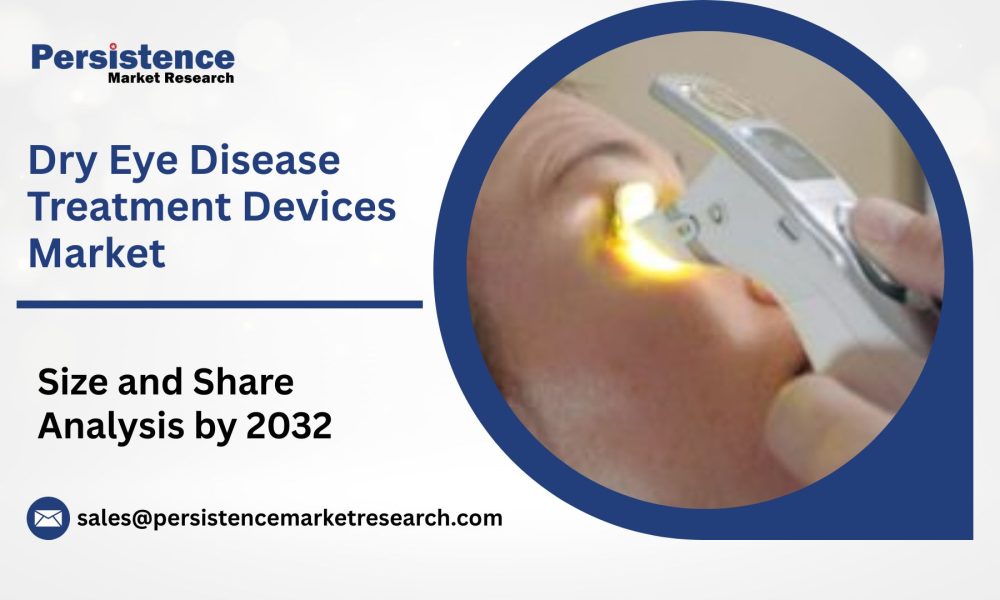
The Dry Eye Disease (DED) Treatment Devices Market plays a critical role in ophthalmology and eye care by providing effective solutions for managing dry eye symptoms, enhancing patient comfort, and improving ocular health. DED treatment devices are extensively used in hospitals, eye clinics, ophthalmic centers, and research institutions. Their precision, safety, and compatibility with advanced therapeutic methods make them indispensable in modern eye care. According to the latest study by Persistence Market Research, the global dry eye disease treatment devices market size is likely to be valued at US$ 302.3 Mn in 2025, and is expected to reach US$ 483.5 Mn by 2032, growing at a CAGR of 6.9% during the forecast period from 2025 to 2032..Growth is primarily driven by the rising prevalence of dry eye disease, increasing screen time and digital device usage, and expanding access to advanced ophthalmic care worldwide.
The market expansion is further supported by technological advancements in therapeutic devices, rising adoption of non-invasive and minimally invasive treatments, and growing awareness of eye health and preventive care. Among product types, thermal pulsation systems and intense pulsed light (IPL) devices remain the leading segments due to their effectiveness in treating meibomian gland dysfunction and other chronic dry eye conditions. Geographically, North America dominates the global market, attributed to high healthcare expenditure, advanced ophthalmic infrastructure, and strong patient awareness. The U.S. remains the key contributor, supported by ongoing research, innovation, and adoption of advanced treatment technologies.
🔗 Download Sample PDF of This Report: https://www.persistencemarketresearch.com/samples/34725
Key Market Insights
- The global dry eye disease treatment devices market size is likely to be valued at US$ 302.3 Mn in 2025, and is expected to reach US$ 483.5 Mn by 2032, growing at a CAGR of 6.9% during the forecast period.
- Thermal pulsation systems and IPL devices dominate due to high clinical effectiveness and widespread adoption.
- North America leads the market, driven by advanced healthcare systems and growing patient awareness.
- Rising prevalence of digital eye strain and chronic dry eye disease is fueling market adoption.
- Increasing focus on non-invasive, patient-friendly treatment devices is shaping product innovation.
What Are the Main Drivers of the Dry Eye Disease Treatment Devices Market?
The primary drivers include rising prevalence of dry eye conditions, increasing digital device usage, and growing awareness of eye health. The expansion of ophthalmic clinics, improvements in healthcare infrastructure, and adoption of technologically advanced treatment devices further strengthen market growth.
Market Dynamics
Drivers:
- Rising prevalence of chronic dry eye and ocular surface disorders.
- Growing demand for non-invasive and efficient treatment devices.
- Increasing adoption of advanced therapeutic technologies.
Restraints:
- High cost of advanced devices in emerging markets.
- Limited patient awareness in rural regions.
- Need for skilled ophthalmic professionals for device operation.
Key Market Opportunity:
The demand for minimally invasive, technologically advanced, and patient-friendly treatment devices presents major opportunities. Companies focusing on cost-effective, efficient, and sustainable solutions are expected to capture significant growth in both developed and emerging markets.
Market Segmentation
By Product Type:
- Thermal Pulsation Systems
- Intense Pulsed Light (IPL) Devices
- Punctal Plugs & Occlusion Devices
- Meibomian Gland Expression Tools
- Others
Thermal pulsation systems and IPL devices dominate due to their efficacy in treating chronic dry eye conditions and meibomian gland dysfunction.
By Application:
- Hospitals & Eye Clinics
- Ophthalmic Specialty Centers
- Research & Academic Institutions
Hospitals and eye clinics remain the largest application segment, while research institutes are witnessing growing demand.
Regional Insights
- North America leads the market, driven by advanced healthcare systems, high patient awareness, and strong adoption of therapeutic devices.
- Europe follows, supported by well-established ophthalmic infrastructure and favorable healthcare policies.
- Asia Pacific is the fastest-growing region, fueled by increasing screen time, growing prevalence of dry eye, and rising healthcare investments in countries such as China and India.
- Latin America and Middle East & Africa are emerging markets, benefitting from expanding ophthalmic infrastructure and rising awareness of eye health.
Competitive Landscape
The dry eye disease treatment devices market is moderately consolidated, with key players focusing on technological innovation, global expansion, and sustainable solutions.
Company Insights:
✦ Johnson & Johnson Vision
✦ Allergan (AbbVie)
✦ TearScience, Inc.
✦ Lumenis Ltd.
✦ Bruder Healthcare Company, Inc.
✦ OptiMedica Corporation
Key Industry Developments:
- Expansion of non-invasive and patient-friendly device technologies.
- Integration of treatment devices with digital eye health monitoring systems.
- Strategic acquisitions and partnerships to strengthen product portfolios.
- Growing focus on eco-friendly and energy-efficient devices.
Innovation and Future Trends
The future of the dry eye disease treatment devices market is shaped by innovation, patient comfort, and digital integration. Increasing adoption of AI-enabled diagnostic and treatment devices, non-invasive therapies, and home-based solutions will drive market growth. Emerging trends include smart eye health monitoring, tele-ophthalmology integrations, and personalized treatment plans, ensuring improved patient outcomes and convenience.
Explore the Latest Trending Research Reports:




