
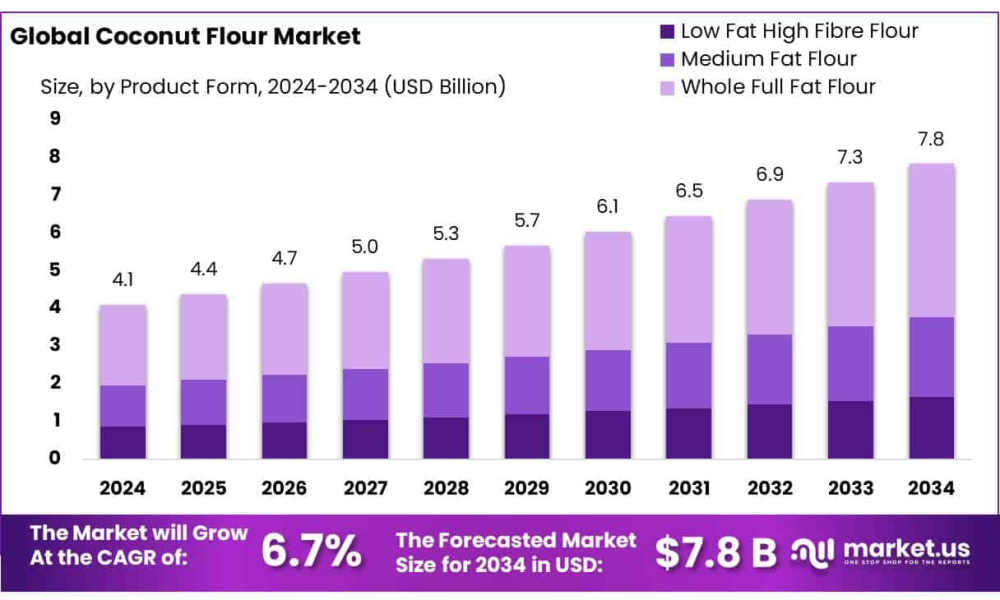
New York, NY – July 18, 2025 – The Global Coconut Flour Market is experiencing strong growth, driven by increasing consumer demand for healthy, gluten-free, and natural food products. Valued at USD 4.1 billion in 2024, the market is projected to reach USD 7.8 billion by 2034, expanding at a steady CAGR of 6.7% from 2025 to 2034.
In 2022–23, India produced approximately 20.54 billion coconuts across 2.28 million hectares, with an average yield of 9,018 nuts per hectare, according to the Coconut Development Board. In 2023, the Indian Ministry of Agriculture & Farmers Welfare reported a slightly higher production of 21.2 billion coconuts, with Kerala, Tamil Nadu, and Karnataka as the leading states. Meanwhile, the Philippine Statistics Authority (PSA) recorded a production of 13.6 million metric tons of coconuts in 2023, much of which is processed into desiccated coconut and by-products like coconut flour. These figures reflect a strong raw material base for coconut-derived products in both nations.
In India, value addition remains limited, with less than 10% of coconuts processed into products like coconut flour. Over 50% of the production is used for copra and coconut oil, while 15% is consumed as tender coconut. India’s presence in the global coconut trade is minimal, except for coir products. In contrast, the Philippines has seen a 16% increase in coconut flour exports to the U.S. in 2023, as reported by the USDA Foreign Agricultural Service, indicating growing international demand for coconut-derived products.
The demand for coconut flour is driven by the global trend toward clean-label, allergen-free, and functional food ingredients. The Food and Agriculture Organization (FAO) notes that global per capita dietary fiber intake falls below the recommended 25–30 grams per day, boosting interest in fiber-rich options like coconut flour. Additionally, the prevalence of gluten intolerance and celiac disease, affecting about 1% of the global population, is encouraging food manufacturers to adopt coconut flour as a wheat-free alternative.
Future growth in the coconut flour market lies in expanding its applications beyond conventional food uses. Innovations such as coconut flour protein blends and ready-to-use baking mixes are gaining popularity. The increasing vegan population and rising demand for functional foods in Europe and North America further enhance market potential, positioning coconut flour as a versatile ingredient in the global food industry.
Important Revelation
- Coconut Flour Market size is expected to be worth around USD 7.8 Bn by 2034, from USD 4.1 Bn in 2024, growing at a CAGR of 6.7%.
- Whole Full Fat Flour held a dominant market position, capturing more than a 45.4% share of the global coconut flour market.
- Conventional held a dominant market position, capturing more than a 54.6% share of the coconut flour market.
- Wet Process held a dominant market position, capturing more than a 63.7% share in the global coconut flour market.
- Dietary Supplements held a dominant market position, capturing more than a 38.1% share in the coconut flour market.
- Retail held a dominant market position, capturing more than a 68.2% share in the coconut flour market.
- North America emerged as the leading region in the global coconut flour market, commanding a substantial 43.9% share and generating approximately USD 1.7 billion
➤ Download Exclusive Sample Of This Premium Report (Including Full TOC, Table & Figures): https://market.us/report/global-coconut-flour-market/request-sample/
Report Segmentation
By Product Form
In 2024, Whole Full Fat Flour led the global coconut flour market with a 45.4% share. Its natural fat content delivers enhanced taste and nutritional value, appealing to health-conscious consumers on keto, paleo, or gluten-free diets. The flour’s rich texture and sustained energy release make it a top choice, particularly in North America and Europe, where home baking and clean-label trends are thriving.
By Nature
In 2024, Conventional coconut flour dominated with a 54.6% market share, driven by its cost-effectiveness and widespread availability. Small and mid-scale food producers opt for it due to its comparable texture and functionality to organic alternatives at a lower price. It remains the preferred choice for mass-produced bakery goods, processed foods, and home cooking, especially in emerging markets.
By Technology
In 2024, the Wet Process accounted for 63.7% of the global coconut flour market. This method retains more natural oils and nutrients, producing a flavorful, aromatic flour with a fine texture ideal for premium food products and gluten-free baking. Its superior moisture content and taste make it a favorite among manufacturers and consumers alike.
By Application
In 2024, Dietary Supplements led with a 38.1% share of the coconut flour market. The flour’s high fiber and healthy fat content make it a popular ingredient in supplements for gut health, energy, and weight management. Its gluten-free and low-carb properties resonate with fitness enthusiasts and diabetic consumers, boosting its use in powders, capsules, and health mixes.
By End-Use
In 2024, Retail held a 68.2% share of the coconut flour market, driven by the rise in home baking and demand for healthier flour alternatives. Coconut flour’s popularity in gluten-free, keto, and high-fiber diets has made it a staple in urban households. Its availability in supermarkets, health food stores, and online platforms has further accelerated retail growth.
Market Key Segmentation
By Product Form
- Low-Fat High-Fibre Flour
- Medium Fat Flour
- Whole Full-Fat Flour
By Nature
- Organic
- Conventional
By Technology
- Wet Process
- Fresh-Dry Process
By Application
- Baked Products
- Snack Foods
- Animal Feed
- Extruded Products
- Others
By End-Use
- Retail
- Industrial
Regional Analysis
In 2024, North America secured a dominant position in the global coconut flour market, accounting for a notable 43.9% share and generating approximately USD 1.7 billion in revenue. This leadership can be attributed to growing consumer awareness surrounding health and nutrition, along with a strong shift toward gluten-free and low-carbohydrate dietary preferences.
The increasing prevalence of celiac disease and gluten sensitivities has significantly boosted the demand for alternative flour options, with coconut flour emerging as a favored choice among health-conscious individuals.
The United States has played a pivotal role in driving this regional growth, supported by a well-established market for gluten-free products. As reported by the Celiac Disease Foundation, around 3 million Americans are currently affected by celiac disease, highlighting the critical need for suitable gluten-free alternatives.
This has encouraged the integration of coconut flour across various food categories, particularly in baked goods and snacks. Additionally, the growing popularity of paleo and ketogenic diets has reinforced the market’s momentum, as coconut flour aligns well with these regimens due to its high dietary fiber and low glycemic properties.
Factors Affecting the Growth of the Coconut Flour Market
- Growing Demand for Gluten-Free Products: More people are choosing gluten-free diets due to health issues like celiac disease or gluten sensitivity. Coconut flour, being naturally gluten-free, is a popular substitute for wheat flour in baking, driving its demand in health-conscious markets, especially in North America and Europe.
- Health and Wellness Trends: Consumers are seeking healthier food options with low carbs and high fiber. Coconut flour’s nutritional benefits, like aiding digestion and blood sugar control, make it a favorite for keto and paleo diets, boosting its use in snacks and baked goods.
- Supply Chain Challenges: Coconut flour production depends on the coconut supply, which can be disrupted by weather events like droughts or typhoons in major producing regions like the Philippines and Indonesia. These issues cause price fluctuations and affect product availability.
- Competition from Alternative Flours: Coconut flour faces competition from other gluten-free options like almond, cassava, and chickpea flours. Consumer preferences for different textures or flavors can limit coconut flour’s market share, especially in recipes where its distinct taste is less desired.
- Rising Vegan and Plant-Based Diets: The growing popularity of veganism and plant-based diets increases demand for coconut flour as a versatile ingredient in vegan baking and cooking. Its natural, plant-based properties align with ethical and environmental consumer preferences.
Competitive Landscape
- Asia Botanicals
- Bob’s Red Mill Natural Foods
- Celebes Coconut Corporation
- Coconut Secret
- Connecticut Coconut Company
- Healthy Traditions
- Nutiva
- Nutrisure Ltd.
- Peter Paul Philippine Corporation
- Primex Coco Products
- Smith Naturals
- The Coconut Company
- The groovyfood company
- Van Amerongen & Son
Get in Touch with Us:
Market.us (Powered By Prudour Pvt. Ltd.)
Address: 420 Lexington Avenue, Suite 300, New York City, NY 10170, United States
Send Email: [email protected]
Refer To More Related Reports:



