
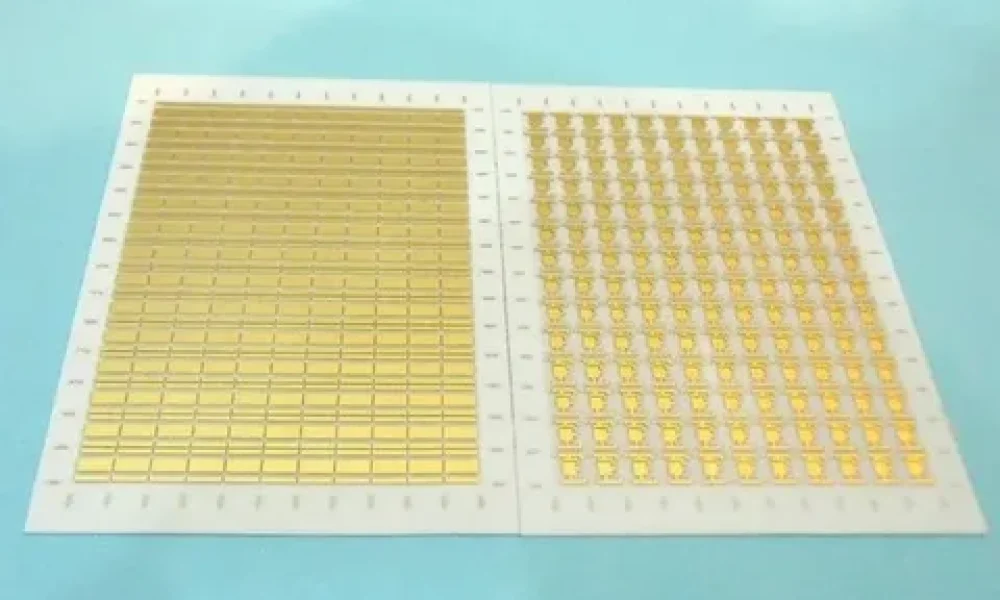
The global Ceramic Substrates Market is on track for significant growth, with its value projected to rise from USD 8.6 billion in 2025 to USD 15.6 billion by 2035, expanding at a 6.2% CAGR over the forecast period. This growth reflects the rising need for materials that deliver exceptional thermal management, mechanical stability, and electrical insulation for next-generation electronic applications.
The Rising Importance of Ceramic Substrates in Modern Industries
As technology continues to advance, industries are placing greater emphasis on compact, energy-efficient, and high-performance devices. Ceramic substrates have emerged as an essential backbone of this evolution. Their superior thermal conductivity and ability to withstand extreme stress conditions make them indispensable for semiconductor packaging, power electronics, and LED manufacturing.
The electrical and electronics sector, currently the largest end-use industry, is projected to account for 53.9% of global market share in 2025. Applications in automotive electronics, renewable energy, aerospace, and communication infrastructure are further accelerating adoption.
Full Market Report available for delivery. For purchase or customization, please request here:
https://www.futuremarketinsights.com/reports/sample/rep-gb-7728
Alumina Takes the Lead in Product Segments
Among all product types, alumina-based substrates are expected to dominate with 51.6% share in 2025. Known for their strength, cost-efficiency, and compatibility with metallization techniques, alumina substrates are widely used in semiconductor devices, LEDs, and high-power modules. As industries move toward miniaturization and higher density packaging, alumina is positioned to retain its leadership.
Meanwhile, aluminum nitride and silicon nitride substrates are gaining momentum for applications demanding higher thermal conductivity and reliability, particularly in automotive and aerospace industries.
Electronic Circuit Manufacturing Remains the Leading Application
The electronic circuit manufacturing segment is forecast to account for 46.8% of the ceramic substrates market revenue in 2025, underpinned by the rising complexity of circuit designs and the surge in global PCB assembly and semiconductor packaging. Ceramic substrates ensure better signal integrity, heat dissipation, and long-term performance—features that are critical for the growing demand in automotive electronics and industrial automation.
Regional Outlook: Asia-Pacific Leads the Way
Geographically, Asia-Pacific continues to spearhead market growth, with China, India, Japan, and South Korea at the forefront of demand. China alone is expected to grow at a CAGR of 8.4%, while India is not far behind at 7.8%. These markets benefit from robust electronics manufacturing ecosystems and government-backed initiatives in clean energy and automotive sectors.
North America and Europe are also expected to maintain steady growth, driven by advanced aerospace, automotive, and communication infrastructure needs. In particular, the U.S. ceramic substrates market is projected to expand from USD 3.0 billion in 2025 to USD 5.0 billion by 2035, at a 5.3% CAGR.
Why the Market is Growing
Several factors are propelling this surge:
Electronics miniaturization: Demand for smaller, more efficient devices is creating a push for advanced substrates.
Automotive evolution: The shift to electric vehicles (EVs) and advanced driver-assistance systems (ADAS) is increasing demand for ceramic substrates in power modules and sensors.
Regulatory compliance: Stricter global emission standards are driving the adoption of ceramic substrates in automotive exhaust systems.
Renewable energy integration: Power inverters, energy-efficient LEDs, and grid infrastructure rely on high-performance substrates for reliable operation.
Established and Emerging Players Driving Innovation
The ceramic substrates market features a blend of long-established players and emerging innovators, both focused on advancing material performance and production efficiency.
Leading manufacturers such as KYOCERA Corporation, CeramTec GmbH, CoorsTek Inc., and Corning Incorporated continue to set benchmarks in high-performance substrates, leveraging decades of expertise and R&D investments. Meanwhile, companies like LEATEC Fine Ceramics, ICP TECHNOLOGY Co., Ltd., and MARUWA Co., Ltd. are introducing specialized and cost-effective solutions tailored for specific industries, reinforcing competition and innovation.
For instance:
KYOCERA Corporation has been actively expanding its product lines for EV electronics, aiming to deliver more compact and energy-efficient solutions.
CoorsTek Inc. continues to diversify its advanced ceramics portfolio, strengthening its footprint in aerospace and defense.
Corning Incorporated, with its deep materials science expertise, is investing in innovative ceramic technologies that enhance signal transmission and durability.
New entrants in Asia-Pacific, supported by government initiatives, are developing scalable production models to meet the surging domestic demand in electronics and automotive sectors.
Get the Report Brochure Now:
https://www.futuremarketinsights.com/reports/brochure/rep-gb-7728
Key Takeaways from the Report
Market Value 2025: USD 8.6 billion
Market Value 2035: USD 15.6 billion
CAGR: 6.2%
Leading Product Segment (2025): Alumina (51.6%)
Leading Application (2025): Electronic Circuit Manufacturing (46.8%)
Largest End-Use Industry (2025): Electrical & Electronics (53.9%)
Fastest-Growing Region: Asia-Pacific, with China leading at 8.4% CAGR
The Future of Ceramic Substrates
The next decade will witness a sharp rise in the use of multifunctional, high-density, and eco-friendly ceramic substrates. As industries continue to prioritize performance, sustainability, and cost-efficiency, manufacturers will focus on developing materials that can balance these demands.
The market is also expected to benefit from the ongoing push toward green energy solutions, where ceramic substrates will play a key role in improving the efficiency of solar inverters, wind power systems, and smart grids.
With both established players and newcomers innovating at a rapid pace, the ceramic substrates market is set to transform the future of electronics, mobility, and industrial applications, making it a cornerstone of technological progress in the coming decade.



