
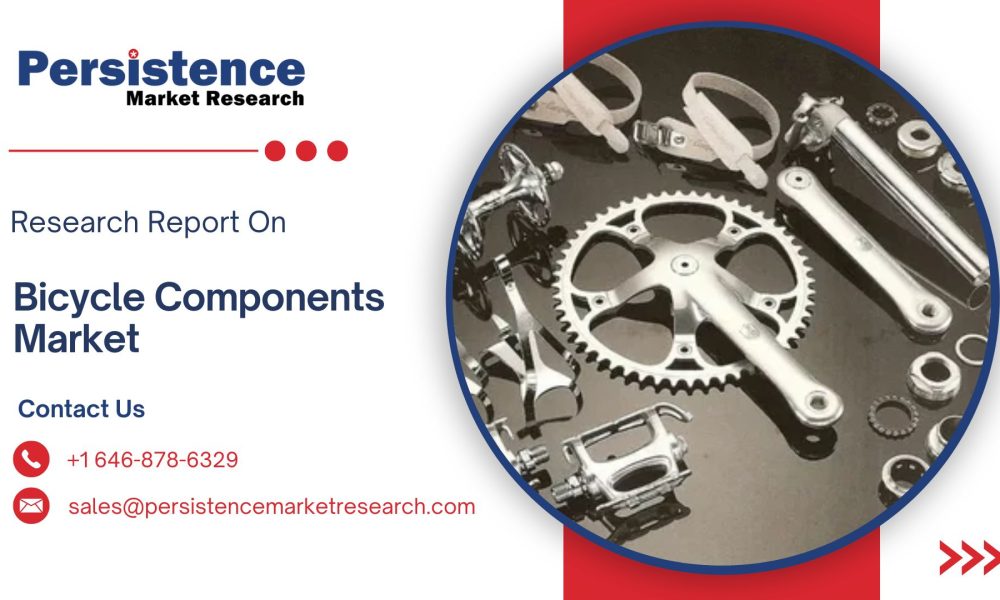
The global bicycle components market is undergoing significant transformation driven by the rising popularity of bicycles for transportation, fitness, and recreational purposes. According to Persistence Market Research, the market is estimated to reach a value of US$14.57 billion in 2025 and is projected to expand to US$22.49 billion by 2032, growing at a CAGR of 6.4% during the forecast period. The increasing awareness of environmental sustainability, rising urban congestion, and governmental incentives to promote cycling are pivotal in propelling market growth. Moreover, innovations in lightweight and high-performance bicycle components have encouraged consumers to invest in advanced bicycles, thereby stimulating the demand for premium components.
The market’s growth is also supported by technological advancements in drivetrain systems, brakes, gear sets, and wheels, which are gaining traction among professional cyclists and hobbyists alike. Among the various product types, bicycle drivetrains and wheel assemblies emerge as leading segments due to their critical impact on performance and safety. Geographically, Europe dominates the market owing to a well-established cycling culture, robust infrastructure, and favorable regulations promoting non-motorized transportation. Increasing adoption of bicycles in North America and Asia-Pacific also reflects a shift toward eco-friendly and cost-effective mobility solutions, further supporting the growth trajectory of the bicycle components market.
Get Latest Sample Copy of the Report: https://www.persistencemarketresearch.com/samples/32246
Key Highlights from the Report
- The global bicycle components market is projected to witness a steady growth at a CAGR of 6.4% from 2025 to 2032.
- Drivetrain systems are expected to be the most lucrative product segment due to performance enhancements and consumer preference for durable components.
- Wheel assemblies and braking systems are increasingly adopted in high-end bicycles, driving revenue growth in premium segments.
- Europe holds the largest market share, largely due to favorable cycling infrastructure and government initiatives promoting cycling.
- The increasing trend of e-bikes is significantly influencing component demand, particularly in urban commuting markets.
- Innovations in lightweight materials such as carbon fiber and advanced alloys are reshaping consumer expectations and boosting sales of high-end components.
Market Segmentation
The bicycle components market can be segmented based on product type, end-user, and other relevant categories. By product type, the market includes drivetrains, brakes, wheels, handlebars, saddles, and suspension systems. Among these, drivetrains and wheels are the most dominant due to their critical role in ensuring performance, safety, and cycling efficiency. Braking systems and suspensions are increasingly gaining attention in the mountain and high-performance bike segments. Product innovation, material improvements, and technological integration, such as electronic shifting systems, are expected to enhance adoption across various regions.
By end-user, the market is divided into recreational, professional, and urban commuters. Recreational cyclists continue to demand durable and affordable components, while professional cyclists require performance-oriented, lightweight, and technologically advanced systems. Urban commuters, particularly in regions with heavy traffic congestion and government initiatives supporting green mobility, are increasingly shifting toward e-bikes, which necessitate specialized components, such as motor-assisted drivetrain systems and battery-integrated wheel assemblies. This diversified segmentation ensures that manufacturers can target multiple user groups while addressing both performance and convenience requirements.
Regional Insights
Europe continues to lead the global bicycle components market, driven by established cycling infrastructure, widespread awareness of health benefits, and government policies promoting eco-friendly commuting. Countries such as Germany, France, and the Netherlands contribute significantly due to their cycling culture and consistent demand for high-performance and recreational bicycles. The region’s emphasis on e-bike adoption is further boosting the need for advanced components, particularly in drivetrain and braking systems.
In the Asia-Pacific region, rapid urbanization, rising disposable income, and increased government initiatives for sustainable transportation are driving market expansion. Countries like China, Japan, and India are witnessing an uptick in bicycle sales, both for personal commuting and leisure activities. Additionally, the increasing popularity of online retail platforms is facilitating easy access to premium and customized bicycle components, thereby enhancing regional market growth. North America also exhibits steady growth due to a growing fitness-conscious population and strong recreational cycling culture.
For customization options before purchasing: https://www.persistencemarketresearch.com/request-customization/32246
Market Drivers
The bicycle components market is primarily driven by the global push toward sustainable transportation. Governments across multiple regions are promoting cycling to reduce carbon emissions and alleviate traffic congestion. This has translated into increased demand for high-quality, durable, and efficient bicycle components. The rising awareness of health benefits associated with cycling is encouraging individuals to invest in both recreational and professional bicycles. Furthermore, the surge in urban commuting bicycles and e-bikes is creating opportunities for component manufacturers to cater to a broader range of consumers.
Technological innovations and material advancements also contribute significantly to market growth. Lightweight materials such as carbon fiber, aluminum alloys, and composite materials enhance bicycle performance while improving durability. Advanced braking systems, gear mechanisms, and suspension technologies cater to performance-oriented cyclists and enthusiasts. The increasing popularity of cycling competitions and adventure sports events globally further encourages investment in high-performance bicycle components, bolstering market expansion.
Market Restraints
Despite promising growth, the bicycle components market faces certain constraints. High production costs of advanced materials and premium components can limit adoption among price-sensitive consumers. Additionally, the dependence on raw materials, such as aluminum and carbon composites, makes the market vulnerable to price fluctuations and supply chain disruptions. In regions with limited cycling infrastructure or unfavorable weather conditions, the growth of bicycle adoption—and consequently, component demand—may be restricted.
Furthermore, the increasing penetration of low-cost bicycles with pre-assembled components can limit the demand for standalone premium components. Regulatory challenges in certain regions regarding product safety, transportation, and import/export tariffs may also impact market growth. Market players need to navigate these challenges carefully while maintaining quality standards, innovation, and cost-effectiveness to sustain growth in competitive regions.
Market Opportunities
The bicycle components market offers significant opportunities for innovation and expansion. The rising demand for e-bikes represents a lucrative segment for advanced drivetrain systems, battery-integrated wheels, and electronic gear systems. Manufacturers can capitalize on this trend by developing high-performance, energy-efficient components that cater to urban commuting and recreational cyclists alike. Additionally, the adoption of smart bicycle technology, including IoT-enabled components and GPS-integrated systems, presents a growth avenue for the tech-savvy consumer segment.
Emerging markets in Asia-Pacific and Latin America provide untapped potential due to urbanization, rising disposable incomes, and increasing health awareness. Collaborations between component manufacturers and bicycle OEMs can accelerate product adoption and innovation. Sustainability-focused solutions, including recyclable and eco-friendly materials, also open opportunities for brands to differentiate themselves in the market. Furthermore, expanding online retail channels and e-commerce platforms enables direct-to-consumer sales, reducing distribution costs and improving customer reach.
Company Insights
The global bicycle components market is characterized by the presence of established players and innovative startups. Leading companies include:
- Shimano Inc.
- SRAM Corporation
- Campagnolo S.r.l.
- Fox Factory Holding Corp.
- Tektro Technology Corporation
- Giant Manufacturing Co., Ltd.
- Merida Industry Co., Ltd.
Buy Now: https://www.persistencemarketresearch.com/checkout/32246
Recent Developments:
- Shimano Inc. recently launched an advanced electronic shifting system targeting professional and e-bike segments.
- SRAM Corporation introduced a lightweight carbon fiber wheel system designed to enhance performance in competitive cycling events.
Frequently Asked Questions
➤ What are the main factors influencing the Bicycle Components Market 2025-2032?
➤ Which companies are the major sources in this industry?
➤ What are the market’s opportunities, risks, and general structure?
➤ Which of the top Bicycle Components Market 2025-2032 companies compare in terms of sales, revenue, and prices?
➤ How are market types and applications and deals, revenue, and value explored?
Future Opportunities and Growth Prospects
The bicycle components market is poised for long-term growth, fueled by global trends in sustainable transportation, technological advancements, and urban mobility solutions. The rising demand for e-bikes and performance bicycles provides a foundation for innovation in drivetrain systems, wheels, and braking technologies. With continuous investments in research and development, manufacturers can expand product portfolios to cater to diverse end-users, from recreational cyclists to professional athletes.
Sustainable manufacturing practices and lightweight material innovations are likely to drive future market differentiation, allowing brands to meet consumer demand while minimizing environmental impact. Additionally, the expansion of online retail and direct-to-consumer sales channels provides an efficient way to reach new customers and enhance brand visibility globally. With the growing emphasis on health, fitness, and green transportation, the bicycle components market is expected to remain resilient and lucrative through 2032.




