
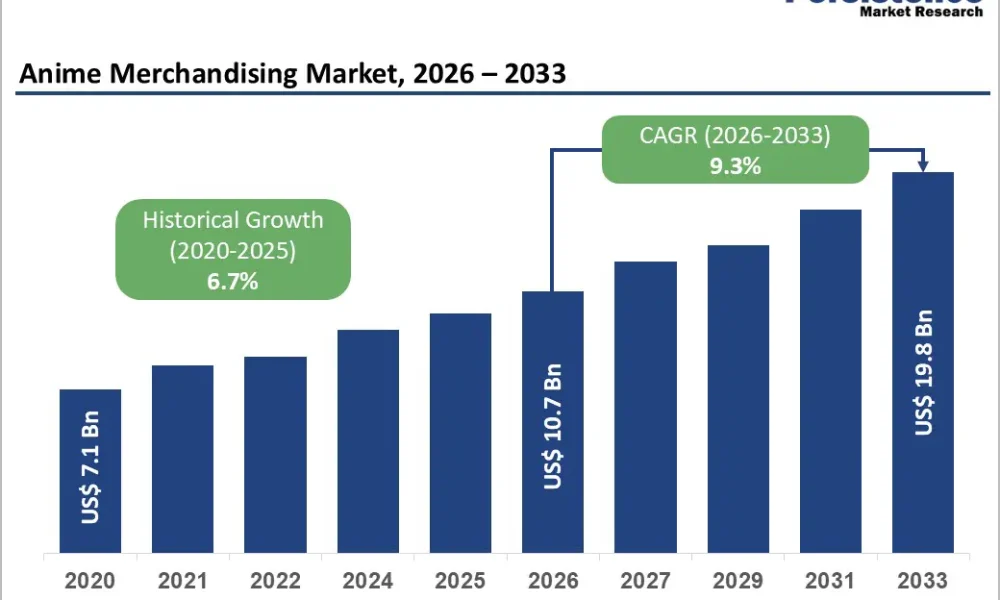
The anime merchandising market is undergoing a remarkable transformation as Japanese animation evolves from a niche cultural export into a dominant global entertainment force. With a projected market value growing from US$10.7 billion in 2026 to US$19.8 billion by 2033, at a CAGR of 9.3%, anime merchandise has become a critical revenue stream for studios, licensors, and global retailers alike.
This growth reflects more than just rising sales—it signals a cultural shift. Anime is no longer confined to television screens; it has permeated fashion, gaming, collectibles, and even lifestyle products. From figurines and apparel to immersive digital experiences, merchandising is at the heart of anime’s commercial ecosystem.
Market Overview
The anime merchandising industry thrives on a powerful combination of storytelling, emotional engagement, and intellectual property (IP) monetization. As streaming platforms expand access to anime content worldwide, fan bases continue to grow across regions, especially in North America, Europe, and emerging markets like India.
Key market metrics highlight the momentum:
- Market Size (2026): US$10.7 billion
- Projected Value (2033): US$19.8 billion
- CAGR (2026–2033): 9.3%
- Historical CAGR (2020–2025): 6.7%
The increasing integration of anime into mainstream culture, combined with strategic licensing partnerships, is accelerating market expansion.
Key Growth Drivers
- Rising Global Popularity of Anime
The global appeal of anime is a primary driver of merchandise demand. Popular series releases often trigger spikes in product sales, ranging from toys and apparel to collectibles and accessories. Fans seek to express their connection with characters through physical goods, creating a strong emotional purchasing driver.
Anime conventions and fan events further amplify this demand. These gatherings serve as key marketplaces where exclusive merchandise is launched, often selling out within hours. The experiential aspect—meeting creators, participating in cosplay, and engaging with communities—adds value beyond the product itself.
Streaming platforms have played a transformative role in expanding anime’s reach. With instant access to diverse content libraries, new audiences are continuously introduced to anime, fueling sustained merchandise demand.
- Strategic Licensing and Global Partnerships
Licensing agreements and co-production models are reshaping the anime merchandising landscape. Japanese studios are increasingly collaborating with international entertainment companies to expand IP reach and unlock new revenue streams.
These partnerships enable synchronized global product launches, where merchandise is released alongside anime premieres, films, or gaming adaptations. This integrated approach maximizes visibility and sales while strengthening brand equity.
Additionally, co-productions provide financial support to studios, allowing them to scale operations and invest in high-quality content, which in turn boosts merchandising opportunities.
- Growth of Anime Conventions and Events
Anime conventions have become major commercial hubs for merchandise sales. These events attract hundreds of thousands of fans globally, offering exclusive products, limited-edition collectibles, and immersive brand experiences.
Pop-up stores and themed cafes also contribute to offline retail growth by creating unique, interactive environments. Fans are more likely to purchase merchandise when they can physically engage with products and participate in themed experiences.
Elevate your business strategy with comprehensive market data. Request a sample report now: https://www.persistencemarketresearch.com/samples/34707
Market Restraints
- Counterfeiting and Piracy
One of the biggest challenges facing the anime merchandising market is the widespread issue of counterfeit products. Unauthorized merchandise not only affects revenue streams but also damages brand reputation due to inferior quality.
Online marketplaces and unregulated retail channels make it easier for counterfeit goods to reach consumers. This undermines trust and reduces the perceived value of official merchandise.
Piracy further compounds the problem by diverting potential revenue away from legitimate content creators, limiting investment in new productions and merchandise innovation.
- Regulatory Complexity and IP Fragmentation
The global nature of anime merchandising introduces regulatory challenges, particularly around intellectual property rights. Different regions have varying copyright laws, enforcement mechanisms, and licensing requirements.
This fragmentation complicates cross-border distribution and increases operational costs. Companies must navigate region-specific regulations, adapt product designs, and manage multiple licensing agreements, which can be resource-intensive.
Emerging Opportunities
- Subscription Boxes and Print-on-Demand Models
Subscription-based merchandise services are gaining traction as they offer curated, themed products delivered regularly to fans. These models create recurring revenue streams and strengthen customer loyalty.
Print-on-demand (POD) platforms are also revolutionizing the market by enabling small businesses and independent creators to produce customized anime merchandise with minimal upfront investment. This flexibility allows rapid adaptation to trends and fan preferences.
- Limited-Edition Drops and Collaborations
Scarcity-driven marketing strategies, such as limited-edition releases, are proving highly effective in driving demand. These products often become collectibles, increasing their perceived value and resale potential.
Collaborations between anime brands and fashion labels, artists, or global franchises are expanding the market beyond traditional fan bases. These partnerships introduce anime-inspired designs into mainstream fashion and lifestyle segments.
- Immersive Technologies: VR, AR, and Gaming
Technological advancements are opening new avenues for anime merchandising. Virtual reality (VR), augmented reality (AR), and gaming integrations are enhancing fan engagement and creating new product categories.
Digital collectibles, virtual merchandise, and interactive experiences are bridging the gap between physical and digital consumption, offering innovative ways for fans to connect with their favorite franchises.
Category-Wise Analysis
By Product
Toys and Figurines: Market Leaders
Toys and figurines dominate the anime merchandising market, accounting for over 28% of global share in 2026. These products appeal to both casual fans and dedicated collectors.
High-quality craftsmanship, detailed designs, and limited-edition releases make figurines highly desirable. The segment benefits from strong collector demand and a growing appreciation for anime artistry.
Apparel and Accessories: Fastest Growing Segment
Apparel and accessories are the fastest-growing category, with a CAGR of 13.9%, projected to reach US$5.9 billion by 2033.
Anime-themed clothing allows fans to express their identity in everyday life. Streetwear collaborations and fashion integrations have elevated anime apparel into mainstream culture, particularly among younger consumers.
By Distribution Channel
Online Channels: Dominating the Market
Online platforms account for over 53% of market share in 2026, driven by convenience, accessibility, and global reach. E-commerce giants and direct-to-consumer websites enable seamless purchasing experiences.
Digital platforms also facilitate product discovery, competitive pricing, and targeted marketing, making them the preferred channel for many consumers.
Offline Channels: Experiential Advantage
Despite the dominance of online sales, offline channels remain significant, expected to hold over 40% market share by 2033.
Specialty stores, conventions, and pop-up events provide tactile experiences that online platforms cannot replicate. Exclusive in-store products and interactive environments drive foot traffic and sales.
Regional Insights
Asia Pacific: Market Leader
Asia Pacific dominates the global anime merchandising market, accounting for over 65% share in 2026. Japan remains the epicenter, driven by its strong IP ecosystem, cultural integration, and established production infrastructure.
The region benefits from deep-rooted anime culture, government support initiatives, and a large consumer base. Emerging markets like China and India are also contributing to growth through increasing digital consumption and expanding fan communities.
North America: Fastest Growing Region
North America is experiencing rapid growth, projected to reach US$3.2 billion by 2033. The region’s expansion is fueled by streaming platforms, a strong convention culture, and increasing mainstream acceptance of anime.
Celebrity endorsements and social media influence have further popularized anime among younger audiences, boosting merchandise demand.
Europe: Steady Expansion
Europe is growing at a CAGR of 10.8%, with markets like France, Germany, and the U.K. leading the region. Strong retail networks, cultural acceptance, and large-scale conventions support market growth.
The region also benefits from regulatory harmonization within the European Union, enabling efficient cross-border distribution.
Competitive Landscape
The anime merchandising market is highly fragmented, with numerous players ranging from small independent creators to large multinational companies.
Key strategies adopted by market participants include:
- Exclusive licensing agreements
- Limited-edition product launches
- Collaborations with fashion and entertainment brands
- Diversification of product portfolios
Companies are increasingly aligning merchandise releases with anime premieres and major events to maximize visibility and sales.
Key Industry Developments
Recent developments highlight the dynamic nature of the market:
- New fan events and exhibitions featuring exclusive merchandise are driving engagement.
- Strategic acquisitions of merchandising rights are expanding global reach.
- Launch of officially licensed platforms in emerging markets is addressing counterfeit concerns and improving product authenticity.
These initiatives demonstrate the industry’s focus on innovation, authenticity, and global expansion.
Future Outlook
The future of the anime merchandising market looks highly promising, driven by continuous innovation and expanding global fandoms. Key trends shaping the future include:
- Integration of digital and physical merchandise ecosystems
- Expansion into emerging markets with growing anime audiences
- Increased focus on sustainability in product manufacturing
- Enhanced personalization through AI and data analytics
As anime continues to influence global pop culture, merchandising will remain a cornerstone of its commercial success.
Conclusion
The anime merchandising market is entering a golden era of growth and innovation. With a projected value of US$19.8 billion by 2033, the industry is set to benefit from the convergence of entertainment, technology, and consumer culture.
From collectibles and apparel to immersive digital experiences, anime merchandise is evolving into a multifaceted ecosystem that caters to diverse consumer preferences. While challenges such as counterfeiting and regulatory complexities persist, the market’s strong fundamentals and expanding global reach position it for sustained growth.
For businesses, creators, and investors, the anime merchandising sector offers immense opportunities to tap into one of the most passionate and rapidly growing fan communities in the world.
Related Reports:




