
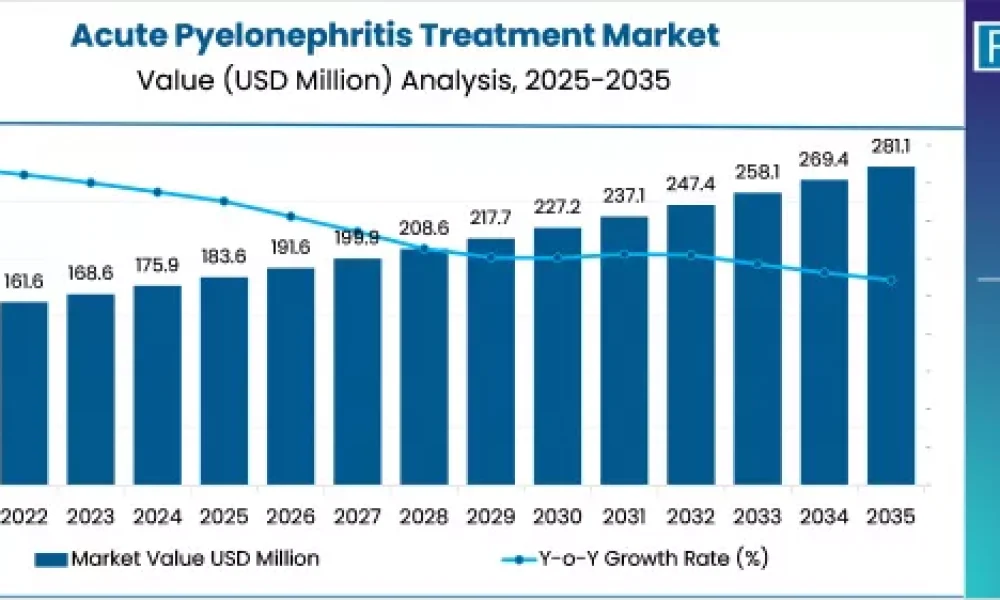
The global acute pyelonephritis treatment market is projected to witness notable growth over the next decade as the prevalence of urinary tract infections (UTIs) — particularly complicated and recurrent cases rises, and the demand for effective, rapid-acting therapeutics increases. In 2025, the acute pyelonephritis treatment market is valued at approximately USD 2.2 billion, and it is expected to reach USD 3.9 billion by 2035, reflecting an absolute increase of USD 1.7 billion over the forecast period. This growth corresponds to a compound annual growth rate (CAGR) of around 6.0% between 2025 and 2035, driven by factors such as growing geriatric populations, increasing antibiotic resistance, improved diagnosis rates, and expanding treatment options.
Acute pyelonephritis is a sudden and severe kidney infection typically caused by bacterial ascension from the lower urinary tract. The condition can lead to serious complications such as sepsis, renal scarring, and chronic kidney disease if not diagnosed and treated timely. The market for acute pyelonephritis treatment includes antibiotic therapies, combination drug regimens, and emerging supportive treatments aimed at improving patient outcomes.
Quick Market Snapshot (2025–2035)
Market Value (2025): USD 2.2 billion
Market Forecast Value (2035): USD 3.9 billion
Forecast CAGR: ~6.0%
Leading Treatment Class: Antibiotics and Combination Therapeutics
Key End Users: Hospitals, Clinics, Outpatient Facilities
Primary Growth Regions: North America, Europe, Asia Pacific
Key Drivers: Rising UTI incidence, antibiotic resistance management, diagnostic advancements, ageing population
To Access the Complete Data Tables & in-depth Insights, Request a Discount on this report: https://www.factmr.com/connectus/sample?flag=S&rep_id=1764
Market Overview
Acute pyelonephritis primarily affects women, older adults, and patients with urinary tract abnormalities or compromised immune systems. Rapid and effective treatment is critical to prevent progression to severe systemic infection and long-term renal damage. The standard of care typically involves empiric antibiotic therapy initially, followed by culture-guided treatment to ensure targeted pathogen eradication.
Treatment regimens include broad-spectrum antibiotics, combination therapies, and newer antibiotics designed to address resistant bacterial strains. Healthcare providers are increasingly leveraging advanced diagnostics — such as rapid urine cultures and molecular pathogen identification — to tailor therapy and improve treatment success rates.
In parallel, supportive care measures and adjunct therapies are used to manage symptoms, prevent recurrence, and support patient recovery. Clinical guidelines recommend timely intervention with appropriate antibiotic stewardship to balance efficacy with minimised resistance development.
Key Demand Drivers
Rising Prevalence of Urinary Tract Infections
Urinary tract infections are among the most common bacterial infections globally, with a significant proportion progressing to acute pyelonephritis when not effectively managed. Women — particularly those of reproductive age — exhibit higher incidence rates, while older adults and patients with comorbidities such as diabetes are at elevated risk. This prevalence trend underpins consistent demand for effective acute pyelonephritis therapies.
Increasing Antibiotic Resistance
Antibiotic resistance among uropathogens such as Escherichia coli and Klebsiella species is a major clinical challenge. The emergence of resistant strains necessitates development and adoption of newer antibiotic agents and combination regimens capable of overcoming resistance mechanisms while maintaining safety and tolerability. This dynamic drives innovation and expands the treatment landscape.
Diagnostic Advancements
Improved diagnostics — including rapid culture methods, molecular assays, and antimicrobial susceptibility testing — are enabling earlier and more accurate identification of causative pathogens. This facilitates targeted therapy, reduces treatment failures, and supports better antimicrobial stewardship, contributing to overall market growth.
Growing Geriatric Population
A significant global demographic shift toward ageing populations is increasing the prevalence of conditions that predispose individuals to complicated UTIs and acute pyelonephritis. Older adults often exhibit weakened immunity, higher rates of catheter-associated infections, and chronic health issues that complicate treatment, driving demand for specialised therapeutic options.
Market Segmentation Insights
By Treatment Type
Antibiotic Monotherapy: Continues to dominate with frontline agents widely used for uncomplicated and initial empiric therapy.
Combination Therapy: Increasing adoption in resistant and complicated cases to improve outcomes and reduce recurrence.
Adjunctive Supportive Care: Includes hydration therapy, pain management, and symptomatic treatments in inpatient and outpatient settings.
By Drug Class
Beta-Lactams and Cephalosporins: Commonly prescribed due to broad efficacy and tolerability.
Fluoroquinolones: Used under specific guidelines while considering resistance profiles.
Carbapenems and Advanced Antibiotics: Employed in resistant or severe cases.
Others: Includes tetracyclines, aminoglycosides, and newer classes with targeted action.
By End User
Hospitals: Largest segment due to acute and inpatient care settings where severe cases are treated.
Clinics and Outpatient Facilities: Growing adoption as early diagnosis and outpatient management increase.
Long-Term Care Facilities: High relevance given elevated risk among elderly residents.
Regional Demand Dynamics
North America
North America holds a significant share of the acute pyelonephritis treatment market due to high healthcare access, established treatment guidelines, and prevalent diagnostics infrastructure. Growing awareness of antibiotic resistance and stewardship programmes also supports expanded adoption of advanced therapeutic regimens.
Europe
Europe demonstrates steady growth supported by widespread healthcare coverage, structured treatment protocols, and investments in diagnostic technologies. Countries in Western and Northern Europe show strong demand for targeted therapies and combination regimens.
Asia Pacific
Asia Pacific is expected to exhibit rapid growth through 2035, driven by rising healthcare expenditure, increasing disease burden, expanding diagnostics access, and growing adoption of modern therapeutic approaches in developing economies. Markets such as China and India are particularly significant due to large populations and increasing clinical care penetration.
Competitive Landscape
The acute pyelonephritis treatment market is moderately competitive, with major pharmaceutical companies, specialty antibiotic manufacturers, and biotechnology firms focusing on product innovation, new drug development, and strategic partnerships. Companies are investing in clinical trials, antibiotic pipeline expansion, and combination therapy research to address resistance challenges and enhance therapeutic value.
In addition to drug innovation, competitive strategies include collaborations with diagnostics developers to integrate targeted diagnostics with specific therapeutic regimens, educational initiatives on antimicrobial stewardship, and tailored solutions for high-risk patient populations.
Future Outlook
The acute pyelonephritis treatment market is anticipated to maintain steady growth through 2035 as healthcare systems, clinicians, and patients continue to prioritise effective infection management. Advancements in diagnostics, expansion of antibiotic classes, and increasing focus on personalised therapy will expand treatment options and improve clinical outcomes.
As global populations age and chronic health conditions remain prevalent, the need for robust, safe, and effective acute pyelonephritis treatments will remain critical. Enhanced therapeutic strategies, integrated care pathways, and ongoing research efforts will collectively shape the market’s future growth trajectory.
Have specific requirements or need assistance on report pricing or have a limited budget? Please contact [email protected]
About Fact.MR:
Fact.MR is a global market research and consulting firm, trusted by Fortune 500 companies and emerging businesses for reliable insights and strategic intelligence. With a presence across the U.S., UK, India, and Dubai, we deliver data-driven research and tailored consulting solutions across 30+ industries and 1,000+ markets. Backed by deep expertise and advanced analytics, Fact.MR helps organizations uncover opportunities, reduce risks, and make informed decisions for sustainable growth



