
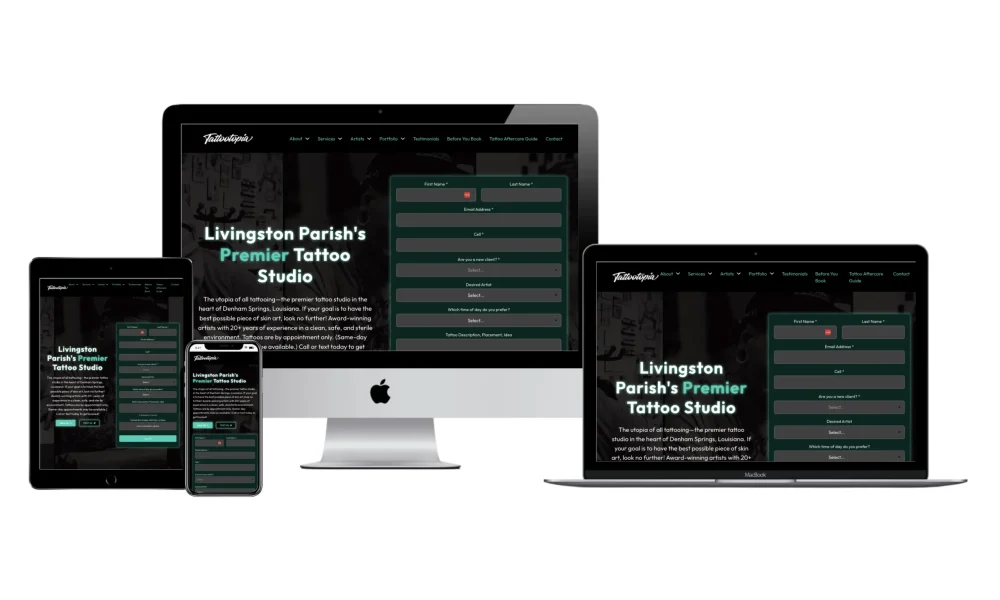
As the tattoo industry thrives on creativity and individuality, a well-constructed website is crucial for tattoo studios aiming to stand out and attract clients. An exceptional tattoo studio website reflects the studio’s artistic spirit, builds trust, and provides crucial information. Here, we delve into the essential elements a tattoo studio website should have for maximum impact.
1. Portfolio/Gallery: Showcasing Artistic Mastery
A visually striking portfolio is one of the most crucial sections of a tattoo studio website.
- High-Quality Images: Feature high-resolution photos of tattoos to highlight artistic detail and quality.
- Organized Layout: Sort the portfolio by artist or style, ensuring each image is labeled clearly.
- Variety: Include diverse styles to appeal to different tastes and attract a broader audience.
Visit Tattootopia’s website to see the perfect example of how to create the perfect portfolio for your tattoo studio.
2. Artist Profiles: Highlighting the Talent
Artists are the heart of a tattoo studio. Providing comprehensive artist profiles helps establish credibility.
- Biographies: Share each artist’s background, experience, and specialization.
- Personal Touch: Include quotes from artists about their artistic journey or philosophy.
- Links to Personal Portfolios: Allow artists to connect their social media profiles or personal websites.
3. Booking Information: Streamlining the Process
Clear booking information can significantly improve customer experience and increase bookings.
- Instructions: Provide step-by-step instructions on how to book an appointment.
- Online Forms: Include a user-friendly booking form to collect essential details.
- Studio Policies: Clearly state booking policies, pricing, deposit requirements, and availability.
4. About Us: Building the Studio’s Identity
The “About Us” section provides insight into the studio’s values and uniqueness.
- History and Philosophy: Share the studio’s journey, mission, and vision.
- Awards and Recognitions: Highlight any industry awards, certifications, or recognitions.
- Unique Selling Points: Describe what makes the studio stand out, such as specialized artists or techniques.
5. FAQ Section: Addressing Common Concerns
A comprehensive FAQ section answers visitors’ questions and reduces inquiries.
- Tattoo Process: Explain the procedure from consultation to the final tattoo.
- Aftercare: Provide instructions on how to care for new tattoos.
- Studio Policies: Clarify policies regarding deposits, changes, cancellations, and age requirements.
6. Location and Contact Information: Making Connections Easy
Help potential clients find and contact the studio effortlessly.
- Maps and Directions: Integrate a Google Map showing the studio’s location and nearby landmarks.
- Contact Details: Provide multiple methods, including phone, email, and social media links.
- Parking Information: If applicable, give detailed information on parking options nearby.
7. Social Media Integration: Amplifying Your Reach
Social media presence is crucial for any modern business, especially creative ones.
- Links to Social Platforms: Make sure all social media profiles are easily accessible from the website.
- Embedded Feeds: Include feeds from Instagram or Facebook to keep the website updated with new artwork.
8. Testimonials/Reviews: Establishing Trust
Social proof plays a significant role in convincing potential clients of a studio’s quality.
- Client Reviews: Feature positive reviews from clients to build trust.
- Testimonials: Share detailed testimonials that highlight the client experience.
9. Hygiene and Safety: Prioritizing Health Standards
Given the sensitive nature of tattooing, emphasizing safety is vital.
- Sterilization Practices: Describe sterilization processes and the use of single-use needles.
- Certifications: Showcase any relevant health or safety certifications to build confidence.
- Hygiene Policies: Clearly state policies for maintaining a sterile environment.
10. Blog or News Section: Sharing Studio Insights
An active blog or news section keeps visitors engaged and informed.
- Industry Insights: Share articles about tattoo trends, safety, and aftercare tips.
- Studio Updates: Announce new artists, events, or special promotions.
- Artist Interviews: Publish interviews with resident artists to showcase their personalities and philosophies.
11. Merchandise/Products: Expanding Revenue Streams
If your studio offers products, having an online shop can boost revenue.
- Aftercare Products: Promote your own branded aftercare products or trusted external brands.
- Merchandise: Sell studio-branded clothing, art prints, or accessories.
12. Special Offers: Attracting New Clients
Encourage potential clients to book by highlighting special promotions.
- Discounts: Offer discounts for first-time clients or seasonal promotions.
- Events: Advertise flash tattoo sales, conventions, or other events.
Conclusion
A successful tattoo studio website reflects the studio’s creativity while delivering practical information. By incorporating these essential features, you ensure the site provides an engaging, informative, and trustworthy experience that will draw more bookings and increase customer loyalty.