
Direct mail retargeting is one of those strategies that sounds counterintuitive until you look at the numbers — and then it makes complete sense. Most businesses accept that the vast majority of website visitors leave without taking action. Digital retargeting ads try to pull them back, but banner blindness and the steady erosion of cookie-based targeting have made those campaigns significantly less reliable than they were even five years ago. Direct mail takes a different approach entirely, and for the right businesses the results tend to be meaningfully better than digital follow-up alone.
How It Actually Works
The mechanics are straightforward. Website visitor data is used to trigger a physical piece of mail — typically a postcard — sent to the home address of someone who browsed your site but didn’t convert. The technology matches anonymous visitors to postal addresses through IP matching and third-party data, then triggers mail fulfillment automatically within 24 to 48 hours of the visit.
The result is that a prospect who spent time on your services page on a Tuesday might have a postcard in their mailbox by Thursday or Friday — while the business is still fresh in their mind and they’re still actively comparing options. That timing is what makes the channel work.
Why Physical Mail Has the Edge Right Now
Two problems have grown steadily worse for digital retargeting. The first is attention — most people have developed a near-automatic reflex for ignoring display ads. They register at the edge of awareness and get dismissed almost instantly. The second is reach — iOS privacy changes, ad blockers, and the deprecation of third-party cookies have steadily degraded both the accuracy and the audience size of digital retargeting campaigns.
Physical mail doesn’t have either of those problems. It gets picked up, it gets looked at, and it sits on a counter or desk in a way a banner ad never does. Pairing direct mail retargeting with a strong SEO services strategy means you’re not just attracting the right visitors — you’re following up with the ones who showed genuine intent but didn’t act on it.
Who Benefits Most
Direct mail retargeting works best for businesses where prospects research before deciding rather than making impulse purchases. Home services, legal, medical, real estate, and financial services are natural fits because the consideration window is long enough for a physical mailer to arrive while the prospect is still actively evaluating options.
Local and regional businesses also tend to see strong results because a physical piece with a recognizable local brand hits differently than a generic digital ad from a company the recipient barely remembers seeing online. And the economics favor any business where a single converted customer carries enough lifetime value to justify the cost of a mail run at even modest conversion rates.
What the Mailer Itself Needs to Do
The physical piece matters as much as the targeting. A cluttered, generic postcard with an unclear call to action will underperform regardless of how well the audience was built. The strongest direct mail retargeting pieces do a few things consistently: they reference the category of interest without being creepy about the specificity of the trigger, they include a single clear offer or reason to act now, and they make the next step obvious — a phone number, a QR code, or a URL that goes directly to a relevant landing page rather than a homepage.
Integrating this with a broader content marketing strategy means that landing page is already optimized to convert when the prospect arrives from the mailer.
Fitting It Into Your Existing Strategy
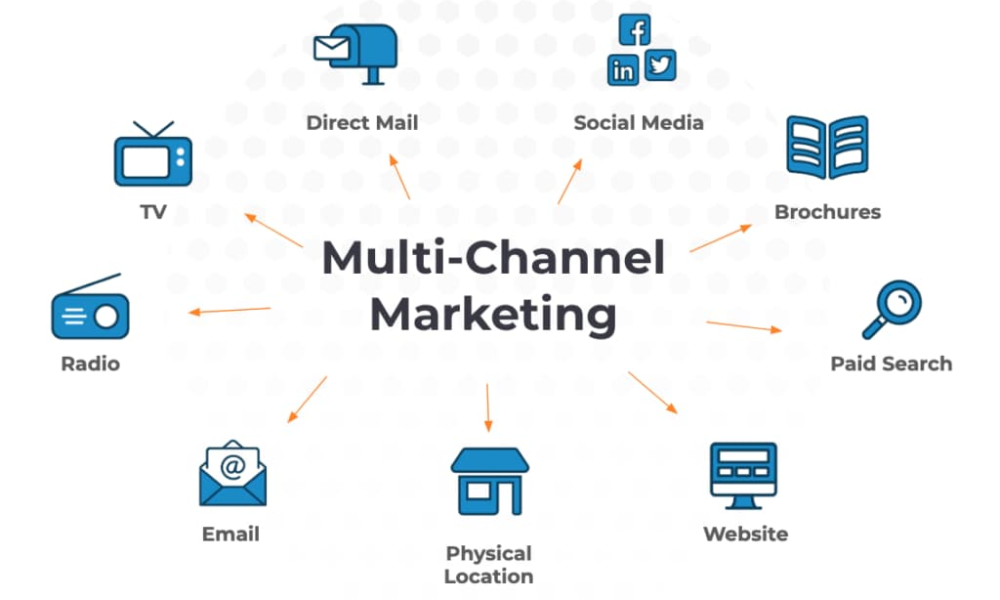
The strongest use of direct mail retargeting isn’t as a replacement for digital channels — it’s as a complement to them. A prospect who finds you through organic search, visits your site, receives a postcard, and then sees a social media ad has had multiple meaningful touchpoints across different formats. That kind of layered exposure builds trust in a way that any single channel alone can’t replicate.
Coordinating direct mail timing with email marketing follow-up for prospects already in your CRM creates a multi-touch sequence that lifts overall conversion rates across the board. The physical and digital touchpoints reinforce each other rather than competing for the same attention.
Measuring What You’re Getting
Modern direct mail retargeting is measurable in ways traditional direct mail never was. Because campaigns are tied to specific website visits and identifiable mail pieces, response rates can be tracked, conversions can be attributed to specific mail drops, and a real cost per acquisition can be calculated — the same way you’d evaluate any paid digital campaign.
That accountability makes it straightforward to optimize over time and to build a clear business case for continuing or scaling the channel based on what the data actually shows rather than intuition.




