
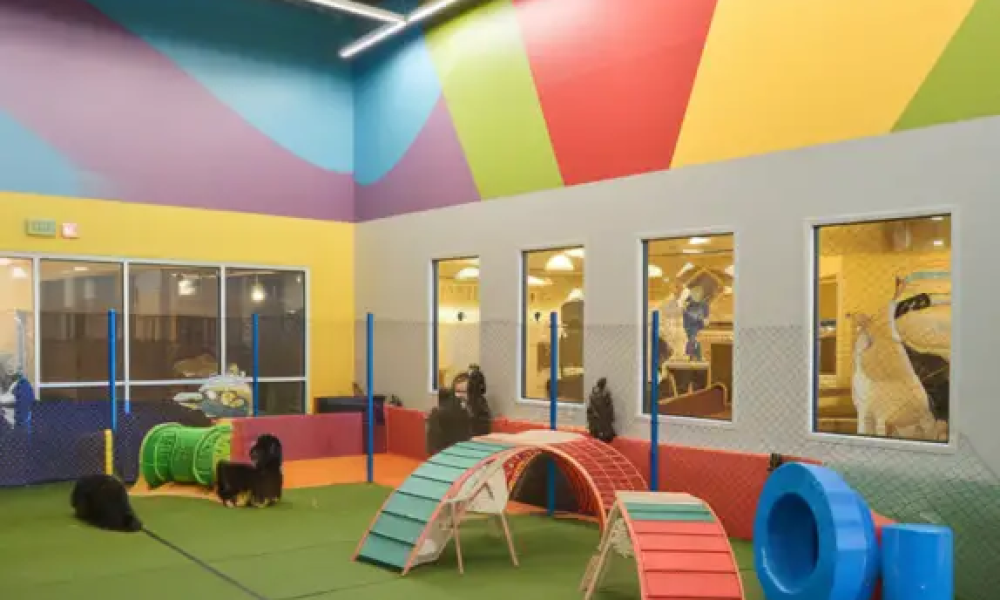
Dog play equipment is one of the first things a prospective client notices when they walk into a daycare or boarding facility — and what they see in those first few seconds shapes how they interpret everything else about the visit. A facility with well-designed, clearly purpose-built equipment reads as intentional and invested in the dogs in its care. A facility with bare concrete runs or worn-out consumer gear that looks like it belongs in someone’s backyard reads as minimal regardless of what the staff says about the quality of their care. That first impression is difficult to overcome, and it’s one that facilities have direct control over.
What Owners Actually See When They Tour
Most dog owners touring a facility aren’t evaluating the equipment on technical grounds. They’re not reading product specs or thinking about load ratings. What they’re doing is making a rapid, largely intuitive judgment about whether this place takes the dog’s experience seriously.
A play space that gives dogs options — things to climb, surfaces to explore, elevated rest spots, varied layouts — communicates engagement and enrichment. It tells an owner that someone has thought about what dogs actually need during a long day away from home, not just what keeps them contained safely. That’s a different signal than a plain room with nothing in it, and it’s the kind of signal that turns a tour into a booking.
Enrichment as a Retention Strategy
The practical business case for investing in quality dog play equipment goes beyond the first impression. It’s about what the dog’s experience is actually like day after day, and what that experience does to the owner’s booking behavior over time.
A dog that comes home from daycare genuinely tired — pleasantly worn out from actual activity and engagement rather than just having spent the day in a kennel — is a dog whose owner keeps coming back. That owner also talks about the facility. They recommend it to people in their neighborhood, their dog park, their apartment building. The quality of the dog’s daily experience drives retention and referrals in a way that no amount of marketing spend fully replicates.
Modular play structures that allow dogs to climb, balance, and move through varied configurations throughout the day provide the kind of stimulation that produces that outcome. The PRO Series Modular systems are built specifically for commercial environments where equipment needs to handle heavy daily use from multiple dogs across a range of sizes and energy levels — not occasional backyard play.
Fitting Equipment to the Space
Commercial facilities rarely have the luxury of unlimited floor space, and play equipment that creates bottlenecks, blind spots, or areas where staff can’t maintain clear sightlines is a problem regardless of how good it looks. Modular systems solve this by adapting to the specific dimensions and layout of a room rather than forcing the facility to work around fixed structures.
For facilities that run separate play groups by size — which is standard practice and the right approach — having equipment scaled appropriately to each group matters. Small dogs interact with their environment differently than large breeds, and equipment designed for their size and capability is safer and more engaging than structures that are technically usable but not actually suited to them. The Mini Series addresses exactly that need.
Rest Infrastructure Matters as Much as Play Equipment
Play structures get most of the attention in facility planning conversations, but rest infrastructure is equally important to how a facility actually functions. Dogs in daycare cycle between active play and genuine rest throughout the day, and where and how they rest affects both their wellbeing and the overall energy of the space.
Elevated rest platforms and purpose-built facility beds keep dogs off cold concrete, reduce moisture and bacteria compared to floor-level bedding, and give individual dogs a defined personal space during downtime that reduces the tension that can build in a group environment when animals feel like they have nowhere to retreat to. The Cuddle Couch is built for this specific commercial context — durable enough for daily use across multiple dogs, easy to clean between uses, and sized to give each dog a genuine rest space rather than just a spot on the floor.
Why Consumer Grade Equipment Fails in Commercial Settings
This is the practical reality that facilities who’ve tried to save money on equipment know well. A ramp or platform that holds up fine for one dog a few times a week shows significant wear within months when it’s used by dozens of dogs every single day. Consumer products aren’t engineered for that kind of load frequency. The materials, the joints, and the surface finishes all degrade faster than the purchase price suggested they would.
The facilities that buy consumer equipment to save money upfront almost always spend more replacing it than they would have spent on commercial-grade dog exercise equipment from the beginning. Beyond the cost, failed equipment during use creates liability exposure that no facility wants to navigate. The durability argument isn’t theoretical — it shows up in real numbers on a real timeline.




