
When people think about what separates a great San Diego design firm from an average one, they usually think about aesthetics — the visual sensibility, the material selections, the overall look of finished spaces. Those things matter. But the difference that shows up most clearly in the quality of a completed project is often process rather than taste. Specifically, whether the firm handles cabinetry as part of an integrated design process or treats it as a finishing decision made separately after the architecture and interior design are already locked in.
Cabinetry as an Architectural Decision
Most people approach cabinetry as something chosen toward the end of a project — a selection made from available options once the bigger decisions have been made. That sequencing is exactly what produces kitchens and closets that feel slightly off even when all the individual pieces are attractive. The proportions don’t quite work. The storage doesn’t actually suit how the space is used. The cabinetry feels added rather than integral.
When an architecture firm is thinking about cabinetry from the initial design phase, those problems don’t develop. Cabinet depth influences kitchen flow and clearance. Upper cabinet height relates to ceiling proportion and lighting placement. In a closet, the configuration of hanging sections, drawers, and shelving determines whether the space functions for the specific person using it — or just photographs well.
Getting those decisions right requires that they be made at the right point in the process, with the right people involved. That’s what integrated design delivers.
What Custom Kitchen Cabinetry Actually Looks Like
A kitchen designed with custom cabinetry from the beginning can incorporate things that standard kitchen design simply doesn’t accommodate. Appliances that disappear behind panel-matched doors and read as part of the cabinetry rather than interruptions in it. Continuous grain runs across cabinet faces that treat the entire kitchen as a single furniture piece. Integrated lighting in the toe kick and under cabinets that’s positioned correctly because it was planned from the start rather than retrofitted. Storage solutions sized to the specific items being stored rather than the nearest standard dimension.
The custom cabinetry services available through an integrated design firm bring a level of engineering precision that mass-market products don’t match — hardware that operates consistently for decades, soft-close mechanisms on every door and drawer, and interior fittings that maximize usable storage within a given footprint as standard rather than as upgrades.
The Walk-In Closet as a Designed Space
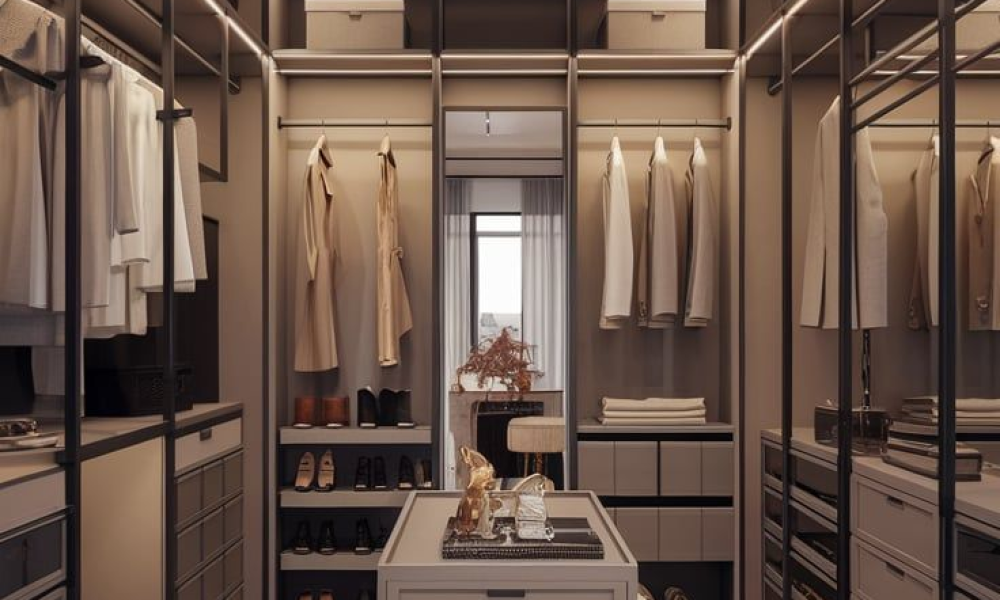
The walk-in closet has shifted considerably in how it’s thought about — from purely functional storage to something closer to a dressing room with its own material palette, lighting design, and organizational logic. The best ones are built around an honest inventory of what needs to be stored and how the person using the space actually operates rather than a generic configuration that works adequately for most people and optimally for none of them.
Long hang versus short hang ratios vary significantly depending on whether a wardrobe skews toward suits and dresses or separates and folded items. Drawer depth should match the specific items going in them rather than a default dimension. Lighting needs to be positioned so colors read accurately under it — a closet that’s beautiful but has lighting that misrepresents fabric colors is a functional failure regardless of how it looks on a tour.
A custom closet designed by the same team managing the broader interior carries materials, finishes, and hardware through consistently rather than feeling like a separate project attached at the end.
The Practical Case for Turn Key
One of the most underappreciated advantages of working with a firm that offers turn key services — managing the full project from concept through installation — is the elimination of coordination gaps. Custom cabinetry in particular requires precision during installation that’s difficult to maintain when a designer, a separate cabinetry vendor, and an independent installer are working from different interpretations of the same drawings.
Cabinets that are slightly out of level, gaps between panels that weren’t specified, or hardware that doesn’t match what was drawn — these are the kinds of issues that generate disputes between parties when the responsibility is fragmented. When a single integrated team manages the full scope, those problems get resolved internally before they become visible.
Designing for San Diego Specifically
San Diego’s climate and lifestyle do influence cabinetry decisions in ways that matter. Indoor-outdoor living is a genuine priority rather than an occasional feature, which means transitional storage and mudroom-adjacent organization needs are real considerations rather than afterthoughts. The abundance of natural light opens up material options — lighter wood species and matte finishes that show handling in dimmer environments look exceptional in San Diego’s consistent daylight. And an active lifestyle means storage for gear and outdoor equipment needs to be integrated thoughtfully rather than crammed into whatever space is left over.
A design firm rooted in the San Diego market understands those specifics without needing them explained — and that fluency shows up in the finished product.




