
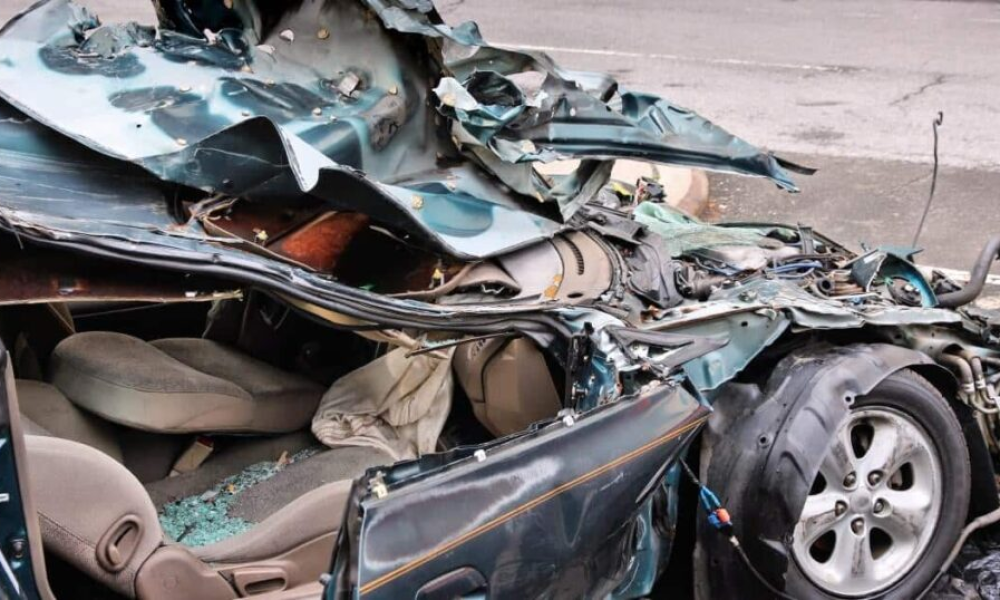
A wrecked car trade in feels out of reach to most drivers who don’t have full coverage — and that assumption costs them. The instinct is to think that without an insurance payout coming, there’s no leverage and no good options. That’s not actually how it works. Drivers without full coverage have more paths forward than they realize, and the longer they wait under the assumption that nothing can be done, the more that delay costs them in depreciation, lost transportation, and shrinking options.
What Liability-Only Coverage Means for Your Vehicle
Liability insurance covers damage you cause to other people and their vehicles. It does not cover damage to your own car. For drivers carrying only the state minimum — which describes a significant portion of people on the road in Virginia — a wreck that damages their own vehicle leaves them holding a car that may not run and facing repair estimates their insurance isn’t going to touch.
This situation is more common than most people realize. Many drivers drop comprehensive and collision coverage on older vehicles where the premium no longer seemed justified relative to the car’s value. When an accident happens, that calculation suddenly looks very different. The question becomes what to do with a damaged vehicle when there’s no check coming from an insurer.
Why the Repair Path Usually Doesn’t Work Out
The first instinct is almost always to get an estimate and see whether repair is feasible. For many wrecked vehicles the estimate comes back close to or exceeding what the car is worth — which means putting several thousand dollars into a vehicle that will come out the other side worth roughly the same as before the accident, now with a repair history attached to it that affects future resale value.
There’s also the time factor. Parts delays, body shop backlogs, and the cost and inconvenience of getting around without a vehicle add up in ways that the repair estimate itself doesn’t capture. Drivers who go down the repair path often find the total cost of the process — financial and otherwise — significantly higher than the shop quote suggested.
How the Trade Actually Works Without Insurance Money
This is the part that surprises most people. A wrecked car trade in doesn’t require an insurance payout to work. The vehicle’s pre-wreck value — what it was worth before the accident — is the basis for the trade, not the damaged value. That means the credit applied toward a replacement vehicle reflects what the car was actually worth rather than what a salvage buyer or junkyard would offer for it in its current condition.
No repairs are needed before the trade. No waiting on insurance claims to settle or disputes over fault to resolve. The damaged vehicle gets assessed, credit gets applied toward a replacement, and the driver moves forward without having to manage the sale of something that may not even be drivable.
What Happens to the Wrecked Vehicle
Once the trade is complete the damaged car is no longer the driver’s problem. The facility handles it from there — whether that means repairing and reselling it, parting it out, or moving it to a salvage buyer. For drivers who’ve been staring at a wrecked car in the driveway trying to figure out how to dispose of it, that alone is a meaningful relief.
Trying to sell a wrecked vehicle privately is a genuinely unpleasant process. Buyers lowball aggressively, back out when they see the actual condition, and the title transfer on a damaged vehicle adds administrative hassle on top of everything else. The trade path sidesteps all of that.
Getting Started in Virginia
For Virginia drivers the process of exploring a trade my car in Virginia option starts simply — providing basic details about the vehicle and the accident, then scheduling an inspection to establish what a trade would look like in practice. What credit you’d receive, what replacement options are available, and how quickly the whole thing can move forward are all questions that get answered at that stage rather than after a commitment has been made.
The Roanoke wrecked car trade in process works the same regardless of insurance status. Drivers in the Roanoke and Richmond areas who’ve been sitting on a wrecked vehicle while trying to figure out next steps often find the trade path resolves things in a fraction of the time the repair route would have taken — and at a total cost that makes considerably more sense.




