
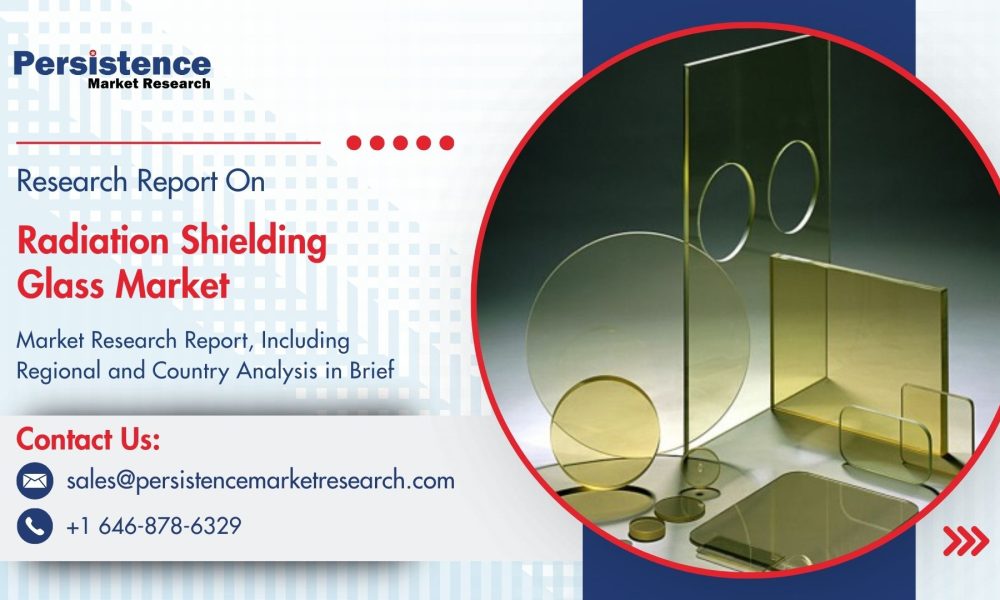
The Radiation Shielding Glass Market is experiencing steady growth due to increasing demand for radiation protection in medical, nuclear, and research environments. Radiation shielding glass is a specialized transparent material designed to block harmful ionizing radiation while maintaining clear visibility. It is commonly used in hospitals, diagnostic imaging rooms, nuclear power facilities, laboratories, and industrial inspection environments where both safety and monitoring are critical.
According to market analysis, the global radiation shielding glass market is expected to reach US$ 1,457.7 million in 2026 and is projected to grow to US$ 2,148.8 million by 2033, expanding at a CAGR of 5.7% during 2026–2033. The growth is largely driven by the expansion of diagnostic imaging facilities, increasing nuclear energy infrastructure, and rising industrial applications requiring radiation protection systems.
Get Your FREE Sample Report Instantly – Click Now: https://www.persistencemarketresearch.com/samples/34817
Market Overview
Radiation shielding glass is manufactured using high-density elements such as lead, barium, or tungsten that absorb and block radiation without compromising optical clarity. This glass allows technicians and healthcare professionals to observe procedures in radiation environments while remaining protected from exposure.
The material is widely used in X-ray rooms, CT scan rooms, nuclear medicine departments, and industrial radiography facilities. As the number of imaging procedures and radiation-based technologies increases worldwide, the demand for effective shielding materials continues to grow.
Global healthcare spending is increasing rapidly, and diagnostic imaging represents a significant portion of hospital infrastructure investments. As a result, radiation shielding glass has become a critical component of modern healthcare facilities.
Key Market Drivers
Expansion of Medical Imaging Facilities
One of the major drivers of the radiation shielding glass market is the rapid expansion of medical imaging services. Hospitals and diagnostic centers rely heavily on imaging technologies such as X-rays, CT scans, fluoroscopy, and PET scans to diagnose and monitor various diseases.
Radiation shielding glass plays a crucial role in protecting healthcare professionals and patients from radiation exposure while enabling continuous monitoring of procedures. The growing number of imaging procedures performed annually has increased the need for protective infrastructure.
With the global healthcare sector investing heavily in diagnostic technologies and imaging equipment, demand for radiation shielding glass is expected to increase significantly. Hospitals and imaging centers must comply with strict radiation protection standards, which further supports market growth.
Growth of Nuclear Energy and Research Facilities
The expansion of nuclear energy infrastructure is another important factor contributing to the growth of the radiation shielding glass market. Nuclear power plants and research reactors require specialized shielding materials to ensure safe operation and monitoring.
Radiation shielding glass is used in control rooms, observation windows, and nuclear laboratories where technicians need visibility while being protected from radiation exposure.
In addition, many countries are investing in advanced nuclear technologies and research reactors to meet growing energy demands and develop new scientific capabilities. These developments are increasing the demand for high-performance shielding materials, including specialized glass solutions.
Furthermore, nuclear facility decommissioning activities also require radiation shielding systems to safely manage radioactive materials.
Rising Industrial Applications
Beyond healthcare and nuclear energy, radiation shielding glass is increasingly used in industrial environments. Industries such as aerospace, automotive manufacturing, and materials engineering utilize industrial radiography and non-destructive testing (NDT) techniques to inspect structural components.
These processes involve radiation sources that require protective shielding for workers and equipment. Radiation shielding glass allows technicians to monitor inspection processes safely while maintaining visibility.
As industrial inspection technologies become more sophisticated and safety regulations become stricter, demand for shielding glass solutions in industrial applications continues to grow.
Market Challenges
Environmental Concerns Related to Lead-Based Glass
Traditional radiation shielding glass contains high concentrations of lead oxide to enhance radiation absorption capabilities. While effective, lead-based materials can raise environmental and occupational health concerns.
Strict regulations in several regions, particularly in Europe, are encouraging the adoption of lead-free alternatives to minimize environmental impact. As a result, manufacturers must invest in research and development to develop environmentally friendly shielding materials without compromising performance.
The transition toward lead-free solutions may increase production costs and pose technical challenges for manufacturers.
Glass Type Insights
Based on glass type, the market is primarily divided into lead glass and lead-free glass.
Lead Glass
Lead glass currently dominates the market, accounting for around 65.2% of the global market share. Its high lead oxide content provides excellent radiation attenuation properties, making it highly effective for shielding against X-rays and gamma radiation.
Lead glass is widely used in:
- Medical imaging rooms
- Nuclear facilities
- Industrial radiography centers
Its proven performance and regulatory acceptance continue to support widespread adoption.
Lead-Free Glass
Lead-free glass is the fastest-growing segment in the radiation shielding glass market. Growing environmental concerns and strict regulatory requirements are encouraging the development of alternative shielding materials.
Manufacturers are increasingly using barium and tungsten-based technologies to produce lead-free glass that offers comparable radiation shielding performance while eliminating the environmental risks associated with lead.
Radiation Type Insights
Radiation shielding glass is used to protect against different types of radiation, including:
- X-ray radiation
- Gamma radiation
- Neutron radiation
Among these, X-ray shielding accounts for the largest share of the market, representing about 61.4% of global demand. The widespread use of X-ray imaging in hospitals and diagnostic centers drives this dominance.
Gamma-ray shielding applications are also expanding rapidly due to the growing use of nuclear medicine and industrial radiography technologies.
Application Insights
Radiation shielding glass is used across several industries, including healthcare, research, nuclear energy, and manufacturing.
Medical Sector
The medical sector dominates the market, accounting for more than 54% of total market share in 2026. Radiation shielding glass is widely used in hospitals, diagnostic imaging centers, and radiation therapy facilities to protect healthcare workers and patients from harmful radiation exposure.
Research and Laboratory Applications
Scientific laboratories and nuclear research facilities require radiation shielding glass for safe monitoring of experiments involving radioactive materials.
Industrial Applications
Industrial radiography and non-destructive testing operations also utilize shielding glass to ensure safety during inspection processes.
Nuclear Energy Facilities
Control rooms and observation areas in nuclear power plants rely on radiation shielding glass to allow monitoring of reactor operations while maintaining radiation protection.
Regional Analysis
North America
North America holds the largest share of the global radiation shielding glass market, accounting for around 35% of global revenue. The region benefits from advanced healthcare infrastructure, strict radiation protection regulations, and the presence of numerous nuclear power facilities.
The United States is the leading market within the region due to its extensive network of hospitals and diagnostic imaging centers.
Europe
Europe represents a significant market for radiation shielding glass due to strong healthcare infrastructure and active nuclear research activities. Countries such as Germany, France, and the United Kingdom are major contributors to regional demand.
Additionally, strict environmental regulations in Europe are accelerating the development and adoption of lead-free shielding glass technologies.
Asia-Pacific
Asia-Pacific is expected to be the fastest-growing regional market, driven by expanding healthcare infrastructure, rising diagnostic imaging demand, and increasing nuclear energy investments in countries such as China, India, and Japan.
The construction of new hospitals and diagnostic centers across emerging economies is creating strong demand for radiation protection systems.
Competitive Landscape
The radiation shielding glass market is moderately consolidated, with several global manufacturers focusing on product innovation and technological advancements.
Key companies operating in the market include:
- SCHOTT AG
- Corning Incorporated
- Nippon Electric Glass Co., Ltd.
- Ray-Bar Engineering Corp.
- Kopp Glass, Inc.
- Nuclear Lead Co., Inc.
- Pilkington Group Limited
- Isolite Corporation
- Glaswerke Haller GmbH
These companies focus on developing advanced shielding materials, expanding production capacity, and forming strategic partnerships to strengthen their market position.
Get a Customized Market View in One Click: https://www.persistencemarketresearch.com/request-customization/34817
Future Market Opportunities
Several emerging trends are expected to create new opportunities for the radiation shielding glass market in the coming years.
One of the most significant trends is the development of lead-free radiation shielding glass, which addresses environmental concerns while maintaining effective radiation protection.
Additionally, the increasing adoption of advanced imaging technologies, nuclear medicine procedures, and industrial radiography systems is expected to further drive demand for radiation shielding materials.
Technological advancements in glass manufacturing processes are also improving performance, durability, and cost efficiency, making shielding glass more accessible across various industries.
Conclusion
The radiation shielding glass market is poised for steady growth as industries prioritize safety and regulatory compliance in radiation environments. Expanding healthcare infrastructure, increasing nuclear energy investments, and rising industrial radiography applications are key factors driving market expansion.
While environmental concerns surrounding lead-based materials present challenges, ongoing innovations in lead-free shielding technologies are expected to support long-term market growth. As diagnostic imaging and radiation-based technologies continue to evolve, radiation shielding glass will remain a critical component of safety infrastructure worldwide.
About Persistence Market Research:
Persistence Market Research delivers strategic research solutions that drive business growth. Founded in 2012 and registered in England and Wales in 2023 as Persistence Research & Consultancy Services Ltd., we have completed 3,600+ custom and syndicated studies and supported 2,700+ projects for leading research firms. Combining traditional methodologies with modern tools, we provide actionable insights to multinational corporations, consultants, investors, and government bodies, earning strong trust through long-term client relationships.
Contact Us:
Persistence Market Research
Second Floor, 150 Fleet Street,
London, EC4A 2DQ, United Kingdom
USA Phone: +1 646-878-6329
UK Phone: +44 203-837-5656
Email: [email protected]
Web: https://www.persistencemarketresearch.com




