
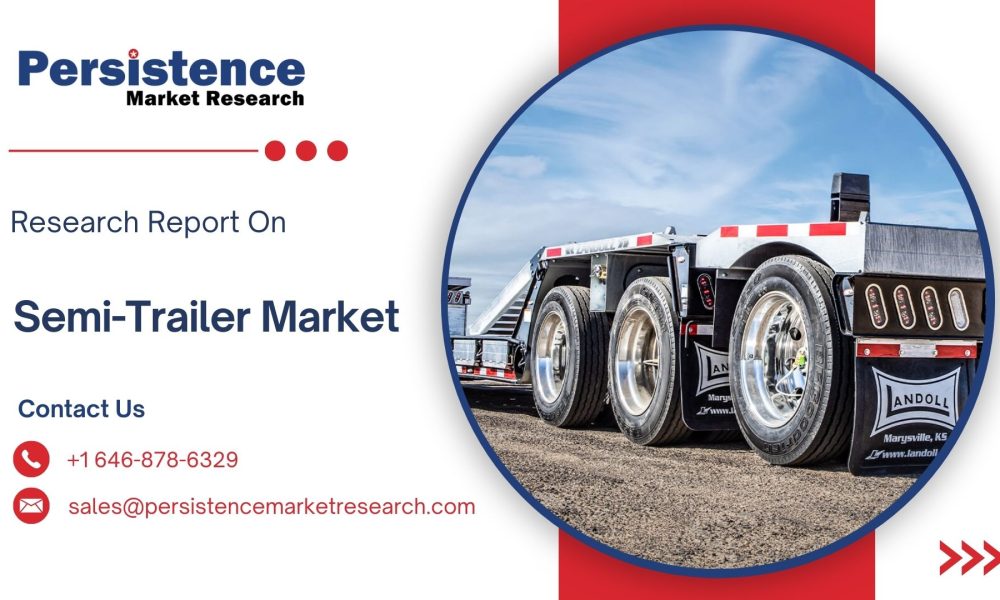
The Semi-Trailer Market is entering a transformative phase as global trade, industrial output, and e-commerce logistics continue to expand. According to Persistence Market Research, the global semi-trailer market size is likely to be valued at approximately US$35.7 billion in 2025 and is projected to reach about US$52.1 billion by 2032. This steady expansion reflects structural shifts in freight transportation, including the modernization of fleet infrastructure and the integration of advanced telematics systems. Semi-trailers play a critical role in long-haul logistics, cold chain distribution, construction material transport, and industrial supply chains, making them indispensable to global commerce.
The semi-trailer industry is also benefiting from regulatory mandates focused on improved safety standards, load optimization, and emission reduction. Fleets are increasingly investing in lighter, digitally-enabled trailer platforms to reduce operational costs and enhance efficiency. Demand for specialized semi-trailers such as refrigerated, flatbed, tanker, and curtain-side variants is rising due to sector-specific logistics needs. Additionally, technological innovations in braking systems, axle configurations, and aerodynamic design are enhancing performance and durability. These trends collectively position the semi-trailer market as a stable and growth-oriented segment within the broader commercial vehicle industry.
The leading segment within the semi-trailer market continues to be driven by high-volume freight applications, particularly those supporting retail distribution and industrial logistics. The rise of organized retail and online marketplaces has intensified the need for high-capacity, durable trailer systems. Geographically, developed logistics ecosystems with strong transportation networks remain dominant due to advanced infrastructure and significant fleet replacement demand. Investment in digital fleet management, safety compliance systems, and fuel-efficient trailer designs further strengthens market leadership in these regions, ensuring sustained long-term growth momentum.
Get Your FREE Sample Report Instantly Click Now: https://www.persistencemarketresearch.com/samples/35819
Company Insights
Key players operating in the Semi-Trailer Market include:
- Wabash National Corporation
- Schmitz Cargobull AG
- Great Dane LLC
- Krone Group
- Hyundai Translead
- CIMC Vehicles Group Co., Ltd.
- Kögel Trailer GmbH
- Utility Trailer Manufacturing Company
- Stoughton Trailers LLC
- Lamberet SAS
- Fontaine Trailer Company
- Tirsan Treyler Sanayi ve Ticaret A.S.
- Kässbohrer Fahrzeugwerke GmbH
- Dennison Trailers Ltd.
- Fruehauf Trailer Corporation
- Schwarzmüller Group
- Doepker Industries Ltd.
- MAN Truck & Bus SE (Trailer Division)
- Humbaur GmbH
- East Manufacturing Corporation
Key Highlights from the Report
➤ The global semi-trailer market is projected to grow from US$35.7 billion in 2025 to US$52.1 billion by 2032
➤ The market is anticipated to expand at a CAGR of 5.7% during the forecast period 2025 to 2032
➤ Expanding e-commerce and logistics demand remains a primary catalyst for sustained semi-trailer adoption
➤ Fleet operators are increasingly investing in lighter, digitally-enabled trailer platforms to enhance efficiency
➤ Regulatory imperatives are driving upgrades in safety and operational performance equipment
➤ Technological advancements in trailer design and telematics are reshaping competitive dynamics
Market Segmentation
By Trailer Type
- Dry Van/Box
- Refrigerated
- Curtain-Sider
- Flatbed
- Lowboy/Low-Loader
- Tipper/Tipper
- Tanker
By Capacity
- ≤25 Ton
- 25-50 Ton
- >50 Ton
By Application
- General Freight/3PL
- Food & Beverage
- Construction & Mining
- Chemicals & Petroleum
- Agriculture
- Specialized Heavy Transport
By Acquisition Model
- OEM Direct
- Dealer/Distributor
- Aftermarket/Rental
- Taas
By Region
- North America
- Europe
- East Asia
- South Asia & Oceania
- Latin America
- Middle East & Africa
Customize This Report for Your Exact Requirements: https://www.persistencemarketresearch.com/request-customization/35819
Regional Insights
Developed transportation hubs continue to lead the Semi-Trailer Market due to mature logistics infrastructure and high fleet replacement cycles. Strong regulatory frameworks emphasizing safety upgrades and efficiency improvements are encouraging operators to modernize aging trailer fleets. These regions also demonstrate high adoption of digitally-enabled trailer platforms, integrating telematics and smart monitoring systems for optimized freight management.
Emerging markets are witnessing gradual growth as expanding industrial output and trade activities increase demand for reliable freight solutions. Urbanization and infrastructure investments are strengthening domestic supply chains, driving procurement of high-capacity semi-trailers. As logistics networks become more organized and technologically advanced, these regions are expected to contribute steadily to global revenue growth during the forecast period.
Market Drivers
The primary driver of the Semi-Trailer Market is the rapid expansion of e-commerce and global logistics networks. Rising online retail penetration has significantly increased last-mile and long-haul freight requirements, necessitating robust and high-capacity trailer solutions. Logistics providers are scaling operations to handle higher shipment volumes, creating consistent demand for durable and technologically advanced semi-trailers. Additionally, globalization and cross-border trade agreements are further amplifying freight movement across regions.
Another major growth driver is fleet modernization and technological integration. Transportation companies are replacing outdated trailers with lighter models featuring aerodynamic enhancements and fuel-efficient designs. Digital transformation in fleet management, including telematics and performance analytics, is enabling better route optimization and maintenance planning. Regulatory imperatives mandating safety equipment upgrades and efficiency standards are also accelerating procurement cycles, reinforcing steady market growth.
Market Restraints
Despite positive growth prospects, the Semi-Trailer Market faces challenges related to high initial investment costs. Advanced semi-trailers equipped with digital monitoring systems and safety enhancements require significant capital expenditure, which may constrain smaller fleet operators. Economic uncertainties and fluctuating freight rates can also delay fleet expansion decisions, impacting short-term demand cycles.
Supply chain disruptions and raw material price volatility represent additional constraints for manufacturers. Production costs can fluctuate due to changes in steel and component prices, affecting profit margins. Furthermore, stringent compliance requirements may increase manufacturing complexity and cost structures. These factors collectively pose challenges to maintaining stable pricing strategies while ensuring technological competitiveness.
Market Opportunities
The shift toward lightweight and digitally-enabled trailer platforms presents substantial growth opportunities. Manufacturers that focus on innovation in materials, aerodynamic design, and smart connectivity solutions can capture rising demand from logistics operators seeking operational efficiency. Integration of real-time tracking, predictive maintenance, and load optimization systems is likely to redefine value propositions across the market.
Growing emphasis on sustainability and efficiency also opens new avenues for product development. Fleets aiming to reduce fuel consumption and carbon footprints are increasingly investing in advanced trailer technologies. As regulatory frameworks continue to evolve, companies offering compliance-ready and performance-optimized semi-trailers will gain competitive advantages. Strategic collaborations and expansion into high-growth logistics corridors further strengthen future market potential.
Recent Developments:
- March 2024: A leading manufacturer expanded its digitally-enabled trailer portfolio to enhance fleet connectivity solutions.
- October 2023: A major semi-trailer producer introduced lightweight trailer platforms focused on improving fuel efficiency and payload capacity.
Ready to Dive Deep? Buy Full Report Today: https://www.persistencemarketresearch.com/checkout/35819
Frequently Asked Questions
➤ What are the main factors influencing the Semi-Trailer Market 2025-2032?
➤ Which companies are the major sources in the Semi-Trailer Market industry?
➤ What are the Semi-Trailer Market opportunities, risks, and general structure?
➤ Which of the top Semi-Trailer Market 2025-2032 companies compare in terms of sales, revenue, and prices?
➤ How are market types and applications and deals, revenue, and value explored in the Semi-Trailer Market?
Future Opportunities and Growth Prospects
The Semi-Trailer Market is poised for sustained expansion through 2032, supported by steady freight demand and ongoing fleet modernization initiatives. With the market projected to reach US$52.1 billion by 2032 at a CAGR of 5.7%, industry participants are focusing on innovation, regulatory compliance, and digital integration. As logistics ecosystems become increasingly technology-driven, semi-trailer manufacturers that prioritize efficiency, safety, and connectivity will be well-positioned to capitalize on emerging growth opportunities in the global transportation landscape.




