
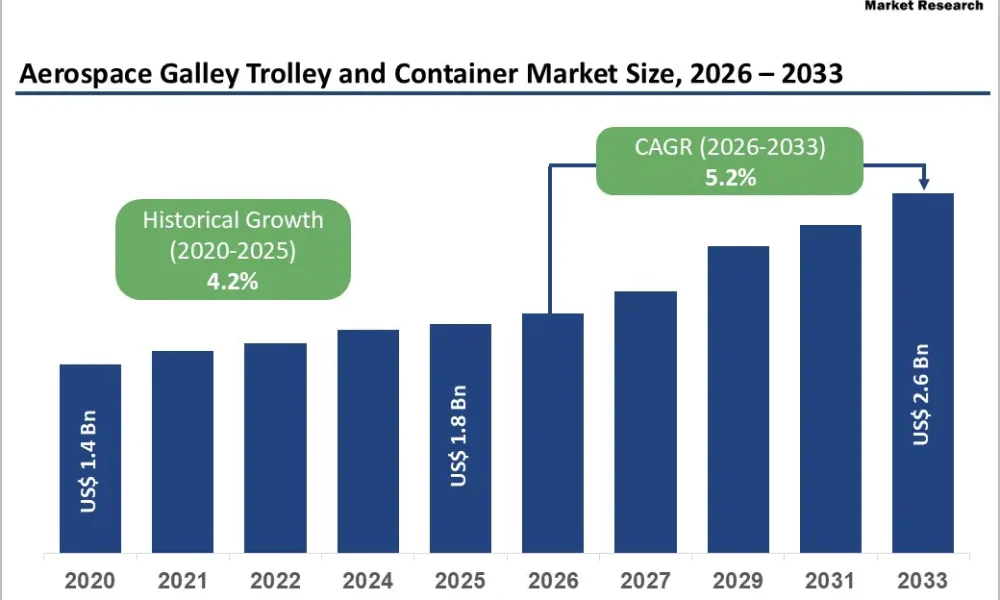
The Aerospace Galley Trolley and Container Market plays a critical yet often understated role in the global aviation ecosystem. Galley trolleys and containers are essential cabin interior components used for food service, beverage distribution, waste handling, and onboard storage across commercial, regional, and business aircraft. Designed to meet stringent aviation safety, weight, and durability standards, these systems directly influence airline operational efficiency, cabin workflow, and passenger service quality.
With airlines increasingly focused on optimizing cabin space, reducing aircraft weight, and improving inflight service efficiency, the demand for advanced galley trolleys and containers has grown steadily. Modern solutions are engineered using lightweight aluminum alloys, advanced composites, and fire-resistant materials while complying with strict aerospace certification standards. The growing emphasis on modular cabin interiors and standardized galley configurations has further elevated the importance of high-performance trolley and container systems within aircraft interiors.
Market Statistics, Growth Drivers, and Regional Leadership
According to Persistence Market Research, the global aerospace galley trolley and container market size is expected to be valued at US$ 1.8 billion in 2026 and is projected to reach US$ 2.6 billion by 2033, expanding at a CAGR of 5.2% between 2026 and 2033. This consistent growth trajectory reflects the recovery and expansion of global air travel, increasing aircraft deliveries, and rising investments in cabin refurbishment and retrofit programs.
Key growth drivers include the expansion of commercial airline fleets, increasing passenger traffic, and the growing focus on inflight service differentiation. The standard galley trolley segment continues to lead the market due to its widespread use across narrow-body and wide-body aircraft. Geographically, North America dominates the aerospace galley trolley and container market, supported by the presence of major aircraft manufacturers, large airline fleets, and a strong aftermarket ecosystem for cabin interior upgrades and replacements.
Get Your FREE Sample Report Instantly Click Now: https://www.persistencemarketresearch.com/samples/19300
Key players operating in the aerospace galley trolley and container market include:
- Zodiac Aerospace
- Jamco Corporation
- Rockwell Collins, Inc.
- Geven S.p.A.
- Korita Aviation
- Flightweight Ltd.
- Norduyn Inc.
- Bucher Group
- Trenchard Aviation Group Ltd
- Egret Aviation Co., Ltd
- Diethelm Keller Aviation Pte. Ltd.
- AVIC Cabin Systems
Key Highlights from the Report
➤ The aerospace galley trolley and container market is projected to grow from US$ 1.8 billion in 2026 to US$ 2.6 billion by 2033
➤ A CAGR of 5.2% reflects steady demand driven by aircraft fleet expansion and cabin modernization
➤ Lightweight materials and standardized designs are shaping next-generation galley systems
➤ Increasing focus on inflight service efficiency is boosting demand for advanced trolley solutions
➤ Retrofit and aftermarket demand remain key contributors to overall market growth
➤ North America continues to lead due to strong aircraft manufacturing and airline presence
Market Segmentation
By Product Type
- Trolleys
- Meal & Beverage Service Trolleys
- Waste Collection Trolleys
- Refrigerated/Heated Trolleys
- Containers
- Food Storage Containers
- Ice and Beverage Containers
- Waste and Utility Containers
By Fit Type
- Line-Fit Equipment
- Retrofit
By Material Type
- Aluminum Alloys
- High-strength Stainless Steel
- Reinforced Plastics
- Carbon Fiber and Composite Materials
By Regions
- North America
- Europe
- East Asia
- South Asia & Oceania
- Latin America
- Middle East & Africa
Customize This Report for Your Exact Requirements: https://www.persistencemarketresearch.com/request-customization/19300
Regional Insights and Market Trends
North America remains the leading region in the aerospace galley trolley and container market, driven by a mature aviation industry, strong aircraft manufacturing capabilities, and a large installed base of commercial aircraft. Airlines in the region frequently invest in cabin upgrades to improve passenger experience and operational efficiency, supporting steady aftermarket demand for galley equipment.
Europe represents another significant market, supported by a strong presence of aircraft OEMs, cabin interior suppliers, and major international airlines. The region’s emphasis on lightweight cabin solutions and sustainability-driven design is influencing innovation in galley trolley and container materials. Asia Pacific is emerging as a high-growth region, fueled by expanding airline fleets, rising air passenger traffic, and increasing investments in aviation infrastructure across developing economies.
Market Drivers
The primary driver of the aerospace galley trolley and container market is the steady growth in global air travel and aircraft fleet expansion. Airlines continue to add new aircraft to meet rising passenger demand, directly increasing the need for galley equipment installations. Each aircraft delivery requires certified trolleys and containers, creating a consistent baseline demand for manufacturers.
Another major driver is the growing emphasis on inflight service efficiency and passenger experience. Airlines are increasingly adopting ergonomic trolley designs, improved maneuverability, and optimized storage configurations to enhance cabin crew productivity. These improvements not only reduce service time but also contribute to better cost management and customer satisfaction.
Technological advancements in materials and manufacturing processes further support market growth. The use of lightweight alloys and composite materials helps reduce aircraft weight, leading to fuel efficiency improvements. Airlines are increasingly prioritizing such solutions to align with operational cost reduction strategies and environmental goals.
Market Restraints
Despite positive growth prospects, the aerospace galley trolley and container market faces several restraints. High certification and compliance requirements significantly increase development costs and time-to-market for new products. Manufacturers must adhere to stringent aviation safety, fire resistance, and durability standards, which can limit design flexibility and innovation speed.
Another restraint is the long replacement cycle of galley equipment. While aircraft deliveries drive new installations, existing trolleys and containers are designed for long service life, reducing the frequency of replacements. This can limit short-term aftermarket growth, particularly during periods of reduced airline capital expenditure.
Cost pressures from airlines also pose challenges. Airlines continuously seek cost reductions and may delay cabin upgrades or opt for refurbishment instead of replacement, impacting demand for new galley equipment. These factors can constrain revenue growth for suppliers in highly competitive market conditions.
Market Opportunities
The market presents significant opportunities through the growing demand for aircraft retrofitting and cabin refurbishment programs. As airlines seek to extend the operational life of existing fleets, investments in cabin upgrades are becoming increasingly common. Galley trolley and container replacements form a critical part of these retrofit initiatives, creating steady aftermarket demand.
Sustainability-focused innovation represents another major opportunity. Airlines are actively seeking lightweight, recyclable, and environmentally friendly cabin components. Manufacturers that invest in sustainable materials and eco-efficient production processes can gain a competitive advantage and align with airline sustainability goals.
Emerging markets also offer long-term growth opportunities. Rapid expansion of airline fleets in Asia Pacific, the Middle East, and parts of Latin America is expected to drive demand for new aircraft and associated galley equipment. Strategic partnerships with regional airlines and aircraft lessors can further enhance market penetration.
Recent Developments:
- February 2024 – A major cabin interiors manufacturer introduced a lightweight galley trolley platform designed to improve durability and reduce aircraft weight
- November 2024 – A leading aerospace supplier expanded its production capacity to support rising demand from narrow-body aircraft programs
Ready to Dive Deep? Buy Full Report Today: https://www.persistencemarketresearch.com/checkout/19300
Frequently Asked Questionsey and Container Market?
➤ What are the market’s opportunities, risks, and general structure?
➤ Which of the top Aerospace Galley Trolley and Container Market companies compare in terms of sales and value?
➤ How are market types and applications and deals, revenue, and value explored?
Future Opportunities and Growth Prospects
The future outlook for the aerospace galley trolley and container market remains positive, supported by steady aircraft deliveries, growing passenger traffic, and increased focus on cabin efficiency. As airlines prioritize operational optimization and enhanced inflight services, demand for advanced galley systems is expected to remain strong through 2033. Manufacturers that emphasize lightweight design, regulatory compliance, and customization capabilities will be well-positioned to capture emerging opportunities. With consistent growth projected at a CAGR of 5.2%, the market is set to remain a vital component of the global aircraft interiors industry.




