
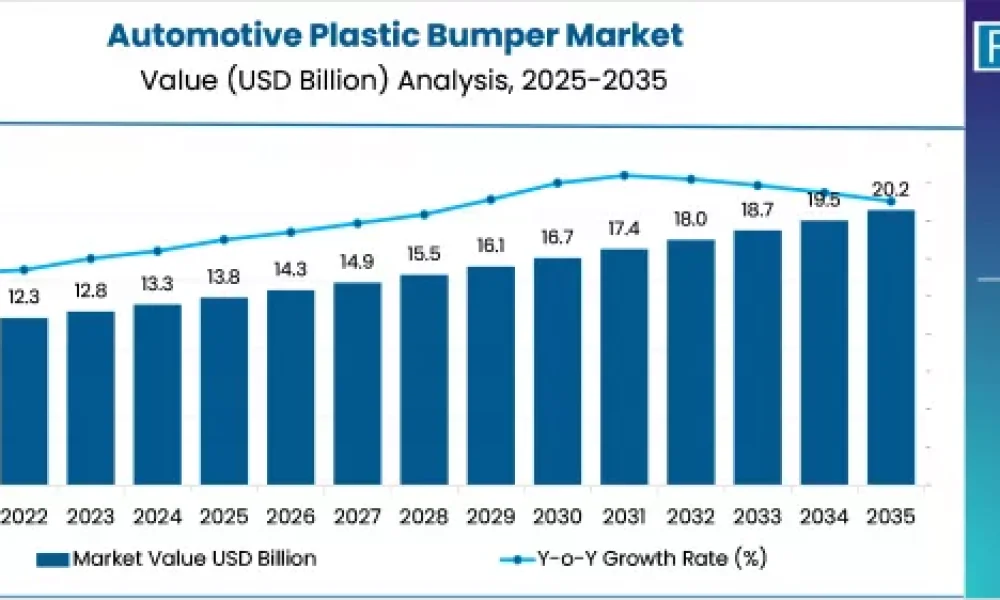
The global automotive plastic bumper market is entering a high-tech growth phase, with new industry data projecting the sector to reach a valuation of $26.53 billion by 2035. Driven by a steady compound annual growth rate (CAGR) of 4.19% from its 2025 base of $17.6 billion, the market is responding to a fundamental shift in vehicle architecture, where the bumper is no longer a simple shield but a critical “smart module” for safety and autonomy.
As of early 2026, the industry has reached a crucial inflection point. Stricter Euro NCAP and NHTSA protocols for pedestrian protection and Advanced Driver-Assistance Systems (ADAS) performance have effectively mandated the adoption of radar-transparent polymers and sensor-integrated bumper assemblies. This transition is moving the market away from commodity-grade components toward high-value, multi-material systems that balance crash resistance with electronic functionality.
Request for Sample Report | Customize Report |purchase Full Report – https://www.factmr.com/connectus/sample?flag=S&rep_id=1
The Modular Shift: Who, What, and Why
The resurgence in the plastic bumper sector is being dictated by the convergence of electric vehicle (EV) expansion and the demand for “intelligent” exteriors.
- Who: Market leadership is anchored by global Tier-1 innovators including OPmobility (formerly Plastic Omnium), Magna International, Forvia (Faurecia), Hyundai Mobis, and Toyoda Gosei, alongside regional leaders like Motherson Group and Yanfeng.
- What: Modern automotive bumpers primarily utilize high-performance Polypropylene (PP), Polycarbonate (PC), and Thermoplastic Olefins (TPO) to provide lightweight, impact-absorbing structures that house radar, LiDAR, and pedestrian-protection airbags.
- Why: The pivot to plastic is driven by a 15% reduction in weight compared to legacy metal reinforcements, a critical factor for extending EV battery range. Furthermore, plastic’s design flexibility allows for the aerodynamic “facia” profiles essential for modern fuel-efficiency standards.
Key Market Dynamics and 2026 Technology Drivers
The 2026 landscape is defined by the rise of “Sensor-Transparent” materials, ensuring that safety electronics function without interference from the bumper’s surface.
The Dominance of Smart Bumper Modules
In 2026, over 35% of all new vehicles feature bumpers with integrated sensors or cameras. This has led to the emergence of:
- Radar-Friendly Polymers: Manufacturers are investing in specialized resin blends that allow ADAS signals to pass through the bumper skin with zero signal attenuation.
- Intelligent Front Ends: Led by companies like OPmobility, new modular front ends now include up to 140 components—including grilles, lighting, and cooling systems—delivered as a single unit to the OEM assembly line.
- Pedestrian Safety Systems: The fastest-growing sub-segment, driven by active external airbags and energy-absorbing foam cores that “soften” the impact in pedestrian collisions.
Material Evolution: From Staples to Sustainable
While Polypropylene remains the most used material due to its cost-efficiency and durability, 2026 marks a strategic surge in recycled content. The market for recycled automotive plastics is estimated to reach $5 billion this year, as manufacturers like Ford and Mercedes-Benz adopt bio-based polymers to align with global carbon-neutrality targets.
Regional Leadership and Economic Insights
- Asia-Pacific: Retains its status as the global market leader, holding approximately 38% of the market. China and India remain the primary growth engines, supported by massive EV production volumes and the emergence of local manufacturers scaling up for global export.
- North America: Projected to be the fastest-growing market in terms of technology adoption, driven by the U.S. focus on luxury SUVs and high-performance electric trucks that require reinforced, sensor-heavy bumper designs.
- Europe: Serves as the global “Sustainability Hub,” with companies like Lanxess and BASF leading the development of eco-friendly, high-strength composites that meet the strict recycling mandates of the EU Green Deal.
Challenges: Supply Chain Volatility and Complexity
Despite the bullish outlook, the sector faces structural hurdles. The high cost of advanced resins and the volatility of energy prices have increased production expenses by an average of 8% since 2024. Additionally, the integration of complex electronics within the bumper facia creates new challenges for the Aftermarket segment, which now accounts for 30% of sales but must navigate the calibration requirements of high-tech replacement parts.
About the Automotive Plastic Bumper Market
The automotive plastic bumper market encompasses the design, manufacture, and distribution of front and rear bumper assemblies. As a cornerstone of the broader $30+ billion automotive safety market, the plastic bumper segment represents the frontline of modern vehicle aesthetics and crash energy management, serving as a vital platform for the future of autonomous and electric mobility.
About Fact.MR
Fact.MR is a global market research and consulting firm, trusted by Fortune 500 companies and emerging businesses for reliable insights and strategic intelligence. With a presence across the U.S., UK, India, and Dubai, we deliver data-driven research and tailored consulting solutions across 30+ industries and 1,000+ markets. Backed by deep expertise and advanced analytics, Fact.MR helps organizations uncover opportunities, reduce risks, and make informed decisions for sustainable growth.



