
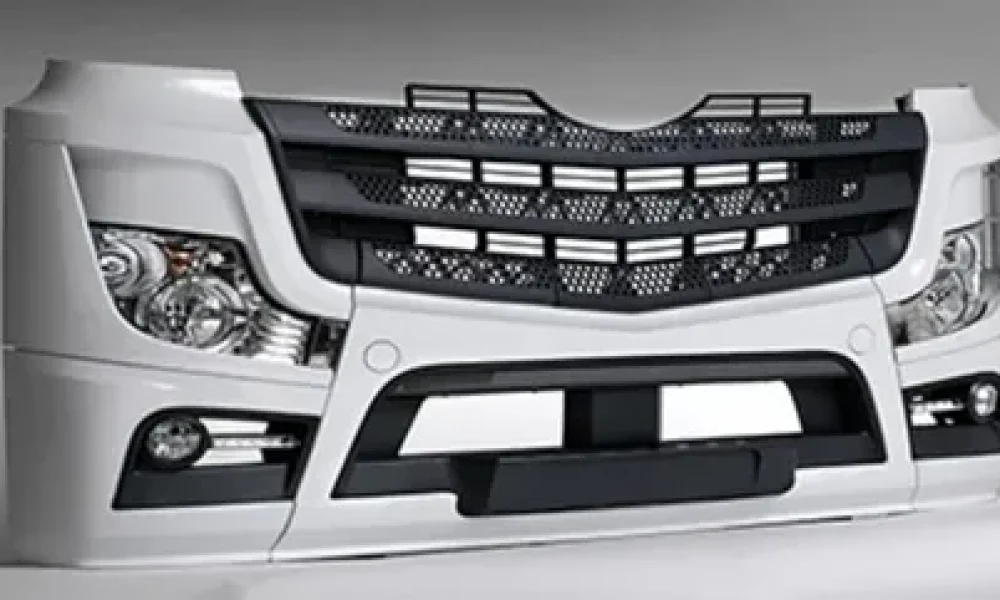
The global automotive front end module (FEM) market is on a strong growth trajectory, expected to expand from USD 14.63 billion in 2025 to USD 28.25 billion by 2035, registering a robust CAGR of 6.8%, according to the latest market analysis. The rising adoption of modular vehicle assembly, increasing vehicle electrification, and the global push for lightweight, compact designs are driving this expansion.
Front end modules, which integrate key components such as radiators, fan condensers, crash management systems, bumpers, headlamps, grilles, and structural supports, are becoming central to modern vehicle architecture. These prefabricated units not only optimize assembly efficiency but also enhance thermal management, safety, and aerodynamics across passenger cars, SUVs, and commercial vehicles.
Modular and EV-Ready Designs Drive Market Innovation
As OEMs aim to reduce assembly time, cost, and part count, FEMs are increasingly being integrated into both internal combustion engine (ICE) and electric vehicle (EV) platforms. Innovations focus on advanced sensors, active grille shutters, and crash mitigation systems, particularly in electric and hybrid vehicles, where precise thermal management for batteries and motors is critical.
Lightweight materials, including plastics and hybrid composites, are increasingly utilized to balance structural integrity with improved fuel efficiency. Simultaneously, FEMs are evolving to house radars, cameras, and air quality sensors to comply with stricter ADAS and emissions regulations.
Subscribe for Year-Round Insights → Stay ahead with quarterly and annual data updates
https://www.futuremarketinsights.com/reports/sample/rep-gb-1547
Regional Market Insights
North America: The market is growing steadily due to high demand for SUVs, pickup trucks, and EVs. OEMs are leveraging composite and hybrid FEMs to reduce vehicle weight while integrating advanced grille shutters, sensors, and crash management systems. Aftermarket demand is fueled by insurance-related repairs and frequent bumper and headlamp replacements.
Europe: Europe remains a hub of FEM innovation, with German and French OEMs leading in sensor clusters, thermal management, and radar-transparent grilles. Luxury and sporty vehicles benefit from aerodynamic optimization, active air flaps, and lightweight supports. In 2023, 45% of newly registered EVs in Germany incorporated composite-based FEMs.
Asia-Pacific: This region dominates global production, led by China, India, Japan, and South Korea. Fast, cost-efficient hybrid and plastic FEMs are deployed to enhance thermal performance and reduce assembly time. Compact and mid-size vehicles, shared mobility, and low-cost EVs drive modular and serviceable FEM adoption.
Rest of the World: In Latin America, the Middle East, and Africa, rising vehicle production drives demand for durable, cost-effective FEMs suitable for local conditions. Luxury brands in the Middle East utilize active grille systems, while Africa focuses on heavy-duty vehicle crash support and radiator solutions.
Key Challenges and Opportunities
Material complexity and integration costs remain a challenge, as FEMs increasingly combine metals, composites, and plastics. Sensor calibration and alignment sensitivity are critical for ADAS safety features, with over 30% of post-repair ADAS errors linked to improper FEM alignment in 2023.
Opportunities lie in EV-oriented FEMs with integrated thermal and sensor systems. Pre-assembled, modular FEMs offer reduced manufacturing time, lower part counts, and platform flexibility. Lightweight composites provide up to 35% weight savings, improved fuel efficiency, corrosion resistance, and design flexibility—especially relevant for mid-size and compact vehicle segments.
Product and Material Trends
Radiators: Remain central for thermal management across ICE, hybrid, and EV platforms. Aluminum radiators are gaining traction for their superior heat dissipation and weight benefits.
Front Active Grilles: Electronically controlled systems enhance aerodynamics and engine cooling, reducing drag by up to 10% in modern SUVs and EVs.
Plastic FEMs: Offer cost-effective, lightweight solutions with corrosion resistance, increasingly adopted in India, South Korea, and Brazil.
Hybrid Materials: Combining metals and plastics, these FEMs are ideal for luxury and high-performance vehicles, ensuring crash safety while reducing weight.
Personalize Your Experience: Ask for Customization to Meet Your Requirements!
https://www.futuremarketinsights.com/customization-available/rep-gb-1547
Competitive Landscape
The market is led by Hyundai Mobis (13–17% market share), MAHLE GmbH (11–15%), and Valeo SA (9–13%), followed by Denso Corporation, Calsonic Kansei Corp., and other global suppliers. These companies are investing in lightweight, modular, and EV-ready FEMs, integrating thermal management, safety, and advanced sensor technologies to meet evolving OEM requirements.
Outlook 2025–2035
The next decade will see FEMs evolve into highly integrated, modular systems optimized for electrification, advanced safety, and lightweighting. EV-specific thermal modules, radar-transparent grilles, and composite structures are expected to dominate OEM and aftermarket adoption. Pre-assembled FEMs will continue to streamline production, reduce costs, and support global platform flexibility, establishing them as a cornerstone of modern automotive design.
About Future Market Insights (FMI)
Future Market Insights, Inc. (FMI) is an ESOMAR-certified, ISO 9001:2015 market research and consulting organization, trusted by Fortune 500 clients and global enterprises. With operations in the U.S., UK, India, and Dubai, FMI provides data-backed insights and strategic intelligence across 30+ industries and 1200 markets worldwide.
Why Choose FMI: Empowering Decisions that Drive Real-World Outcomes:
https://www.futuremarketinsights.com/why-fmi



