
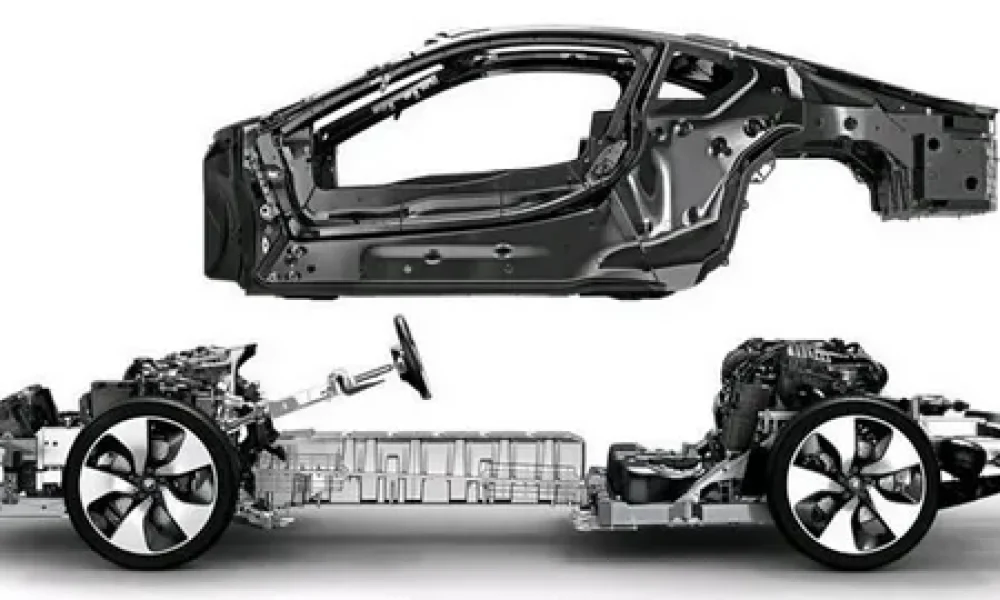
The global automotive composites market is poised for a remarkable expansion, projected to grow from USD 10.43 billion in 2025 to USD 33.27 billion by 2035, registering a robust CAGR of 12.3% over the forecast period. This surge is primarily driven by the automotive sector’s rapid transition toward lightweight materials, stringent emissions regulations, and the increasing adoption of electric and hybrid vehicles.
Automotive composites—advanced materials created by combining two or more basic elements, such as fiber reinforcements and polymer matrices—are redefining vehicle design by simultaneously reducing weight and enhancing strength. Commonly used composites include carbon fiber-reinforced plastics (CFRP), glass fiber-reinforced plastics (GFRP), and natural fiber composites, which find applications across structural, interior, and underbody automotive components.
Driving Growth: Efficiency, Safety, and Electrification
The automotive industry’s pivot toward composites is rooted in the necessity to meet fuel efficiency and emission targets while maintaining structural integrity and safety. By integrating composites, manufacturers can reduce vehicle weight by up to 50% compared to steel, directly improving fuel consumption in internal combustion vehicles and extending battery range in EVs.
The growing popularity of electric vehicles has created new opportunities for composite applications, including battery covers, structural body panels, and modular interiors. Biocomposites, hybrid fibers, and thermoplastics are increasingly gaining traction, reflecting both consumer demand for sustainability and technological advances in production methods such as resin transfer molding (RTM) and additive manufacturing.
Subscribe for Year-Round Insights → Stay ahead with quarterly and annual data updates
https://www.futuremarketinsights.com/reports/sample/rep-gb-1216
Regional Market Insights
North America: The market is expanding rapidly as OEMs adopt CFRP and GFRP to comply with the USA’s Corporate Average Fuel Economy (CAFE) standards. Electric vehicle proliferation is fueling demand for composite-based battery enclosures and high-voltage insulation components, with leading manufacturers like Ford and General Motors integrating composites across vehicle platforms.
Europe: Europe leads in automotive composite innovation due to strict emission standards and the push for sustainable production. Germany, France, and the UK are at the forefront of recycling thermoplastics, bio-based composites, and high-strength carbon fiber. OEMs such as BMW and Audi leverage carbon fiber in electric and luxury vehicles to improve performance and range.
Asia-Pacific: With China as the largest EV producer globally, the region emphasizes lightweight composite structures to optimize energy efficiency and reduce battery weight. Japan and South Korea integrate composites in structural frames, dashboards, and safety reinforcements for next-gen hybrids and EVs, while India is increasingly using natural fiber composites for low-cost passenger and commercial vehicles.
Rest of the World: Latin America, the Middle East, and Africa are witnessing growing adoption driven by emissions compliance and performance-focused vehicle markets. Brazil and Mexico focus on commercial vehicle composites, while the UAE and Saudi Arabia target carbon fiber for luxury and high-performance vehicles.
Opportunities and Challenges
Challenges:
Production Cycle and Scalability: Slow curing processes for thermoset composites limit high-volume adoption. Automated RTM and compression molding help, but uniformity and scalability remain obstacles.
Recycling and End-of-Life Management: Thermoset composites, particularly CFRP, are difficult to recycle, posing compliance challenges in Europe and North America. Emerging thermoplastic alternatives and eco-friendly resin systems are essential for circular economy compliance.
Opportunities:
EV Battery Enclosures: Composites enable lightweight, corrosion-resistant, and thermally insulated battery designs. Companies like SGL Carbon and Teijin are collaborating with OEMs to address fire safety and collision resistance challenges.
Lightweight Structural Components: Chassis, cross members, and bumper systems made of composites can reduce vehicle weight by up to 50%, directly contributing to CO₂ emission reductions.
Sustainable Bio-Composites: Natural fibers such as hemp, flax, and kenaf are increasingly used in interior applications, offering acoustic benefits, lower VOC emissions, and a smaller carbon footprint.
Market Segmentation Highlights
By Material Type:
Glass Fiber Composites: Cost-effective lightweighting for mass-market vehicles, used in panels, bumpers, and underbody shields.
Carbon Fiber Composites: Premium applications in EVs and luxury vehicles for high strength-to-weight ratio and crash performance.
Natural Fiber Composites: Growing popularity in interior trims and sustainable mobility solutions.
By Application: Exterior panels, interior trims, underbody, chassis components, powertrain, and engine parts.
By Vehicle Type: Passenger cars, light commercial vehicles (LCVs), heavy commercial vehicles (HCVs), and agricultural vehicles.
Competitive Landscape
The automotive composites market is highly competitive, with key players focusing on lightweighting, performance, sustainability, and supply chain integration.
Market Share Overview:
Toray Industries, Inc.: 15–19%
SGL Carbon SE: 11–15%
Teijin Limited: 8–12%
Owens Corning: 6–9%
Hexcel Corporation: 4–7%
Others: 40–50%
Strategic Initiatives: Leading companies are expanding composite R&D, focusing on EV applications, optimizing resin systems, and enhancing recyclability.
Personalize Your Experience: Ask for Customization to Meet Your Requirements!
https://www.futuremarketinsights.com/customization-available/rep-gb-1216
Outlook 2025–2035
The next decade will witness mainstream adoption of thermoplastic composites, digital twins for design precision, modular vehicle architectures, and biodegradable composite materials, aligned with circular economy objectives. With the convergence of regulatory mandates, EV growth, and consumer sustainability expectations, automotive composites are set to become a cornerstone of the next-generation automotive industry.
About Future Market Insights (FMI)
Future Market Insights, Inc. (FMI) is an ESOMAR-certified, ISO 9001:2015 market research and consulting organization, trusted by Fortune 500 clients and global enterprises. With operations in the U.S., UK, India, and Dubai, FMI provides data-backed insights and strategic intelligence across 30+ industries and 1200 markets worldwide.
Why Choose FMI: Empowering Decisions that Drive Real-World Outcomes:
https://www.futuremarketinsights.com/why-fmi



