
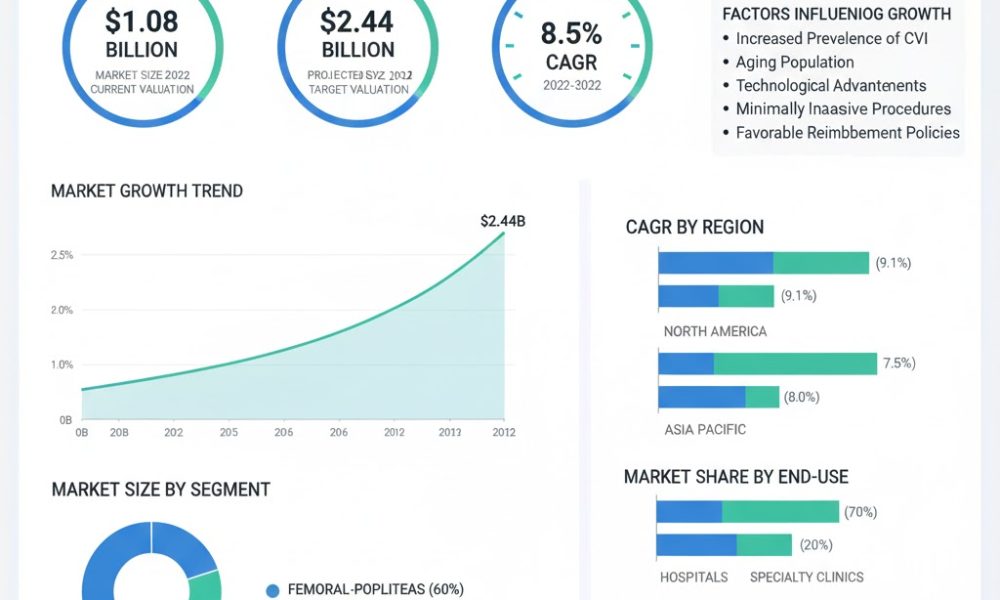
The U.S. venous stents market is set for strong growth through 2035, fueled by the increasing prevalence of venous diseases, rapid adoption of minimally invasive procedures, and technological advancements in stent design. Growing awareness of chronic venous insufficiency, deep vein thrombosis (DVT), and peripheral venous obstruction is boosting demand for advanced venous stents among healthcare providers and patients.
Market Overview and Forecast
The U.S. venous stents market is estimated at approximately USD 425 million in 2025 and is projected to reach USD 785 million by 2035, growing at a compound annual growth rate (CAGR) of 6.0% over the forecast period. The market’s growth is supported by a rising geriatric population, increasing prevalence of vascular disorders, and the growing preference for endovascular interventions over open surgeries.
Venous stents are primarily used to restore blood flow in blocked or narrowed veins, reduce venous hypertension, and prevent complications such as venous ulcers and post-thrombotic syndrome. Advances in stent material, such as nitinol and drug-eluting coatings, are improving outcomes and reducing restenosis rates.
Key Market Insights at a Glance
| Metric | U.S. Estimate |
|---|---|
| Market Value (2025) | USD 425 million |
| Forecast Value (2035) | USD 785 million |
| CAGR | 6.0% |
| Dominant Application | Deep Vein Thrombosis (DVT) Treatment (34% share) |
| Fastest-Growing Segment | Peripheral Venous Stents (7.2% CAGR) |
| Leading Stent Material | Nitinol (58% share) |
To access the complete data tables and in-depth insights, request a Discount On The Report here: https://www.factmr.com/connectus/sample?flag=S&rep_id=7879
Drivers of Market Growth
Rising Prevalence of Venous Diseases
Chronic venous insufficiency, DVT, and venous obstructions are becoming more prevalent due to aging populations, sedentary lifestyles, and obesity, driving stent demand.Technological Advancements in Stent Design
Innovations in flexible, self-expanding, and drug-eluting stents are enhancing clinical outcomes and widening adoption among interventional radiologists and vascular surgeons.Minimally Invasive Procedures
Endovascular stenting is less invasive than traditional surgery, reduces hospital stays, and lowers recovery time, encouraging both clinicians and patients to opt for stent interventions.Healthcare Infrastructure and Reimbursement
Widespread availability of vascular intervention centers, coupled with insurance coverage and reimbursement policies, supports higher procedure volumes and market growth.Increased Awareness and Screening Programs
Patient awareness campaigns and routine screening for venous disorders are contributing to early detection and timely intervention using stents.
Segment Analysis
By Stent Type: Peripheral venous stents are expected to grow the fastest due to their application in iliac and femoral vein interventions. Central venous stents also maintain significant market share due to usage in superior vena cava (SVC) obstruction cases.
By Material: Nitinol stents dominate the market, valued for flexibility, shape memory, and reduced restenosis. Cobalt-chromium and stainless steel stents follow closely.
By Application: DVT treatment is the largest segment, followed by post-thrombotic syndrome management, chronic venous insufficiency, and SVC obstruction.
By End-User: Hospitals and specialized vascular clinics account for the majority of usage, while outpatient surgical centers are witnessing rising adoption of minimally invasive venous procedures.
Regional Insights
The U.S. is the largest market in North America for venous stents, supported by advanced healthcare infrastructure, widespread adoption of minimally invasive procedures, and a growing base of trained interventional specialists. Key regional growth is concentrated in urban medical hubs with advanced vascular care facilities.
Competitive Landscape
Leading players in the U.S. venous stents market include:
Medtronic PLC
Boston Scientific Corporation
Cook Medical Inc.
Abbott Laboratories
B. Braun Melsungen AG
These companies focus on product innovation, clinical trials, and partnerships with hospitals to enhance market reach and provide training for safe and effective stent deployment.
Market Outlook: Innovation and Precision Medicine
Over the next decade, the U.S. venous stents market is expected to evolve with:
Advanced Drug-Eluting Stents: Coatings to prevent restenosis and improve long-term outcomes.
AI and Imaging Integration: Enhanced imaging guidance for precise stent placement and reduced procedural risks.
Expanded Outpatient Procedures: Minimally invasive stenting performed in outpatient or ambulatory care centers to reduce hospital dependency.
Focus on Personalized Interventions: Stent selection and procedure planning tailored to patient anatomy and disease severity.
“Venous stenting is transforming the treatment landscape for vascular disorders, combining minimally invasive technology with clinical precision,” said a market analyst. “Companies innovating with smarter, safer stents are likely to drive future growth.”
Have a specific Requirements and Need Assistant on Report Pricing or Limited Budget please contact us – [email protected]
To View Related Report :
Venous Procedure Devices Market



