
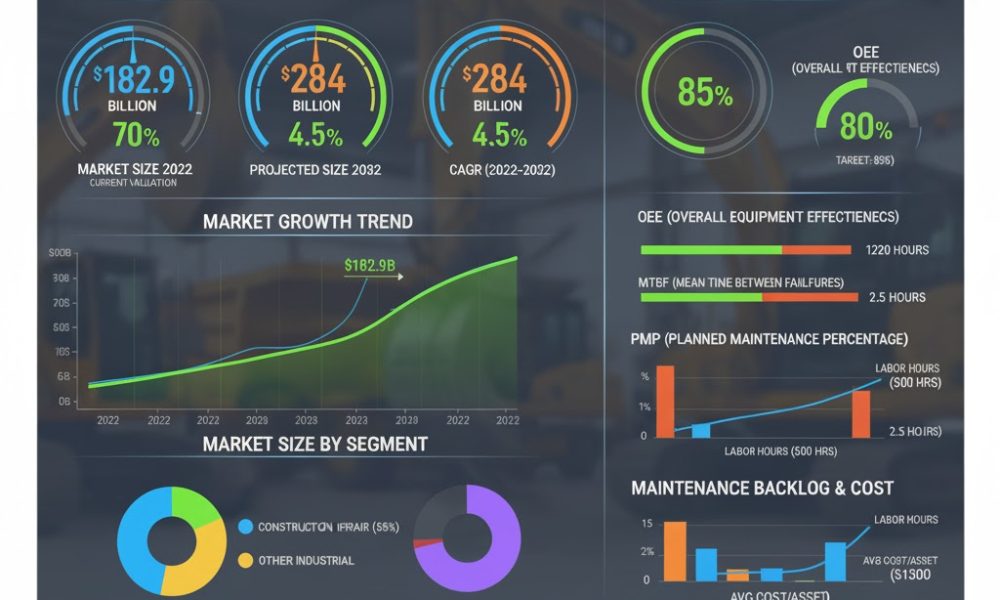
The U.S. heavy machinery maintenance and repair market is projected to witness robust growth over the next decade, fueled by increasing industrialization, infrastructure development, and the rising adoption of predictive maintenance technologies. Industry trends indicate that manufacturers and service providers are increasingly leveraging digital tools, IoT-enabled monitoring, and advanced diagnostics to optimize machinery uptime and operational efficiency.
Market Overview and Forecast
The U.S. heavy machinery maintenance and repair market is estimated at USD 12.5 billion in 2025 and is expected to reach USD 21.8 billion by 2035, reflecting a compound annual growth rate (CAGR) of 5.9% over the forecast period. Growth is primarily driven by the demand for preventive and predictive maintenance solutions in construction, mining, agriculture, and manufacturing sectors.
Heavy machinery maintenance and repair encompasses routine servicing, parts replacement, retrofitting, and performance optimization. Rising equipment costs and extended asset lifecycles have pushed companies to invest in proactive maintenance strategies rather than reactive repairs, resulting in more efficient operations and reduced downtime.
Key Market Insights at a Glance
| Metric | U.S. Estimate |
|---|---|
| Market Value (2025) | USD 12.5 billion |
| Forecast Value (2035) | USD 21.8 billion |
| CAGR | 5.9% |
| Top End-Use Industry | Construction & Mining (42% share) |
| Fastest-Growing Segment | Predictive Maintenance Services (6.5% CAGR) |
| Dominant Service Type | Equipment Servicing & Parts Replacement (58% share) |
To access the complete data tables and in-depth insights, request a Discount On The Report here: https://www.factmr.com/connectus/sample?flag=S&rep_id=7756
Drivers of Market Growth
Industrial Expansion and Infrastructure Development
Growing infrastructure projects and construction activities are driving demand for heavy machinery, which in turn fuels maintenance and repair services. Urbanization and industrial modernization projects across the U.S. are supporting steady market growth.Adoption of Predictive and Digital Maintenance Technologies
IoT sensors, remote diagnostics, and predictive analytics are transforming the heavy machinery service landscape. These technologies allow real-time monitoring, early fault detection, and optimized maintenance schedules, minimizing unplanned downtime.Extended Equipment Lifespan and Cost Efficiency
Companies are increasingly focused on maximizing machinery lifespan and minimizing capital expenditure. Scheduled maintenance and timely repairs ensure that heavy equipment remains operational for longer periods, providing significant cost benefits.Rising Safety and Compliance Standards
Stringent regulatory requirements and safety standards are compelling businesses to maintain equipment at peak performance levels, thereby enhancing the demand for professional maintenance and repair services.Growing Outsourcing of Maintenance Services
Many enterprises are outsourcing maintenance and repair operations to specialized service providers, ensuring access to skilled technicians, advanced tools, and faster turnaround times.
Segment Analysis
By Service Type: Equipment servicing and parts replacement dominate the market, followed by retrofitting, refurbishing, and overhauls. Predictive maintenance services are gaining traction due to advanced sensor integration and digital analytics.
By End-Use Industry: Construction and mining remain the largest segments, supported by heavy infrastructure spending. Agriculture and manufacturing sectors are witnessing rising demand for preventive maintenance services.
By Distribution Channel: Direct services through OEMs and certified service providers remain prevalent, while third-party maintenance companies and digital service platforms are rapidly emerging.
Regional Insights
The U.S. is the largest market in North America for heavy machinery maintenance and repair, driven by industrial hubs in Texas, California, and the Midwest. The combination of large-scale construction projects, mining operations, and a mature industrial ecosystem ensures continued market expansion.
Competitive Landscape
Key players in the U.S. heavy machinery maintenance and repair market include:
Caterpillar Inc.
Komatsu America Corp.
John Deere Service & Parts
Volvo Construction Equipment Service Division
CNH Industrial N.V.
These companies are focusing on integrating digital maintenance solutions, expanding service networks, and providing end-to-end lifecycle support for heavy machinery. Collaboration with technology providers for IoT and AI-enabled diagnostics is also emerging as a competitive differentiator.
Market Outlook: Technological Integration and Service Optimization
Over the next decade, the U.S. heavy machinery maintenance and repair market is expected to evolve significantly:
Predictive Maintenance Dominance: Integration of AI-driven predictive analytics will reduce downtime, optimize service schedules, and increase operational efficiency.
Digital Service Platforms: Remote monitoring, mobile diagnostics, and online service management tools will enhance transparency and speed of maintenance operations.
Sustainability and Cost Efficiency: Energy-efficient practices and environmentally responsible waste management in maintenance operations will become key differentiators.
Skill Development and Workforce Automation: Training programs for technicians on advanced equipment and digital platforms will be crucial to support market growth.
“Maintenance and repair are no longer reactive functions; they are strategic drivers for operational excellence,” said a market analyst. “Companies that adopt predictive, technology-enabled services will lead market growth in the next decade.”
Have a specific Requirements and Need Assistant on Report Pricing or Limited Budget please contact us – [email protected]
To View Related Report :
Heavy Equipment Lamps Market
Heavy Equipment Movers Market
About Fact.MR
Fact.MR is an independent market research and consulting firm delivering actionable insights and business intelligence across multiple industries. Their research enables clients to make data-driven decisions and identify emerging market opportunities.



