
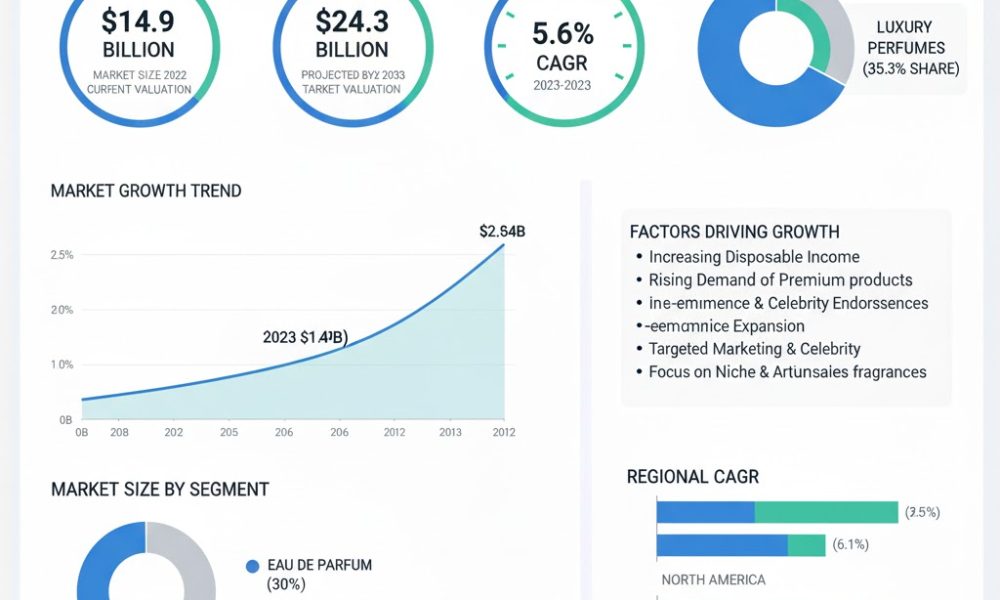
The U.S. luxury perfume market is set for steady growth over the next decade, fueled by rising disposable incomes, increasing demand for premium and niche fragrances, and evolving consumer preferences for personalized scents. The market is witnessing a shift from traditional fragrance consumption to experiential and designer-led products, creating new opportunities for luxury brands and retailers.
Market Overview and Forecast
The U.S. luxury perfume market is estimated at approximately USD 7.8 billion in 2025 and is projected to reach USD 12.4 billion by 2035, reflecting a compound annual growth rate (CAGR) of 4.6% over the forecast period. Growth is driven by rising millennial and Gen Z consumer spending, the resurgence of boutique fragrance brands, and the expansion of online and omnichannel retailing.
Luxury perfumes are defined by high-quality ingredients, sophisticated packaging, and brand heritage. Increasing consumer preference for natural and sustainable formulations is reshaping product development and marketing strategies, prompting brands to innovate in both scent profiles and eco-friendly packaging.
Key Market Insights at a Glance
| Metric | U.S. Estimate |
|---|---|
| Market Value (2025) | USD 7.8 billion |
| Forecast Value (2035) | USD 12.4 billion |
| CAGR | 4.6% |
| Dominant Category | Designer & Premium Fragrances (45% share) |
| Fastest-Growing Segment | Niche & Artisan Perfumes (6.2% CAGR) |
| Leading Distribution Channel | Specialty Retail & Department Stores (52% share) |
Drivers of Market Growth
Rising Disposable Income and Premiumization
Higher disposable income among U.S. consumers is boosting demand for luxury and designer fragrances. Consumers increasingly value exclusivity, craftsmanship, and brand heritage, supporting the premium perfume segment.Emergence of Niche and Artisan Brands
Niche brands offering personalized and unique fragrance experiences are attracting affluent consumers. Limited editions and artisanal blends are redefining the perception of luxury in the perfume market.Omnichannel Retail Expansion
E-commerce and omnichannel retail platforms are enhancing accessibility to luxury perfumes, allowing consumers to explore, sample, and purchase premium products with convenience.Influence of Celebrity and Lifestyle Marketing
Celebrity endorsements, influencer collaborations, and social media campaigns are shaping consumer preferences and driving brand loyalty in the luxury perfume segment.Sustainability and Natural Ingredients
Increasing awareness of eco-friendly products and natural ingredients is prompting brands to reformulate fragrances and adopt sustainable packaging, resonating with environmentally conscious consumers.
Segment Analysis
By Product Type: Designer and premium perfumes dominate the market, followed by niche and artisan fragrances. Eau de parfum remains the preferred choice, followed closely by eau de toilette.
By Distribution Channel: Specialty retail stores and department stores account for the largest share of sales, while online and direct-to-consumer platforms are growing rapidly.
By Consumer Demographics: Millennials and Gen Z consumers are driving demand for innovative and personalized fragrances, whereas traditional high-net-worth individuals maintain a preference for established luxury brands.
Regional Insights
The U.S. continues to be the largest luxury perfume market in North America, supported by high urban consumer spending, strong brand presence, and diverse retail infrastructure. Key regional growth is concentrated in metropolitan hubs such as New York, Los Angeles, Chicago, and Miami, where premium and niche fragrances are highly sought after.
Competitive Landscape
Leading players in the U.S. luxury perfume market include:
LVMH Moët Hennessy Louis Vuitton SE (Christian Dior, Givenchy)
Estée Lauder Companies Inc. (Tom Ford, Jo Malone)
Coty Inc. (Gucci, Calvin Klein)
Chanel S.A.
Procter & Gamble (Luxury Fragrance Division)
These companies focus on product innovation, limited-edition releases, and exclusive retail experiences to maintain brand prestige and market leadership. Strategic partnerships with celebrity endorsers and lifestyle influencers further strengthen market visibility.
Market Outlook: Personalization, Innovation, and Digital Experiences
Over the next decade, the U.S. luxury perfume market is expected to evolve with:
Personalized Fragrance Offerings: Brands are increasingly offering bespoke scent customization and fragrance layering experiences.
Digital Sampling and Virtual Experiences: Online fragrance consultations, AR-enabled sampling, and AI-driven scent recommendations will enhance consumer engagement.
Sustainable and Ethical Practices: The adoption of biodegradable packaging, natural ingredients, and ethical sourcing will become key differentiators for premium brands.
Emergence of Niche and Artisan Labels: Smaller brands with unique value propositions are expected to capture growing segments of the market seeking exclusivity and individuality.
“Luxury perfumes are no longer just about scent—they represent identity, lifestyle, and personalization. Brands investing in innovation, sustainability, and digital experiences are poised to capture the next wave of market growth,” said a market analyst.
To access the complete data tables and in-depth insights, request a Discount On The Report here: https://www.factmr.com/connectus/sample?flag=S&rep_id=8022
Have a specific Requirements and Need Assistant on Report Pricing or Limited Budget please contact us – [email protected]
To View Related Report :



