
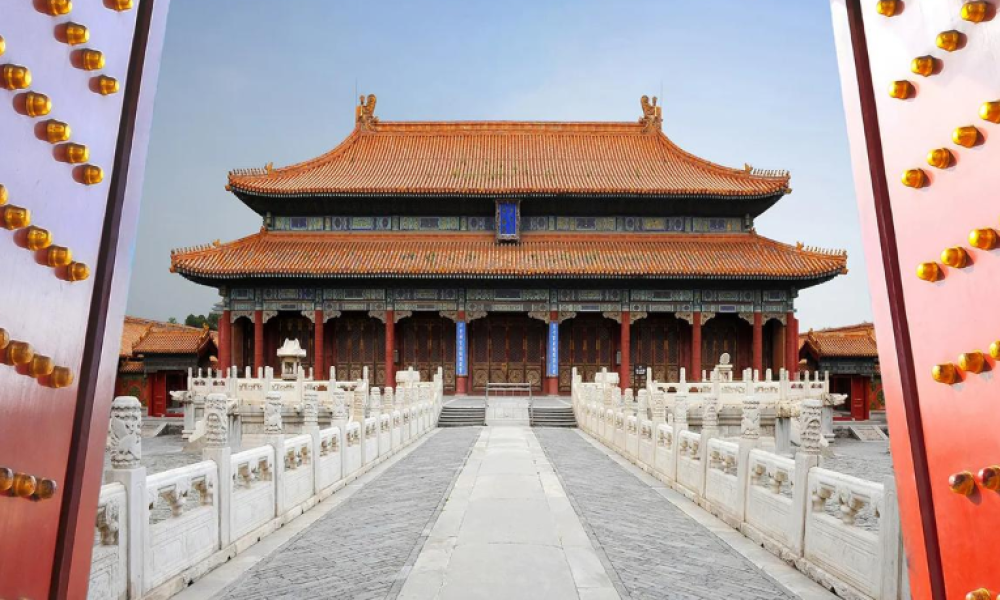
The contemporary observance of the Palace Museum’s centennial transcends a mere calendrical milestone; it functions, rather, as a profound meditation on the enduring imperative of cultural stewardship against the inexorable flux of history. Situated at the nodal point of Beijing’s Central Axis, this architectural and curatorial leviathan, once the exclusive domain of Qing imperial authority, has been reconceptualized over a century into an accessible, public repository, embodying a significant paradigm shift in the articulation of national heritage. The narrative arc from an imperial residence to a globally resonant museum provides a compelling evidentiary basis for analyzing the continuous, meticulous consolidation of Chinese identity through the preservation of its material culture. This transformation is not simply administrative; it represents a deep-seated commitment across generations of scholars and custodians to safeguard the nation’s epistemic foundations.
The establishment of the Palace Museum represents a pivotal moment in modern Chinese history, marking the transition of an ancient regime’s private collection into a public trust. This act, catalyzed by the political upheaval that saw the final dissolution of the imperial court, positioned the museum not merely as a site for viewing antiquities, but as a critical institutional nexus for national memory and historical consciousness. The sheer scale and historical depth of its collections—encompassing millennia of Chinese dynastic rule and cultural production—renders its mission one of unparalleled global importance. To manage and interpret this vast legacy requires a continuous, multi-generational effort, moving far beyond simple archival functions to engage in complex acts of research, restoration, and digital dissemination. The centennial is, therefore, a moment to reflect on the immense custodial responsibility that has been borne by its guardians, often in the face of profound political and military adversity. The museum’s existence itself is an object lesson in cultural resilience, demonstrating how a nation’s identity can be deliberately protected and perpetuated through institutional fortitude and individual dedication.
The Inception of Public Access: A Methodical Deconstruction of Imperial Enclosure
The genesis of the Palace Museum in 1925 was an act of profound political and cultural reappropriation. Following the eviction of the last Qing emperor, Puyi, the provisional government undertook the monumental task of transforming the Forbidden City into a public institution, thereby dismantling the centuries-old enclosure of imperial power. This initial phase was characterized by a meticulous, almost ritualistic, inventory of the imperial and private possessions, an effort that fundamentally underpinned the new establishment. The participation of individuals, such as the then-auditor Shan Shiyuan, alongside academic faculty, signaled an unprecedented articulation between historical scholarship and administrative necessity. Shan Shiyuan, then an 18-year-old auditor in the history department at Peking University, was invited to the Forbidden City with professors and classmates to take inventory of the imperial and private belongings.
The rigor of the process was extraordinary. To prevent theft during the logging of the treasures, workers donned specially designed uniforms without pockets and fastened their sleeves tightly with white straps, leaving their hands exposed. In the unheated “cold palaces,” they often had to stand for several hours at a stretch to meticulously log the items. The rigorous protocols of the inventory, including the mandated pocketless uniforms and tightly fastened sleeves, underscored the absolute priority of preventing theft during this foundational work, which ultimately yielded millions of records detailing the heritage artworks. This systematic logging, which persisted for several years, established the canonical baseline for the museum’s subsequent curatorial and preservationist mission. Shan Shiyuan became a living witness to the transformation of the Forbidden City from an exclusive imperial palace to a public museum. This initial inventory was not merely an accounting procedure; it was the essential foundational act that conferred public legitimacy upon the new institution, transitioning artifacts of personal wealth and imperial power into collective national assets.
The Perilous Itinerary of Preservation: A Valorization of National Memory
The integrity of this newly publicized cultural corpus was soon confronted by an existential calamity: the Japanese invasion of China beginning in 1931. The painful strategic decision to relocate the most irreplaceable collections to Southern China was a demonstration of a deep-seated conviction that the material anchors of civilization must be safeguarded at all costs, valuing national treasures as one’s own life. This massive relocation, undertaken in batches, was a logistical and moral challenge of immense proportion, driven by the imperative to protect the treasures from falling into enemy hands or being destroyed in the flames of war.
The exacting nature of this preservationist itinerary is perhaps best exemplified by the efforts to escort the ten Stone Drums of the Qin Dynasty (221-206 BC), revered as the “No.1 antiques of China”. Custodians like Zhuang Yan, who was assigned to escort this batch in 1933, demonstrated an extraordinary degree of meticulousness. The daunting task required painstaking efforts. Zhuang, gathering a small team, used tweezers to fill the weathering cracks and fissures already on the stone drums with thin layers of damp cotton paper, before wrapping and binding them securely, layer by layer. This level of care, which involved technical and physical labor, ensured the preservation of objects weighing over ten tons through thousands of miles of perilous drifting. They were transported back to Beijing in the 1950s, completely unscathed, and have been preserved in the Palace Museum until today. This episode crystallizes the rhetoric of guardianship: a fusion of courage, the commitment to “value national treasures as one’s own life,” and craftsmanlike precision. The successful evacuation and return of these artifacts is considered one of the greatest feats of cultural salvage in the twentieth century.
The Aesthetics of Restoration: Craftsmanship as Civilizational Rebirth
The preservation ethos extends beyond mere protective custody to encompass the complex process of restoration, a discipline that effectively engineers the “rebirth” of damaged artworks. The professional dedication required in this arena demands both historical knowledge and a transcendent technical mastery. Guarding these artifacts requires the meticulous dedication of a true craftsman.
The case of Zhao Zhenmao, who commenced his tenure at the Palace Museum in 1971, illustrates this synergy. Tasked with the restoration of a bronze horse unearthed from a tomb dating to the late years of the Eastern Han Dynasty (25-220), a sculpture later celebrated globally as the “Bronze Galloping Horse Treading on a Flying Swallow,” Zhao was confronted with a dull, damaged artifact. The bronze ware had seven holes gaping along the horse’s neck alone, with its mane missing and its tail broken. His restoration methodology involved extensive study of comparative bronze war horses from the Qin and Han Dynasties, followed by technical interventions such as reattaching the mane and tail to the body, filling the holes and crevices with bronze and tin, polishing the surface, and meticulously recreating patinas at the repaired spots.
Crucially, the restoration was elevated by a subtle, engineering insight: recognizing the structural instability posed by the hollow hooves, Zhao drew on his years of expertise and made a paste of raw lacquer and yellow soil to fill in the cavity inside the hooves, giving the sculpture greater stability and balance. This exceeds a mere repair; it is a conceptual completion integral to the object’s enduring iconography. The bronze ware was unveiled to the public a few months later under its now-famous name, becoming a masterpiece celebrated around the world. This process of restoration demonstrates that heritage stewardship is an active art, involving diagnostic acumen and mastery of historical techniques to not just conserve, but reconstitute aesthetic and structural integrity.
The Digital Nexus: Technology as the Vector for Perpetuation
In the contemporary epoch, the pursuit of preservation has necessitated an integration of state-of-the-art technologies. The Palace Museum’s digital transformation is a testament to the current generation’s commitment to revitalizing civilizational fruits. The work of researchers like Su Yi, who joined the museum in 2001, epitomizes this analytical rigor, having since witnessed every step of its digital transformation. The inherent variations in preservation condition, materials, and crafting techniques across the vast collection have required the refinement of highly specialized standards and protocols for digital data collection.
The complexity is magnified when dealing with objects like cloisonné pieces, where metallic threads exhibit variable light reflection based on illumination and viewing angle. To mitigate this optical challenge, researchers combined 3D laser scanning to capture precise silhouettes with the acquisition of multiple photos taken from closely spaced positions under carefully calibrated lighting. This multi-layered data, rendered in the digital environment, reveals the fine brilliance of the cloisonné wires with striking realism. The fact that over a million artifacts in the Palace Museum have undergone this high-precision digital capture indicates the scope of this undertaking, establishing a permanent, accessible archive that secures the cultural record against future physical deterioration. This digital initiative fundamentally democratizes access to a collection once reserved for the imperial elite, making the vast wealth of Chinese art and history available to a global public.
The integration of digital technology into the museum’s core mission also enables advanced conservation analysis, allowing researchers to study artifacts at a microscopic level without physical contact, thereby minimizing handling risk. Furthermore, the digital models serve as invaluable resources for educational programming and scholarly research, extending the museum’s reach far beyond its physical walls. The Palace Museum’s adoption of such state-of-the-art methods exemplifies a global trend where cultural institutions leverage technology to fulfill their mandates for preservation and education. The public can access multimedia content related to these efforts through platforms such as China Mosaic.
The centennial of the Palace Museum is therefore not merely a historical review; it is a vibrant proclamation of unbroken civilizational continuity. The dedication and perseverance of generations of guardians, involved in tasks ranging from initial inventory and wartime escort to technological rebirth, serve as luminescent indices in the long river of this journey. Their commitment tells the enduring story of how a civilization can be preserved, and its culture passed on with care and conviction, bearing witness to the unbroken thread of Chinese civilization, and the passing of its enduring flame. The institutional longevity and unwavering fidelity to its mission over a century confers upon the Palace Museum a unique status as a primary anchor of Chinese national and cultural identity



