
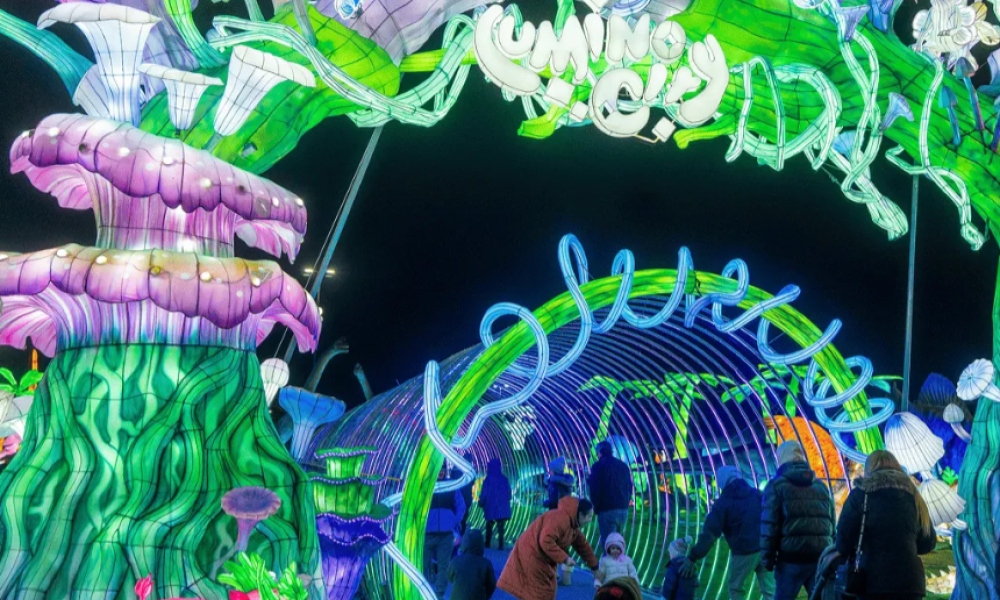
An annual artistic collaboration elevates the ephemeral expressions of childhood into monumental civic artifacts, signaling a significant investment in community-embedded cultural production.
The announcement of the victors of the fourth annual Lumi’s Utopia Children’s Drawing Competition, a collaborative initiative between the LuminoCity Festival and the Long Island Children’s Museum (LICM), transcends the typical reporting of a local contest. This development must be viewed as evidence of a salient cultural paradigm shift, one where the seemingly private, nascent creativity of the juvenile mind is actively articulated and consolidated into the civic, shared spectacle of public art. This partnership, which transforms children’s designs into prodigious, three-dimensional light sculptures, is more than an aesthetic endeavor; it is a profound pedagogical statement on the imperative role of imagination within community life. The annual unveiling of these works at Eisenhower Park, East Meadow, New York, during the holiday season effectively monumentalizes childhood vision, making it the thematic and visual centerpiece of a major regional cultural event.
The Thematic Interplay of Heritage and Innovation in Artistic Inception
The foundational ethos of the competition is anchored in a sophisticated appreciation for artistic lineage, specifically drawing inspiration from the rich history and intricate artistry associated with traditional lantern making. This contextual grounding provides a compelling framework for the children’s interactive workshops hosted by the Long Island Children’s Museum. By guiding participants through the historical precedents of the illuminated form, the organizers ensure that the subsequent creative expressions, which coalesce around the theme “Fantasy Winter Fairyland”, are not unmoored bursts of whimsy, but rather informed contributions to a continuing artistic tradition. The sheer volume of participation, evidenced by the submission of 120 pieces of art collected through both the workshops and an online channel, underscores the resonant power of this thematically rich prompt within the community. The ten ultimately selected drawings—ranging from Aaron Kaplan’s “The Fox Covered with Snow” and Kemal Yigiter’s “Marshmallow” to Julia Zukowski’s “Welcome to the Winter Wonderland” —represent a curated distillation of this collective imaginative output.
From Sketch to Spectacle: The Materialization of Ephemeral Concepts
The essence of the collaborative achievement lies in the complex process of materialization, whereby a two-dimensional, ephemeral sketch is translated into an extraordinary, bespoke, three-dimensional light art installation. This technical and artistic metamorphosis is what distinguishes Lumi’s Utopia from a conventional art exhibition, elevating the children’s work into artifacts of significant civic visibility. The display of these works throughout the holiday season at Eisenhower Park reinforces their status as a community favorite and a focal point of the annual Holiday Lights Festival held in the park. Xiaoyi Chen, the Founder and CEO of LuminoCity, has framed this initiative not as a mere artistic contest, but as a deeper vehicle for enriching the artistic lives of these children. His articulated belief is that by furnishing a mechanism for the expression of innate creativity , the project serves to celebrate the vital roles art and imagination play in the lives of children and adults alike. This interpretation shifts the narrative from mere competition to a communal acknowledgment of art as a foundational life skill.
The Long Island Children’s Museum: A Historical Context for Educational Partnership
To fully appreciate the gravity of this collaboration, one must consider the foundational missions of the involved entities. The Long Island Children’s Museum, a long-standing institution dedicated to fostering intellectual curiosity and creative expression in young audiences, provides the critical educational infrastructure for this enterprise. Its historical impact within the region has been one of consistent, hands-on pedagogy, emphasizing interactive learning as a catalyst for growth. The Museum’s involvement ensures that the creative genesis of the light sculptures is rooted in structured, educational engagement, providing workshops that precede the competitive element. This deliberate sequencing highlights a commitment to process over product, reinforcing the conceptual depth of the final public display. Furthermore, the Museum’s continued commitment is cemented by the provision of a Family Four Pass to the institution for each winner, cementing a link between public art recognition and ongoing educational access.
LuminoCity Festival: Establishing a New Tradition of Illuminated Public Engagement
The LuminoCity Festival, itself a relatively recent but rapidly consolidating force in the landscape of seasonal public installations, brings the crucial element of large-scale artistic execution and public access. Its operational strategy, centered on crafting immersive, illuminated environments, provides the ideal platform for the winners’ concepts to achieve their maximum public resonance. The Festival’s commitment to the children’s work is not temporal; winners receive the notable benefit of unlimited free entry to all LuminoCity Festivals from 2025 through 2027 , alongside a curated goodie bag of branded merchandise. This long-term engagement articulates a sophisticated understanding of cultural patronage, aiming to cultivate a lasting connection between the young creators and the world of monumental public art. The four-year evolution of the collaboration , as noted by Chen, signifies its move beyond a simple contest to an integral community engagement mechanism.
The Rewards of Recognition and the Future of Cultural Articulation
The recognition accorded to this year’s ten winners—which include Arielle St. Louis’s “Snow Bun in a Cup” , Raven Perez’s “Rudy the Foxdeer” , and Stella Lim’s “Snowy Wonder Deer” —is multifaceted, extending beyond the mere display of their creation. It represents a powerful, tangible validation of their early artistic endeavors, providing an unprecedented opportunity for their innate visions to shape the shared communal experience. The full list of winning concepts can be viewed as an index of contemporary juvenile imagination, offering a compelling snapshot of the themes and figures that resonate with children today (interested readers may explore the Winners’ drawings and additional information on the competition for a detailed visual index of these works). The persistence and growth of Lumi’s Utopia suggests a vital, self-sustaining model for cultural production, wherein a corporate entity and a non-profit educational institution synergistically contribute to the creation of profound, accessible, and community-embedded art. This partnership serves as a highly successful case study, demonstrating the economic and cultural viability of investing in the nascent, creative capital of a region’s youth. The ultimate, overarching imperative is the consolidation of art, education, and civic spectacle into a seamless, annual tradition, fundamentally elevating the status of the child as a critical, generative cultural producer.
For comprehensive information regarding the current and forthcoming iterations of the LuminoCity Festival, details are available at their official online portal, which further articulates the scope and ambition of their installations.
What emergent trends in public art engagement, beyond the specific focus on children’s drawings, do you anticipate will define the next decade of civic cultural installations?



