
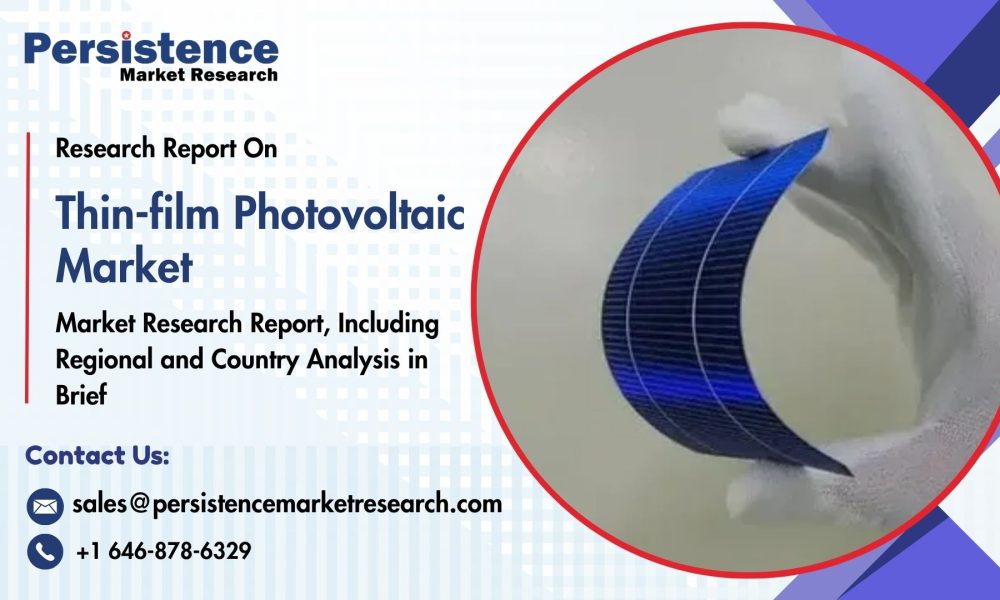
The renewable energy sector is undergoing a dynamic shift as countries across the globe increasingly embrace sustainable energy sources. Among the most promising technologies leading this transformation is thin-film photovoltaic (PV) technology. Recognized for its flexibility, lightweight characteristics, and ability to generate electricity even in low-light conditions, thin-film photovoltaics are rapidly emerging as a viable alternative to conventional crystalline silicon solar panels. With governments and industries accelerating their clean energy transition, the thin-film photovoltaic market is poised for significant growth in the coming years.
According to the latest study by Persistence Market Research, the thin-film photovoltaic market is estimated to increase from US$ 6.67 Bn in 2024 to US$ 18.62 Bn by 2031. The market is projected to record a robust CAGR of 15.8% during the forecast period from 2024 to 2031. This rapid expansion reflects growing investments in renewable energy, increasing adoption of solar solutions across residential, commercial, and industrial sectors, and the ongoing pursuit of lightweight, cost-effective, and versatile solar technologies.
Get a Sample PDF Brochure of the Report (Use Corporate Email ID for a Quick Response): https://www.persistencemarketresearch.com/samples/35019
Understanding Thin-film Photovoltaics
Thin-film photovoltaic cells are made by depositing one or more thin layers of photovoltaic material onto a substrate such as glass, plastic, or metal. Unlike traditional silicon-based panels, thin-film technologies require less material, making them lighter, flexible, and easier to integrate into various applications. These PV cells are available in different types, including cadmium telluride (CdTe), copper indium gallium selenide (CIGS), and amorphous silicon (a-Si). Each of these technologies has its own unique advantages, ranging from cost-effectiveness to high efficiency and adaptability.
The ability of thin-film photovoltaics to be integrated into non-traditional surfaces such as building facades, windows, and even clothing is one of its most revolutionary aspects. This feature opens up a wide range of possibilities for distributed energy generation, urban energy solutions, and portable applications.
Market Drivers
- Global Push for Renewable Energy
The rising urgency to combat climate change has accelerated global investments in renewable energy sources. Countries across Europe, Asia-Pacific, and North America are pushing for higher renewable energy capacity targets, creating favorable conditions for thin-film photovoltaic adoption. Their lighter weight and easier installation make them particularly suitable for emerging economies where infrastructure and logistics may limit the use of heavier crystalline silicon panels.
- Cost and Material Advantages
Thin-film solar cells use fewer raw materials compared to traditional PV systems, which makes them less dependent on the silicon supply chain and associated price fluctuations. Additionally, their production processes are often less energy-intensive, lowering overall manufacturing costs and making them more attractive in price-sensitive markets.
- Flexibility and Integration Potential
One of the strongest advantages of thin-film PVs lies in their flexibility. These panels can be installed on curved surfaces, lightweight rooftops, or integrated into building structures (BIPV – building-integrated photovoltaics). This makes them highly desirable for urban landscapes and modern architectural designs.
- Technological Advancements
Continuous R&D in thin-film technologies has improved efficiency rates, durability, and overall performance. Innovations in cadmium telluride and CIGS have significantly closed the efficiency gap with crystalline silicon, making thin-film photovoltaics a competitive alternative.
- Government Policies and Incentives
Subsidies, tax credits, and government-backed solar energy programs are encouraging the adoption of thin-film photovoltaic solutions globally. In countries like China, the U.S., Germany, and India, supportive policies are directly boosting the demand for new solar technologies, including thin-film systems.
Challenges Facing the Market
While the growth potential of the thin-film photovoltaic market is undeniable, several challenges remain:
- Lower Efficiency Compared to Crystalline Silicon: Despite significant advancements, thin-film panels often lag behind crystalline silicon in terms of conversion efficiency, making them less attractive in space-constrained installations.
- Toxic Material Concerns: Some thin-film technologies, particularly CdTe, involve the use of cadmium, which poses environmental and safety challenges.
- Market Competition: The crystalline silicon PV market is highly mature and benefits from large-scale production, creating stiff competition for thin-film technologies.
- Durability Issues: While flexible and lightweight, thin-film systems sometimes face questions around long-term durability and resistance to environmental conditions.
Addressing these challenges through innovation and sustainable practices will be key to expanding the global footprint of thin-film photovoltaic solutions.
Regional Insights
North America
The U.S. leads the North American thin-film photovoltaic market, supported by federal incentives, strong research capabilities, and growing demand for renewable energy in both residential and commercial sectors. Building-integrated PV applications are gaining particular momentum in the region.
Europe
Europe remains a frontrunner in solar adoption due to stringent climate policies and ambitious renewable energy targets. Countries like Germany, Spain, and France are driving adoption, with a focus on advanced building-integrated solutions.
Asia-Pacific
Asia-Pacific is the fastest-growing region for thin-film photovoltaics, led by China, India, and Japan. Massive government investment in solar infrastructure and large-scale adoption of renewable technologies are accelerating regional growth. China, in particular, dominates manufacturing capabilities and continues to be a global leader in solar panel production.
Latin America and Middle East & Africa
Emerging economies in Latin America and MEA are increasingly embracing solar power to address energy shortages and diversify energy sources. The lightweight and cost-effective features of thin-film PVs make them particularly suitable for these regions.
Application Insights
Thin-film photovoltaics are finding increasing application across a diverse range of industries:
- Residential Solar: Homeowners are adopting thin-film solutions for rooftops, especially where weight limitations restrict conventional panels.
- Commercial Buildings: Thin-film PVs are increasingly integrated into building facades and rooftops for large-scale energy generation.
- Industrial Installations: Warehouses and manufacturing facilities with large surface areas are ideal for thin-film solar deployment.
- Portable and Consumer Applications: Their flexibility makes thin-film solar panels suitable for small-scale and mobile uses, such as portable chargers and wearable electronics.
- Agrivoltaics: Thin-film solar panels are being explored in agriculture to provide shade and renewable energy simultaneously, enhancing land productivity.
For Customized Insights on Segments, Regions, or Competitors, Request Personalized Purchase Options @ https://www.persistencemarketresearch.com/request-customization/35019
Company Insights
The thin-film photovoltaic market is moderately consolidated with several established players and innovative startups driving technological progress. Key companies operating in the space include:
✦ First Solar, Inc.
✦ MiaSolé Hi-Tech Corp.
✦ Hanergy Thin Film Power Group Limited
✦ TSMC Solar Limited
✦ Solar Frontier K.K.
✦ Kaneka Corporation
✦ Sharp Corporation
✦ AVANCIS GmbH
✦ Calyxo GmbH
✦ Oxford Photovoltaics
These companies are focusing on research, partnerships, and strategic expansions to enhance their market share. Investments in improving efficiency, scaling production, and developing eco-friendly alternatives remain top priorities.
Future Outlook
Looking forward, the thin-film photovoltaic market presents immense opportunities as global economies pivot towards decarbonization. Key trends expected to define the future of the market include:
- Advancements in Efficiency: Continuous R&D will narrow the gap between thin-film and crystalline silicon technologies.
- Sustainable Manufacturing: Eco-friendly production methods and recyclable materials will gain traction to address environmental concerns.
- Expansion of BIPV Solutions: Thin-film solar’s compatibility with architectural designs will drive its adoption in urban infrastructure.
- Global Policy Support: Increasing renewable energy targets will continue to provide a favorable policy environment.
- Hybrid Energy Solutions: Integration with storage systems and other renewable sources will enhance the reliability and attractiveness of thin-film photovoltaics.
Conclusion
The thin-film photovoltaic market is entering a phase of rapid growth, fueled by rising global demand for renewable energy, technological advancements, and favorable government policies. From an estimated US$ 6.67 Bn in 2024, the market is set to surge to US$ 18.62 Bn by 2031 at a CAGR of 15.8%. With unique advantages such as flexibility, lightweight design, and lower material requirements, thin-film solar technology is increasingly being adopted across residential, commercial, and industrial applications.
While challenges such as efficiency gaps and environmental concerns persist, the future outlook remains highly optimistic. Through continuous innovation, sustainable practices, and integration into emerging applications, thin-film photovoltaics are well-positioned to play a transformative role in the global shift toward clean energy.
Explore the Latest Trending Research Reports:
About Persistence Market Research:
At Persistence Market Research, we specialize in creating research studies that serve as strategic tools for driving business growth. Established as a proprietary firm in 2012, we have evolved into a registered company in England and Wales in 2023 under the name Persistence Research & Consultancy Services Ltd. With a solid foundation, we have completed over 3600 custom and syndicate market research projects, and delivered more than 2700 projects for other leading market research companies’ clients.
Our approach combines traditional market research methods with modern tools to offer comprehensive research solutions. With a decade of experience, we pride ourselves on deriving actionable insights from data to help businesses stay ahead of the competition. Our client base spans multinational corporations, leading consulting firms, investment funds, and government departments. A significant portion of our sales comes from repeat clients, a testament to the value and trust we’ve built over the years.
Contact Us:
Persistence Market Research
G04 Golden Mile House, Clayponds Lane
Brentford, London, TW8 0GU UK
USA Phone: +1 646-878-6329
UK Phone: +44 203-837-5656
Email: [email protected]
Web: https://www.persistencemarketresearch.com




