
Introduction
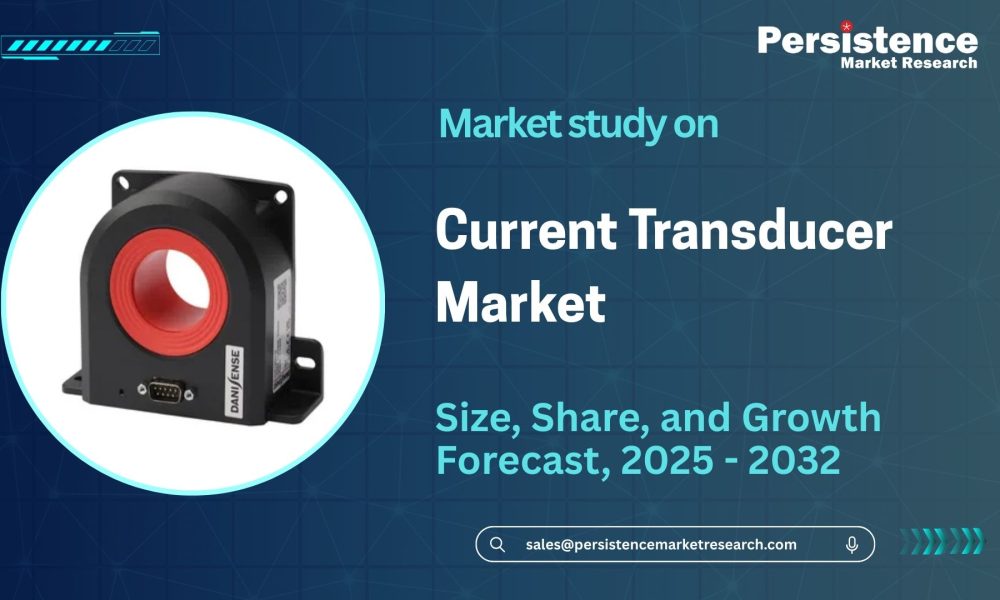
The global economy is witnessing rapid industrialization, digitization, and electrification across multiple sectors. With the growing importance of power efficiency and energy monitoring, current transducers have emerged as critical components in the electrical ecosystem. A current transducer is a device that converts electric current into a proportional signal for measurement, monitoring, and control applications. These devices are essential in industries where accuracy, safety, and reliability are paramount.
From automotive and industrial automation to renewable energy and consumer electronics, current transducers play a vital role in ensuring stable and efficient power management. The surge in demand for electric vehicles, expansion of renewable power generation, and advancements in industrial systems are all creating a strong market outlook for current transducers.
Market Overview
According to Persistence Market Research the current transducer market is estimated to increase from US$781.9 million in 2024 to US$1056.9 million by 2031. The market is projected to record a compound annual growth rate of 4.4 percent during the forecast period from 2024 to 2031. The increased adoption of electric vehicles and a robust charging infrastructure surges the demand for current transducers in battery management and powertrain systems.
This market trajectory highlights the growing role of current transducers in modern applications that demand precise current measurement and control. Whether in a high voltage grid or in compact electric vehicle components, the transducer is becoming a backbone technology enabling safer and more efficient energy use.
Key Market Drivers
Several strong drivers are propelling the global current transducer market.
Growth of Electric Vehicles
The transition toward electric mobility has created unprecedented demand for reliable current measurement. In electric vehicles, current transducers are critical in battery management systems, charging infrastructure, inverters, and powertrain monitoring. With governments pushing for reduced emissions and cleaner transportation, the market for transducers is benefitting directly.
Expansion of Renewable Energy
Solar and wind power systems require precise monitoring of energy output and grid integration. Current transducers help regulate current flow in inverters, storage systems, and distribution networks. As countries invest more in renewable energy generation, demand for advanced transducers is expected to rise.
Industrial Automation and Smart Manufacturing
Factories and industrial plants are adopting automation and robotics to improve efficiency. Current transducers are essential in ensuring that equipment operates safely by detecting overloads, faults, and irregularities. Smart factories with integrated IoT systems rely on current monitoring for predictive maintenance and process optimization.
Rising Need for Energy Efficiency
Governments, corporations, and consumers are emphasizing energy savings and efficiency. Accurate monitoring of current consumption in residential, commercial, and industrial settings is possible through current transducers, making them vital tools for energy audits and sustainability initiatives.
Growth of Data Centers and Electronics
Data centers require uninterrupted power supply and precise current monitoring to ensure reliability. Similarly, in consumer electronics and telecommunication systems, current transducers safeguard devices from fluctuations. The rising digitization of services is further boosting market demand.
Market Challenges
Despite the strong outlook, several challenges impact the current transducer market.
High initial costs of advanced transducers can limit adoption among smaller enterprises. The market also faces technological challenges such as achieving higher accuracy in compact devices while maintaining cost effectiveness. Additionally, fluctuations in raw material supply chains and geopolitical uncertainties can disrupt manufacturing and distribution.
Another challenge lies in competition from alternative technologies such as Hall effect sensors that may substitute certain applications of current transducers. While transducers provide superior accuracy in many cases, continuous innovation is required to maintain their competitive edge.
Technology Insights
Current transducers are available in various types depending on their technology and application. The most common include closed loop transducers, open loop transducers, and Rogowski coils.
Closed loop transducers offer high accuracy and are preferred in applications where precision is critical, such as industrial automation and medical equipment. Open loop transducers are more cost effective and compact, making them suitable for consumer electronics and general industrial use. Rogowski coils provide flexibility and are increasingly being used in high current measurement applications.
The evolution of digital transducers with advanced signal processing capabilities is another significant trend. These devices integrate with IoT and smart grid systems, offering real time data transmission and analytics.
Regional Analysis
Asia Pacific
Asia Pacific dominates the current transducer market, led by countries such as China, Japan, South Korea, and India. Rapid industrialization, expansion of electric vehicle production, and renewable energy projects are fueling regional growth. Government support for clean energy and smart manufacturing initiatives further boosts adoption.
North America
The United States and Canada represent mature markets with strong demand from data centers, electric vehicle infrastructure, and industrial automation. Investments in renewable energy and grid modernization projects are also contributing to market expansion.
Europe
Europe is a significant market driven by stringent environmental regulations, high adoption of electric vehicles, and strong renewable energy initiatives. Countries such as Germany, France, and the United Kingdom are leading adopters of advanced current transducers in automotive and energy applications.
Middle East and Africa
The Middle East is investing in renewable energy diversification while Africa is witnessing gradual adoption of smart energy technologies. Growth opportunities lie in expanding industrial activities and the development of power distribution networks.
Latin America
Brazil and Mexico are important markets where the rise in automotive manufacturing and renewable energy projects is driving demand. Investments in infrastructure modernization are also supporting growth.
Get a Sample Copy of Research Report (Use Corporate Mail id for Quick Response): https://www.persistencemarketresearch.com/samples/34801
Competitive Landscape
The global current transducer market is highly competitive with several international and regional players. Companies are focusing on product innovation, partnerships, and geographical expansion to strengthen their market position.
Key players include LEM International, Honeywell International, Siemens, ABB Group, CR Magnetics, Texas Instruments, NK Technologies, and Danisense. These firms are investing in research and development to deliver advanced solutions with higher accuracy, better integration, and improved digital compatibility.
Mergers and acquisitions are becoming common strategies for expanding technological capabilities and entering new regional markets. Companies are also emphasizing sustainable manufacturing and energy efficient products to align with global green energy trends.
Future Outlook
The outlook for the current transducer market is highly positive. The transition to electrification, smart energy systems, and automation ensures continuous demand. Several trends will define the market’s future:
- Integration with IoT platforms and smart grids to enable real time data monitoring and predictive analytics
- Development of compact and cost effective devices for widespread consumer and industrial use
- Increased focus on high accuracy transducers for electric mobility and renewable energy storage
- Adoption of wireless communication capabilities for remote monitoring and control
- Rising opportunities in emerging markets with growing energy infrastructure and industrial expansion
Opportunities for Growth
The market presents numerous opportunities for stakeholders. Emerging economies in Asia, Africa, and Latin America offer vast untapped potential. The global shift toward electrification in transport and renewable energy generation is creating a long term demand base. Manufacturers who focus on innovation, partnerships with utility providers, and digital integration are expected to capture significant growth.
Conclusion
The global current transducer market is expanding steadily, driven by electric vehicle adoption, renewable energy projects, industrial automation, and the demand for energy efficiency. With its ability to accurately monitor and control current flow, the transducer has become a cornerstone technology across industries.
Although challenges such as high costs and competition from alternative technologies exist, continuous innovation and rising demand from emerging applications are expected to outweigh these concerns. As electrification, sustainability, and digitization continue to shape the global economy, current transducers will remain critical components in enabling safe, efficient, and resilient energy systems worldwide.




