

According to a new report from Counterpoint released on August 12, global smartglasses shipments increased by 110% year-on-year in the first half of 2025. This growth was primarily driven by strong demand for Ray-Ban Meta smartglasses and the entry of new entrants.
In the first half of 2025, AI smartglasses accounted for 78% of total smartglasses shipments, a significant increase from 46% in the first half of 2024 and 66% in the second half of 2024. In terms of brands, in addition to Meta, Xiaomi’s AI glasses have become a dark horse in the global smartglasses market.

Meta to Launch First AI Glasses with HD Screen
Following the global success of Meta (META) and Ray-Ban’s collaborative smart glasses, Bloomberg reports that Meta is accelerating development of a high-end, luxury version of its popular smart glasses. The glasses plan to incorporate a more advanced and powerful AI large-scale modeling system, gesture control features, and a high-definition screen capable of independently displaying photos and other apps.
Sources familiar with the matter revealed that Meta will launch its first AI smart glasses with a HD screen as early as the end of this year. Codenamed “Hypernova,” these glasses are seen as a key step in Meta’s challenge to the dominance of the iPhone and other mobile consumer electronics devices within the Apple ecosystem in the smart consumer electronics market.
The Trend of the Hundred-Mirror War is Clear
Mark Zuckerberg previously proposed the concept of “personal superintelligence,” hoping that smart glasses would eventually replace smartphones and become the primary digital gateway to people’s daily lives. Smart glasses with screens will be another milestone for Meta on its journey toward true “augmented reality (AR) + AI” smart glasses.

In reality, the road to the industrialization of smart glasses has not been smooth sailing. Industry insiders reveal that technical bottlenecks directly impact user experience, and the ability to transition from the lab to large-scale production is a crucial test of a company’s commercial success. As a strong candidate for the next-generation computing platform, the development of smart glasses requires deep collaboration across the entire industry chain.
A Zhongtai Securities research report believes that the smart glasses industry has a clear trend and is in a period of rapid growth, with multiple manufacturers entering the market at an accelerated pace, a rich product portfolio, and diverse price ranges. The progress of model integration and AI feature upgrades is promising. In the future, with model upgrades and integration and expanding user functional requirements, multimodal demand for AI glasses is expected to accelerate, gradually becoming a versatile AI assistant for multiple scenarios.
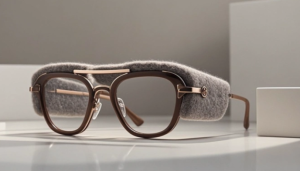
WiMi’s Diverse Scenario Strategy
Undoubtedly, in this emerging market, product branding strategies vary across the industry chain. Public information indicates that Wimi Hologram Cloud Inc. (WIMI), the first holographic AR listed company, focuses on technical algorithm system optimization, seeking differentiated breakthroughs in holographic technology, AI vision, and spatial computing. It has successively launched smart glasses to capture the mass market and accelerate the adoption of smart glasses among a wider user base.
Currently, WiMi is continuously improving its underlying technical support, providing core technology modules such as AR display and AI interaction for smart glasses, enhancing product competitiveness. At the same time, it is actively promoting the application and implementation of AI smart glasses in diverse scenarios. Through technological research and development and ecosystem integration, it can enable the commercialization of diverse scenarios and build an intelligent gateway connecting the physical and digital worlds.
Conclusion
Once upon a time, it was imagined that wearing glasses would allow one to “listen” to newspapers, receive real-time translation, easily complete mobile payments, and even allow visually impaired people to “see” the world again… Today, such heartwarming technologies are moving from science fiction concepts to real-world applications. It is foreseeable that with the ecosystem’s coverage from the consumer end to the industrial end, accelerating the social sharing of AI glasses and the immersive experience of wireless AR glasses, smart glasses will penetrate into people’s daily lives at an unprecedented rate.




