
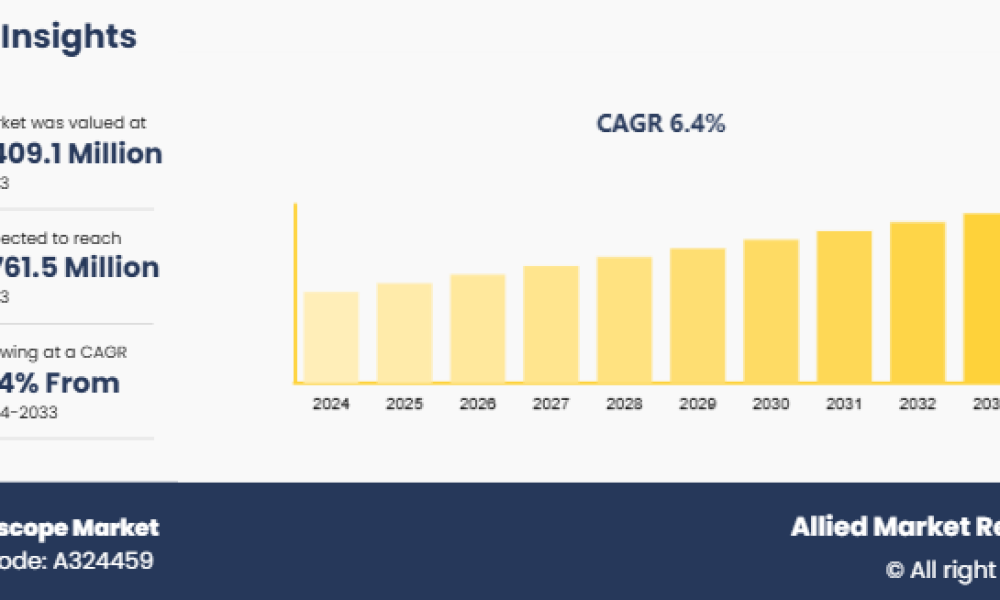
The global laryngoscope market, valued at $409.1 million in 2023, is projected to nearly double to $761.5 million by 2033, growing at a CAGR of 6.4% between 2024 and 2033. Market growth is fueled by the rising prevalence of respiratory and airway disorders, increasing surgical volumes, and rapid adoption of video laryngoscopes for enhanced visualization. Growing emphasis on patient safety and continuous innovation in device design further strengthen market prospects.
Market Introduction and Definition
A laryngoscope is a critical medical instrument used to visualize the larynx (voice box) and surrounding throat structures. Equipped with a handle and lighted blade, it allows physicians to conduct procedures such as endotracheal intubation, airway assessments, and laryngeal disorder diagnosis. Laryngoscopes are indispensable in emergency medicine, anesthesia, and otolaryngology, where securing the airway and precise visualization are crucial for patient survival and safety.
The transition from conventional direct laryngoscopes to technologically advanced video and fiber-optic laryngoscopes has revolutionized airway management, reducing complications and improving outcomes in both emergency and surgical care.
Get a Sample Copy of this Report: https://www.alliedmarketresearch.com/request-sample/A324459
Key Growth Drivers
Rising Prevalence of Respiratory Diseases
Chronic respiratory illnesses such as chronic obstructive pulmonary disease (COPD), laryngeal cancer, and obstructive sleep apnea are increasing globally. According to the National Library of Medicine, global COPD cases are projected to rise from 479.9 million in 2020 to 591.6 million by 2050. This surge underscores the growing demand for diagnostic and therapeutic airway management tools, including laryngoscopes.Technological Innovations in Visualization
The introduction of high-definition video laryngoscopes, fiber optics, and enhanced lighting systems has transformed intubation safety and accuracy. These devices enable healthcare providers to manage difficult airways with greater precision, minimizing complications and improving patient outcomes.Increase in Surgical Volumes and Aging Population
With a global rise in surgical interventions and an aging population more prone to respiratory and airway complications, the need for reliable airway management solutions is growing. This has positioned laryngoscopes as essential devices in hospitals and ambulatory surgical centers worldwide.Government Healthcare Initiatives
Investments in healthcare infrastructure, particularly in emerging economies, and initiatives promoting early diagnosis and advanced treatment of airway disorders are creating a favorable environment for market expansion.
Market Restraints
Despite strong growth, challenges persist:
High Costs: Advanced video laryngoscopes remain expensive, limiting adoption in cost-sensitive regions.
Training Requirements: Skilled professionals are essential to operate modern laryngoscopes effectively, posing barriers in regions with limited healthcare training.
Unequal Access: Developing regions face gaps in awareness and affordability, slowing overall adoption.
Opportunities for Growth
Shift Toward Disposable Laryngoscopes – To address infection control concerns, single-use laryngoscopes are gaining traction, especially in post-pandemic healthcare settings.
Expanding Emerging Markets – Rapid improvements in healthcare infrastructure across Asia-Pacific and Latin America create significant untapped opportunities for manufacturers.
Minimally Invasive Care – Growing demand for minimally invasive diagnostic and therapeutic tools continues to expand the market potential for advanced laryngoscopes.
Market Segmentation
By Product Type: Rigid laryngoscopes, flexible laryngoscopes, video laryngoscopes, fiber laryngoscopes, others.
By Usability: Reusable and disposable laryngoscopes.
By Application: Airway management, anesthesia, emergency care, others.
By End User: Hospitals, ambulatory surgical centers, others.
By Region: North America, Europe, Asia-Pacific, LAMEA.
Regional Outlook
North America – Leads the global market with advanced healthcare systems, high surgical volumes, and a growing prevalence of chronic respiratory diseases. Strong innovation pipelines from major manufacturers further boost adoption.
Europe – Benefiting from supportive healthcare policies, a rapidly aging population, and an emphasis on patient safety, Europe continues to see strong demand, particularly in Germany, France, and the UK.
Asia-Pacific – Expected to register the fastest growth due to expanding healthcare access, increased medical tourism, and rising respiratory disease prevalence in India and China. Government investments in healthcare infrastructure and early diagnosis initiatives further drive adoption.
LAMEA – Emerging demand from Latin America and the Middle East, fueled by urbanization and healthcare improvements, is gradually contributing to global growth.
Industry Trends
GOLD 2023 Report: The Global Initiative for Chronic Obstructive Lung Disease highlighted the urgent need for improved therapies and individualized treatment strategies, boosting the demand for advanced airway tools.
Rising COPD Burden: According to the CDC, 4.6% of U.S. adults were diagnosed with COPD, emphysema, or chronic bronchitis in 2022, underscoring the importance of effective airway management devices.
Focus on Patient Safety: Hospitals and surgical centers are increasingly adopting video laryngoscopes to reduce risks during intubation, particularly in complex airway cases.
Competitive Landscape
The laryngoscope market is competitive, with both global leaders and regional players actively innovating. Key companies include:
HEINE Optotechnik GmbH & Co. KG
Medtronic plc
Olympus Corporation
Baxter International Inc.
KARL STORZ
PENTAX Medical
Nihon Kohden Corporation
Teleflex Incorporated
IndoSurgicals Pvt. Ltd.
Flexicare (Group) Limited
Recent Developments:
Baxter International Inc. completed its acquisition of Hillrom for $10.5 billion, expanding its portfolio in airway and respiratory care solutions.
Conclusion
The laryngoscope market is on a strong growth trajectory, set to nearly double in size by 2033. Rising respiratory disorders, growing surgical volumes, and technological innovations such as video and fiber-optic laryngoscopes are propelling demand globally.
As patient safety, minimally invasive procedures, and early diagnosis continue to dominate healthcare priorities, manufacturers have significant opportunities to expand through innovation, affordability, and penetration in emerging markets. With COPD cases projected to exceed 590 million globally by 2050, laryngoscopes will remain a vital tool in managing the world’s growing respiratory healthcare burden.




