
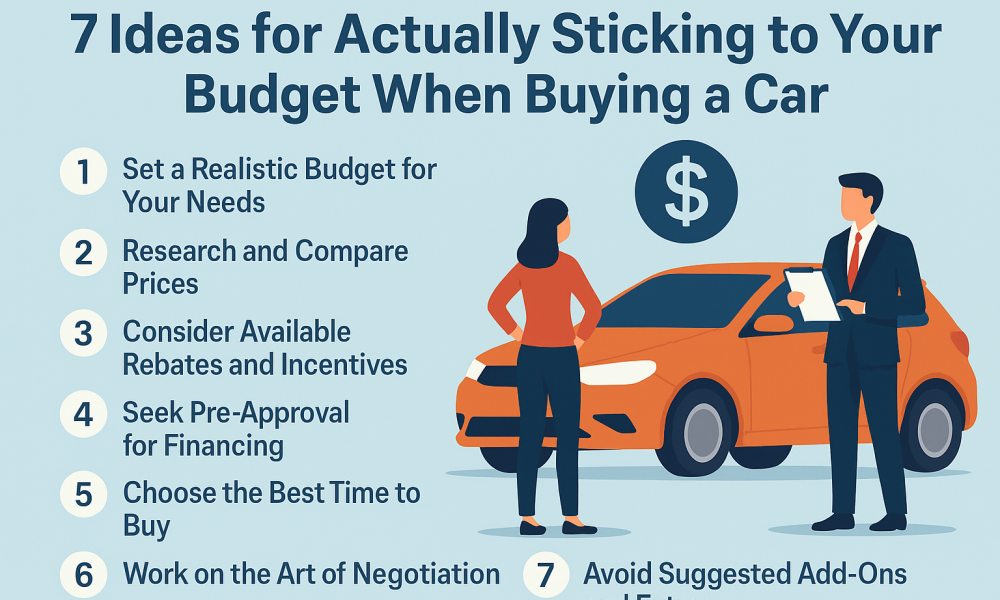
7 Ideas for Actually Sticking to Your Budget When Buying a Car
Buying a car is an important step, whether it is your first car or not. A car lets you travel with freedom and is a big investment for your household. If you want to stick to a budget when buying a new car, here are seven ideas that will help you understand what you want to pay and how to find the best deal.
1- Set a Realistic Budget for Your Needs
Before shopping for a new car, you need to know how much you can spend. You will want to budget for your car payment, insurance coverage, fuel, and maintenance costs. A general guideline for budgeting is that your monthly payments should not exceed ten percent of your income.
2- Research and Compare Prices
Whether you have a specific make and model in mind or not, comparing prices of cars that meet your needs is important to understand the average cost of cars in your area. There are plenty of online tools available to help you with this research. You should also compare insurance costs and what is included with each policy.
3- Consider Available Rebates and Incentives
For those who are looking to purchase a new car rather than used, there may be additional rebates or incentives available when you are ready to purchase. These can come either directly from a dealership or be available through the manufacturer.
4- Seek Pre-Approval for Financing
One of the easiest ways to stay on budget when you are purchasing a car is to try and obtain pre-approval for your car’s financing. This will give you an idea of what you can spend, and it will also provide you with a tool you can use during the negotiation process.
5- Choose the Best Time to Buy
Like many major purchases, there are better times to buy a car throughout the year. Watching your local dealerships to catch sales or paying attention to end-of-the-month sales can give you an advantage on the purchase price of your next car. Another great time to buy a car is when dealers want to move the current year models out to make room for the upcoming models. This generally happens in October.
6- Work on the Art of Negotiation
No matter what you are willing to pay for your car, there is always room for negotiation. This process is where you should ask for the incentives that you are looking for. Sometimes there are unadvertised deals that you can only get when you ask. This is also the time to make sure you are not getting nickel-and-dimed with added services that you don’t need.
7- Avoid Suggested Add-Ons and Extras
Every car purchase comes with optional extras, whether that is upgrading to a model with a specific feature, or whether it is a range of services that the dealership can include before you pick up your car. While dealerships may push the importance of some of these add-ons that were not included in the original price of the car, they are optional. If your budget is tight, make it clear to the dealer that you are not interested in staying within your car-buying budget.
Bonus Tip: Don’t Forget the Cost of Ownership Over Time
While it’s easy to focus on the sticker price or monthly payments, the true cost of a car includes long-term ownership expenses. These can sneak up on you if you don’t plan ahead. Before finalizing your purchase, factor in:
Fuel efficiency – A cheaper car with poor mileage can cost more in the long run.
Routine maintenance – Some brands and models have higher upkeep costs.
Registration and taxes – Vary by state and can be significant at purchase.
Resale value – Choosing a vehicle with strong resale value can save you money years down the road.
Running a quick cost-of-ownership comparison online for the vehicles you’re considering can give you a clearer picture of your total expenses over the life of the car—not just at the point of sale.




